Selecting the wrong coupling can lead to noise, wear, and costly downtime. Chain Coupling is a popular choice for transmitting torque, but it is not perfect for every system. In this article, you will learn the main advantages and disadvantages of chain coupling and when it is the right option for industrial use.
Why Chain Coupling Is Still Commonly Used
A simple design built for practical industrial use
Chain coupling remains popular because it solves a very practical problem: how to connect two shafts and transfer torque without relying on an overly complex mechanism. In most designs, two sprocket-like hubs are mounted on the shaft ends and linked by a roller chain, allowing rotational force to pass from the driving side to the driven side with dependable mechanical engagement. What keeps this design relevant is not sophistication, but usefulness. It is easy to assemble, easy to open for servicing, and easier to replace than many more specialized coupling types. In real industrial settings, that matters more than elegance. Maintenance teams value components that can be inspected quickly, disconnected without major repositioning of equipment, and returned to service with minimal downtime. The design also has a reputation for durability because it uses robust metal parts that can tolerate demanding work environments when lubrication and guarding are handled properly.
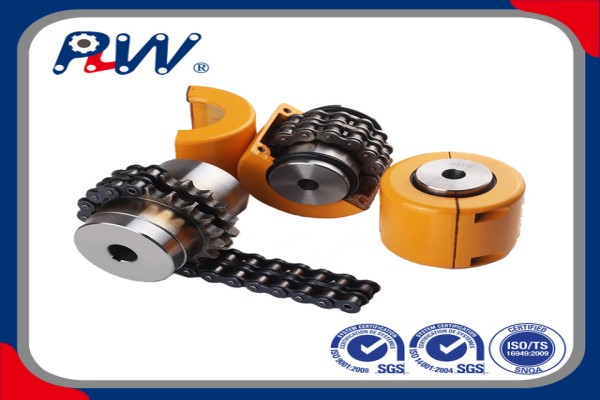
Why this design is still favored in industry:
● Straightforward construction with few critical components
● Reliable torque transfer under continuous load
● Convenient servicing and part replacement
● Good fit for rugged, maintenance-oriented equipment
The operating conditions where it makes sense
Chain coupling is most often chosen for applications where torque demand is significant but operating speed remains in the low-to-medium range. It is especially useful when machinery must keep working in environments where dirt, moisture, oil, or heat would shorten the life of more delicate solutions. Instead of being selected for precision, it is selected for resilience and practicality. This is why it is commonly found in conveyors, pumps, compressors, mixers, and other industrial drives that prioritize strength and uptime over refined motion control.
Best-fit condition | Why chain coupling works well |
Low to medium speed | Helps limit excessive vibration and wear |
High torque demand | Distributes load effectively across the chain and hubs |
Harsh environments | Performs reliably with proper lubrication and protection |
Rugged machinery | Better suited to heavy-duty service than precision positioning |
Main Advantages of Chain Coupling
Strong torque capacity and compact construction
One of the main reasons chain coupling is favored in industrial power transmission is its ability to handle substantial torque without requiring an oversized assembly. Because the chain wraps around both hubs and engages multiple teeth at the same time, the transmitted load is shared across a broader contact area instead of being concentrated at only one or two points. This load-sharing effect improves torque transmission efficiency and makes the coupling especially attractive in heavy-duty applications such as conveyors, pumps, compressors, mixers, and other driven systems that operate under continuous mechanical stress. In practice, this means users can often achieve strong torque performance from a coupling that remains relatively compact in relation to the work it is asked to perform.
Its structural efficiency also matters from a design perspective. A chain coupling uses a direct and mechanically straightforward arrangement of hubs and chain, so it delivers strength without the complexity found in some other coupling designs. For equipment builders and maintenance teams, that compactness can translate into easier integration where installation space is limited. The design is also valued because it combines rigidity in torque transfer with enough flexibility to remain practical in real operating conditions. Rather than being chosen for precision motion, it is chosen because it offers a dependable balance of torque capacity, physical efficiency, and durability.
Advantage area | Practical benefit in operation |
Multi-point load distribution | Helps the coupling transmit higher torque under demanding loads |
Compact physical profile | Makes it easier to fit into machinery with limited space |
Simple metal construction | Provides strength without overly complex components |
Efficient torque transfer | Supports reliable power transmission in heavy-duty service |
Easy maintenance and good adaptability
Another major advantage of chain coupling is serviceability. In industrial environments, maintenance speed has real financial value, and chain couplings are often appreciated because they can be opened and reconnected with less disruption than many bulkier or more intricate alternatives. When inspection, lubrication, or replacement is needed, technicians can usually access the coupling more easily, which helps reduce downtime and simplifies routine servicing. This is one reason chain coupling remains common in plants where uptime and maintainability are more important than refined motion characteristics.
Chain coupling is also adaptable enough to perform well outside ideal laboratory conditions. It can tolerate slight angular, radial, and axial misalignment, which is useful in real machinery where perfect shaft alignment is difficult to maintain over time. Small installation errors, vibration, or thermal expansion can all create minor movement between shafts, and chain coupling offers enough flexibility to handle those variations without immediate failure. When properly lubricated and protected, it also performs reliably in demanding environments that involve dust, moisture, oil, or elevated temperature. That combination of maintainability and environmental toughness is a key reason it continues to be selected for rugged industrial service instead of more delicate coupling solutions.
Main Disadvantages of Chain Coupling
Noise, wear, and lubrication requirements
The biggest drawback of chain coupling is that its strength comes with a mechanical cost. Because torque is transferred through direct metal-to-metal engagement between the chain and the sprocket teeth, operation is usually noisier than with couplings that rely on elastomeric elements or other softer contact surfaces. In industrial plants, that extra sound may be acceptable in heavy-duty service, but it becomes a disadvantage in systems where smoother and quieter running is preferred. Noise is also a visible sign of another issue: the coupling’s working surfaces are constantly exposed to friction, which means wear is not a secondary concern but part of normal operation. Once wear begins to increase, efficiency drops, clearances grow, and the coupling becomes more vulnerable to vibration and damage.
Lubrication is what keeps those disadvantages under control. A chain coupling that is properly lubricated can run reliably for a long period, but one that is neglected will deteriorate much faster. Grease or oil reduces friction between the chain components and the sprocket teeth, limits heat buildup, and helps protect the metal surfaces against corrosion and abrasive damage. In practice, this makes lubrication directly tied to service life. Poor lubrication does not just shorten maintenance intervals; it can lead to rapid wear, chain stretch, overheating, and in severe cases, chain failure. This is why chain couplings are often viewed as dependable but not maintenance-free. Their durability depends heavily on whether lubrication is treated as routine rather than optional.
Disadvantage area | Operational impact |
Metal-to-metal contact | Produces more running noise and friction |
Continuous surface wear | Increases maintenance needs over time |
Lubrication dependency | Reliability drops quickly if servicing is neglected |
Heat and contamination risk | Can accelerate damage in poorly protected conditions |
Limits in speed, damping, and precision
Chain coupling is also less suitable for applications that demand high rotational speed. As speed rises, the moving chain generates greater centrifugal force, which increases vibration, accelerates wear, and can create heat that further weakens performance. This is one reason chain couplings are usually better matched to low- or medium-speed machinery than to fast-running systems. In high-speed service, the combination of mass, friction, and dynamic movement can reduce stability and make the coupling less reliable over time. Even when the coupling is correctly installed, its design is simply not optimized for the kind of smooth, controlled behavior expected in high-speed motion systems.
Another limitation is its relatively weak damping performance. While chain coupling can tolerate small misalignment and offers some flexibility, it does not absorb shock loads and torsional vibration as effectively as couplings built with rubber or other resilient materials. In applications with repeated impact, frequent load fluctuation, or strong vibration, this can place more stress on connected machinery and shorten component life. Precision is also a problem area because the unavoidable clearance between the chain and sprocket teeth introduces backlash. That slight play may be acceptable in rugged industrial drives, but it becomes a serious disadvantage in equipment that depends on accurate positioning, repeatable motion, or very tight control. In systems such as robotics, servo-driven equipment, or precision printing machinery, that backlash can reduce accuracy enough to make chain coupling the wrong choice.
When Chain Coupling Is the Right Choice
Situations where it performs well
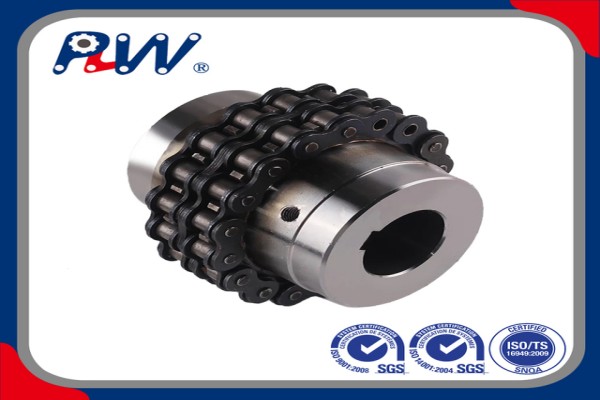
Chain coupling is the right choice when a machine needs dependable torque transmission, a durable mechanical connection, and straightforward maintenance. In many industrial settings, the best coupling is not the most refined one, but the one that can keep running under load with minimal complication. That is where chain coupling has a clear advantage. It is especially suitable for conveyors, pumps, compressors, mixers, and similar equipment that operate under continuous or heavy-duty service. In these applications, users typically value strength, compact construction, and service access more than quiet operation or precision motion. Its ability to transmit substantial torque through a relatively simple structure makes it well matched to machinery that must perform reliably over long operating cycles.
Another reason chain coupling performs well is its tolerance for slight misalignment in real operating conditions. Industrial equipment rarely stays in perfect alignment forever. Thermal expansion, installation deviation, vibration, and general wear can all introduce small shaft movement over time. Chain coupling can accommodate limited angular, radial, and axial variation without immediately compromising function, which makes it useful in demanding environments where ideal conditions are difficult to maintain. When paired with proper lubrication and protection, it also remains practical in locations exposed to dust, moisture, oil, or elevated temperatures.
Application condition | Why chain coupling is a good fit |
High torque demand | Transfers heavy loads through a robust mechanical connection |
Harsh industrial environment | Performs well when properly lubricated and protected |
Slight shaft misalignment | Handles limited movement without requiring perfect alignment |
Maintenance-focused operations | Easier to inspect, open, and service than many complex alternatives |
When another coupling is the better option
Chain coupling becomes a weaker choice when the application demands speed, smoothness, or precision rather than rugged mechanical strength. It is not ideal for high-speed equipment because rising speed increases vibration, friction, and wear, all of which can reduce reliability. It is also a poor fit for environments where low running noise is important, since the metal contact within the coupling naturally produces more sound than softer coupling designs. In the same way, equipment that depends on highly accurate positioning should avoid chain coupling because the clearance between components can create backlash. That small amount of play may be acceptable in heavy industrial drives, but it is a serious limitation in precision-controlled systems.
Another coupling type may also be the better option when maintenance must be kept to an absolute minimum or when strong vibration damping is required. Chain coupling depends on regular lubrication and does not absorb shock or torsional vibration as effectively as elastomer-based alternatives.
Conclusion
Chain Coupling is not simply good or bad; it must fit the job. It offers strength, simple construction, and good value, but also brings noise, lubrication needs, and speed limits. For buyers who value durability and easy service, HANGZHOU PERPETUAL MACHINERY & EQUIPMENT CO., LTD. provides reliable coupling solutions designed to support stable performance in demanding industrial applications.
FAQ
Q: What is the main advantage of Chain Coupling?
A: The main advantage of Chain Coupling is high torque capacity in a compact, serviceable design.
Q: What is the biggest disadvantage of Chain Coupling?
A: The biggest disadvantage of Chain Coupling is its need for regular lubrication and wear control.
Q: Is Chain Coupling suitable for high-speed equipment?
A: Chain Coupling is usually less suitable for high-speed systems because vibration and wear increase with speed.
Q: When should businesses choose Chain Coupling?
A: Businesses should choose Chain Coupling for heavy-duty, low- to medium-speed applications where durability matters.

 Español
  English
  العربية
  Français
  Русский
  Português
  Deutsch
  italiano
  日本語
日本語  한국어
한국어  Nederlands
  Tiếng Việt
  ไทย
ไทย  Polski
  Türkçe
  አማርኛ
አማርኛ  ພາສາລາວ
  ភាសាខ្មែរ
  Bahasa Melayu
  ဗမာစာ
ဗမာစာ  தமிழ்
தமிழ்  Filipino
  Bahasa Indonesia
  magyar
  Română
  Čeština
  Монгол
  қазақ
қазақ  Српски
  हिन्दी
  فارسی
فارسی  Kiswahili
  Slovenčina
  Slovenščina
  Norsk
Norsk  Svenska
  українська
  Ελληνικά
  Suomi
Suomi  Հայերեն
  עברית
עברית  Latine
  Dansk
Dansk  اردو
اردو  Shqip
Shqip  বাংলা
বাংলা  Hrvatski
  Afrikaans
  Gaeilge
  Eesti keel
  Māori
Māori  සිංහල
සිංහල  नेपाली
  Oʻzbekcha
  latviešu
  অসমীয়া
  Aymara
  Azərbaycan dili
  Bamanankan
  Euskara
  Беларуская мова
  भोजपुरी


