In heavy-duty material handling, bottleneck failures and unscheduled downtime can cripple entire production schedules instantly. The conveyor chain serves as the critical mechanical artery keeping these continuous operations moving smoothly. When you select the wrong component, you invite severe operational friction into your facility. Premature wear, excessive guide rail friction, sprocket misalignment, and spiked energy consumption quickly become daily battles. These systemic failures force sudden maintenance stops and degrade equipment lifespan significantly. You need a reliable method to prevent these expensive mechanical disruptions. This guide gives plant engineers and technical teams a proven, evidence-based framework. You will discover exactly how to evaluate, specify, and implement the precise chain architecture you need. We will explore how to perfectly match specific load capacities, dimensional standards, and extreme environmental demands for seamless, long-lasting operation.
Key Takeaways
- Selecting an industrial conveying chain requires balancing ultimate tensile strength (UTS) with maximum working load limits.
- Standardization (e.g., M series conveyor chain metrics) streamlines maintenance, but specific operational bottlenecks often necessitate a customized conveyor chain.
- Proper implementation requires strict adherence to alignment tolerances, tensioning protocols, and environmental matching.
Defining Success Criteria in Material Handling Conveyance
Performance Metrics
You must establish strict baseline requirements for continuous operation. A reliable material handling chain demands exceptionally high fatigue strength. Fatigue strength measures how well the metal handles cyclical loading. Every time a link passes over a sprocket, structural stress spikes. High fatigue limits prevent microscopic cracks from forming. Wear resistance focuses on the internal bearing surfaces. Dimensional stability keeps the pitch length perfectly consistent. Without dimensional stability, the rollers will not seat properly within the sprocket teeth.
The Cost of Misapplication
Under-specifying components triggers dangerous mechanical consequences. Catastrophic snapping threatens worker safety immediately. It causes rapid elongation across the entire loop. Your production line stops entirely. Conversely, over-specifying creates entirely different problems. It adds unnecessary physical weight to the conveyor frame. This heavier mass increases motor amperage draw significantly. You waste valuable electrical energy daily. Engineers must find the exact middle ground.
System Synergy
You must evaluate conveyance as a holistic triad. The system relies equally on the chain, the drive sprockets, and the guide rails. Roller configurations behave very differently from flat tops. Drag applications require unique sprocket engagements. If you upgrade the metal links but ignore a worn sprocket, the system will fail. The guide rails must fully support the vertical load smoothly. Proper synergy reduces sliding friction continuously.
Core Solution Categories and Specifications
Standard Industrial Roller & Flat Top Chains
Packaging lines rely on these components extensively. They suit lightweight manufacturing operations perfectly. You find them operating across standard assembly systems globally. Evaluate their pitch dimensions carefully before installation. Measure pin and bush wear rates over time. Calculate guide rail friction coefficients continuously. Standard roller systems handle smooth horizontal movement exceptionally well. They fail quickly under heavy vertical shock loads. Always match the pitch length directly to your drive sprocket dimensions. Flat top variations provide excellent carrying stability. They transport individual fragile products securely.
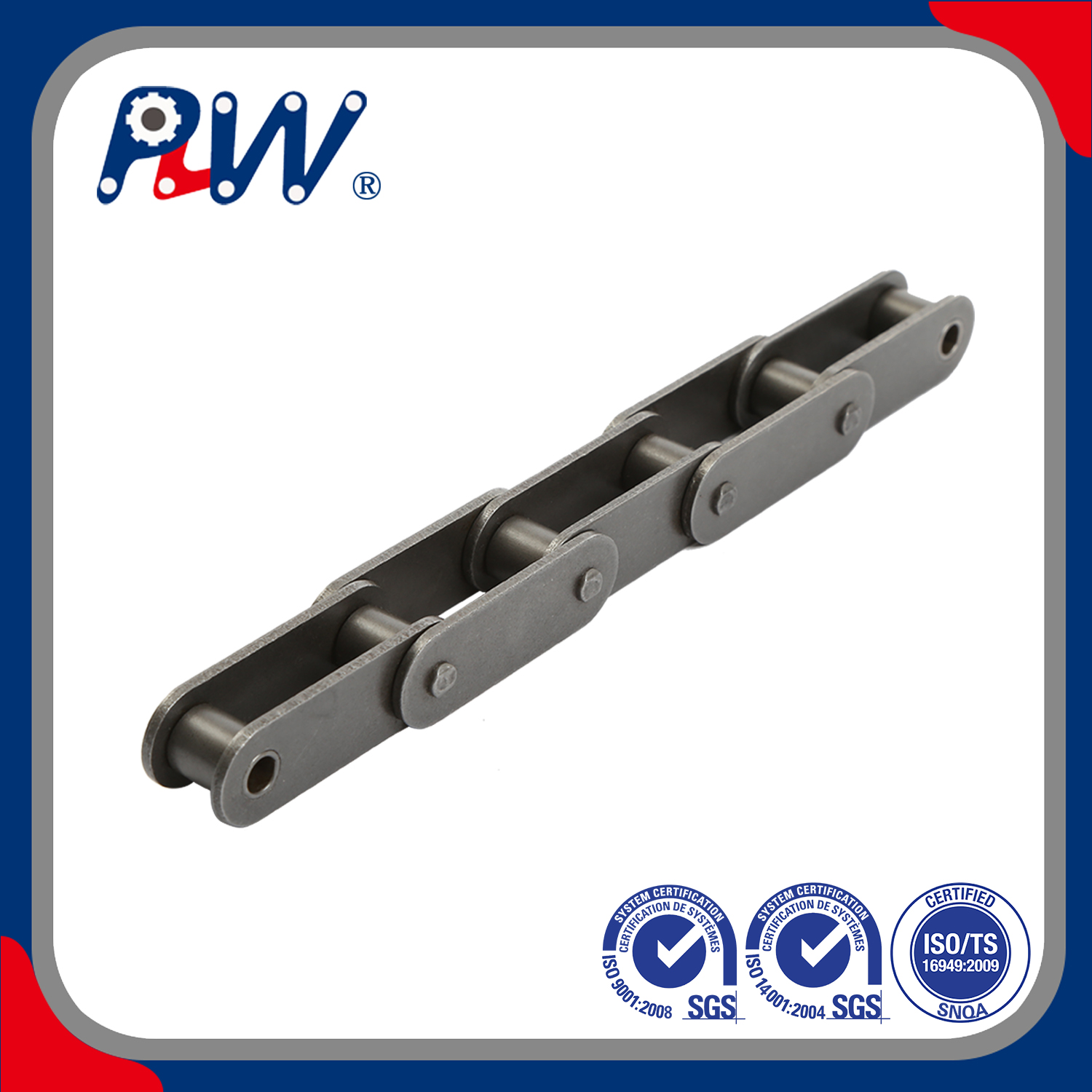
The M Series Conveyor Chain (DIN 8167 / ISO 1977)
Heavy bulk elevators demand rugged engineering solutions. The M series conveyor chain meets these demanding European-standard requirements effortlessly. Engineers evaluate metric pitch dimensions strictly here. They check for robust solid bearing pins constantly. Flanged rollers handle high shock loads easily. Solid pins provide superior internal shear strength. The standardized ISO 1977 dimensions guarantee interchangeability across facilities. This standardization simplifies global maintenance operations. You can swap components predictably without system redesigns. Always assess the side-plate thickness carefully. Thicker plates resist heavy lateral forces efficiently.
Drag Conveyor & Scraper Chains
Abrasive bulk materials destroy weak links rapidly. Ash, cement, and grain require extreme component durability. High-hardness steel alloys perform best here. Welded flight configurations push heavy particulate matter continuously. Evaluate their resistance against highly abrasive environments strictly. Standard chains fail here due to deep dust penetration. Scraper applications use unique joint clearances. These wider clearances allow trapped dirt to escape easily. This self-cleaning action prevents total joint seizure. Evaluate the flight welding quality thoroughly. Broken flights will jam the entire conveyor trough instantly.
| Chain Category | Primary Application | Key Evaluation Metrics |
| Industrial Roller & Flat Top | Packaging lines, lightweight assembly | Pitch dimensions, rail friction, pin wear rates |
| M Series (DIN 8167 / ISO 1977) | Heavy bulk handling, bucket elevators | Metric pitches, shock-load resistance, flanged rollers |
| Drag & Scraper Chains | Abrasive bulk (cement, ash, grain) | High-hardness alloys, welded flights, particulate resistance |
Key Evaluation Dimensions for Technical Procurement
Material & Metallurgical Selection
Carbon steel offers strong baseline performance for dry environments. Stainless steel resists heavy moisture corrosion effectively. Specialized alloys handle extreme industrial heat without warping. You must evaluate surface treatments carefully. Zinc-plated finishes repel light environmental moisture efficiently. Nickel-plated options resist aggressive chemical washdowns safely. Hardened pins withstand abrasive dust penetration flawlessly. Match the metallurgy directly to your exact environmental realities. Using plain carbon steel in a washdown area guarantees rapid oxidation.
Chain-to-Guide Compatibility
Metal links interact constantly against fixed guide rails. This critical physical relationship determines overall system longevity. UHMW-PE (Ultra-High Molecular Weight Polyethylene) wear strips offer excellent track protection. They absorb impact and reduce ambient operating noise. You must assess thermal expansion risks carefully. Plastics expand much faster than steel under continuous heat. If you bolt plastic rails tightly to a steel frame, they buckle. High friction generates excessive heat inside the guide track. Proper material pairing reduces this damaging friction.
Load Capacity & Tensile Strength
Average breaking load never equals the safe working load. You must differentiate these two engineering metrics clearly. Calculate true safety factors using operational realities. You must calculate the total moving mass precisely. Include the weight of the conveying media itself. Add the maximum weight of the transported bulk material. Start and stop frequencies multiply operational stress dynamically. Shock loads require much higher baseline strength. A standard 6:1 safety ratio might fail entirely under severe shock loading.
When to Specify a Customized Conveyor Chain
Identifying the Capability Gap
Standard off-the-shelf options sometimes fall short. They fail to meet exact footprint constraints. Unique attachment needs expose severe capability gaps. Environmental extremes push standard metals beyond their design limits. You must identify these gaps early during system planning. A customized approach solves these unique mechanical challenges.
Customization Vectors
- Specialty attachments: Custom plates manipulate unique products precisely. Engineers use K-type or M-type extended pins often.
- Custom pitch lengths: Unique dimensions retrofit legacy sorting systems effectively. This avoids expensive drive sprocket replacements.
- Hybrid materials: Poly-steel combinations reduce ambient noise generation. They also ensure strict hygiene compliance in food sectors.
Sourcing Risks
You must address specific sourcing risks carefully. Custom designs always increase manufacturing lead times significantly. Minimum order quantities (MOQs) usually apply to special runs. Never skip exact CAD drawing sign-offs. Precision prevents disastrous installation errors. You must verify every dimensional tolerance thoroughly. Once manufactured, custom parts cannot undergo easy field modifications.
Implementation Realities, Maintenance, and Risk Mitigation
Installation Prerequisites
Start by verifying base alignment tolerances precisely. Inspect every sprocket tooth closely. Look for worn flanks or sharp burrs. A worn sprocket destroys a brand-new installation rapidly. Follow initial tensioning procedures strictly. Always reference standard engineering installation manuals. Incorrect alignment causes immediate side-plate gouging. It destroys the mechanical system rapidly.
The "Run-In" Period
Initial mechanical elongation happens naturally. The internal components bed down under operational load. Manage this process during the first 100 hours precisely. Adjust operational tension dynamically as the system settles. Do not ignore this critical adjustment window. Loose tracks will jump the sprocket teeth violently. Tighten them incrementally until they stabilize.
Troubleshooting Common Failures
- Uneven guide rail wear: Look for immediate sprocket misalignment. Unequal strand tension also causes this destructive phenomenon.
- Rapid pin wear: Check for inadequate lubrication penetration. Abrasive contamination often accelerates this internal degradation.
- Drive motor overload: Inspect the track for physical binding. Excessive friction spikes the required pulling force suddenly.
Lubrication Strategies
Dry-running environments require highly specialized care. Use self-lubricating components here. Automated drip setups work well for fast continuous runs. Spray lubrication penetrates deep internal clearances effectively. You must match the oil viscosity to the exact operating temperature. Cold environments require lighter synthetic oils. Extreme heat burns off standard lubricants rapidly. Clean the tracks regularly before applying fresh lubricant.
Vendor Shortlisting Logic and Next Steps
Supplier Validation
Vet manufacturing partners rigorously. Look for verified ISO certifications immediately. Demand strict batch testing transparency upfront. Ask for comprehensive engineering performance data. Request immediate access to CAD files. Reliable suppliers provide this vital data willingly. They understand rigorous global engineering standards. Avoid vendors who obscure their metallurgical sourcing.
Comprehensive Value Analysis
Move beyond simple item comparisons. Evaluate the long-term warranty terms strictly. Check technical support accessibility across different time zones. Verify local inventory availability for critical replacement parts. You need reliable uptime guarantees from your partner. A cheap component becomes disastrous during a prolonged shutdown. Focus entirely on system longevity and operational stability.
Actionable Next Step
Gather specific operational data first. Document environmental conditions clearly. Pull existing system blueprints out for review. Measure your current load profiles accurately. Have this raw data ready before requesting a technical consultation. Engineers need accurate facts to specify correct mechanical components. Act proactively to secure your production line.
Conclusion
The conveyor chain serves as a highly engineered system component. It never functions as a simple commodity. Pairing the correct specification ensures maximum reliability. Aligning proper guide rails minimizes mechanical friction continuously. Strong maintenance protocols extend operational life significantly. Audit your current wear patterns immediately. Consult an engineering specialist soon. Evaluate material upgrades carefully based on environmental demands. Review custom configurations if standard options fail. Proactive evaluation prevents catastrophic failures and ensures smooth daily operations.
FAQ
Q: What is the standard safety factor when sizing a conveyor chain?
A: Engineers typically apply a 6:1 to 10:1 safety ratio. You calculate this based on the ultimate tensile strength versus the maximum working load. Applications facing heavy shock loads or frequent start-stop cycles require the higher 10:1 ratio. Smooth continuous operations can safely utilize a lower 6:1 margin.
Q: How do I know if I need a customized conveyor chain or just a standard attachment?
A: Standard bolt-on attachments fit easily onto off-the-shelf roller links. They work perfectly for basic pushing or lifting tasks. You need engineered-to-order base chains when standard pitches do not match legacy sprockets. Custom designs also become necessary when handling extreme temperatures or highly corrosive chemical washdowns.
Q: What causes a conveyor chain to elongate prematurely?
A: Premature elongation rarely involves actual material stretching. It almost always stems from internal pin and bush wear. Inadequate lubrication acts as the primary culprit here. Abrasive particles enter the bearing area and grind away the metal. This increases the internal clearances, causing the entire length to expand.
Q: Can I run a steel conveyor chain on a UHMW-PE guide track?
A: Yes, you can successfully pair steel against UHMW-PE. This combination lowers overall sliding friction dramatically. However, you must carefully monitor maximum speed limits. Metal generating high friction can melt the plastic. Always account for differing thermal expansion rates when designing the physical guide track layout.

 Español
  English
  العربية
  Français
  Русский
  Português
  Deutsch
  italiano
  日本語
日本語  한국어
한국어  Nederlands
  Tiếng Việt
  ไทย
ไทย  Polski
  Türkçe
  አማርኛ
አማርኛ  ພາສາລາວ
  ភាសាខ្មែរ
  Bahasa Melayu
  ဗမာစာ
ဗမာစာ  தமிழ்
தமிழ்  Filipino
  Bahasa Indonesia
  magyar
  Română
  Čeština
  Монгол
  қазақ
қазақ  Српски
  हिन्दी
  فارسی
فارسی  Kiswahili
  Slovenčina
  Slovenščina
  Norsk
Norsk  Svenska
  українська
  Ελληνικά
  Suomi
Suomi  Հայերեն
  עברית
עברית  Latine
  Dansk
Dansk  اردو
اردو  Shqip
Shqip  বাংলা
বাংলা  Hrvatski
  Afrikaans
  Gaeilge
  Eesti keel
  Māori
Māori  සිංහල
සිංහල  नेपाली
  Oʻzbekcha
  latviešu
  অসমীয়া
  Aymara
  Azərbaycan dili
  Bamanankan
  Euskara
  Беларуская мова
  भोजपुरी


