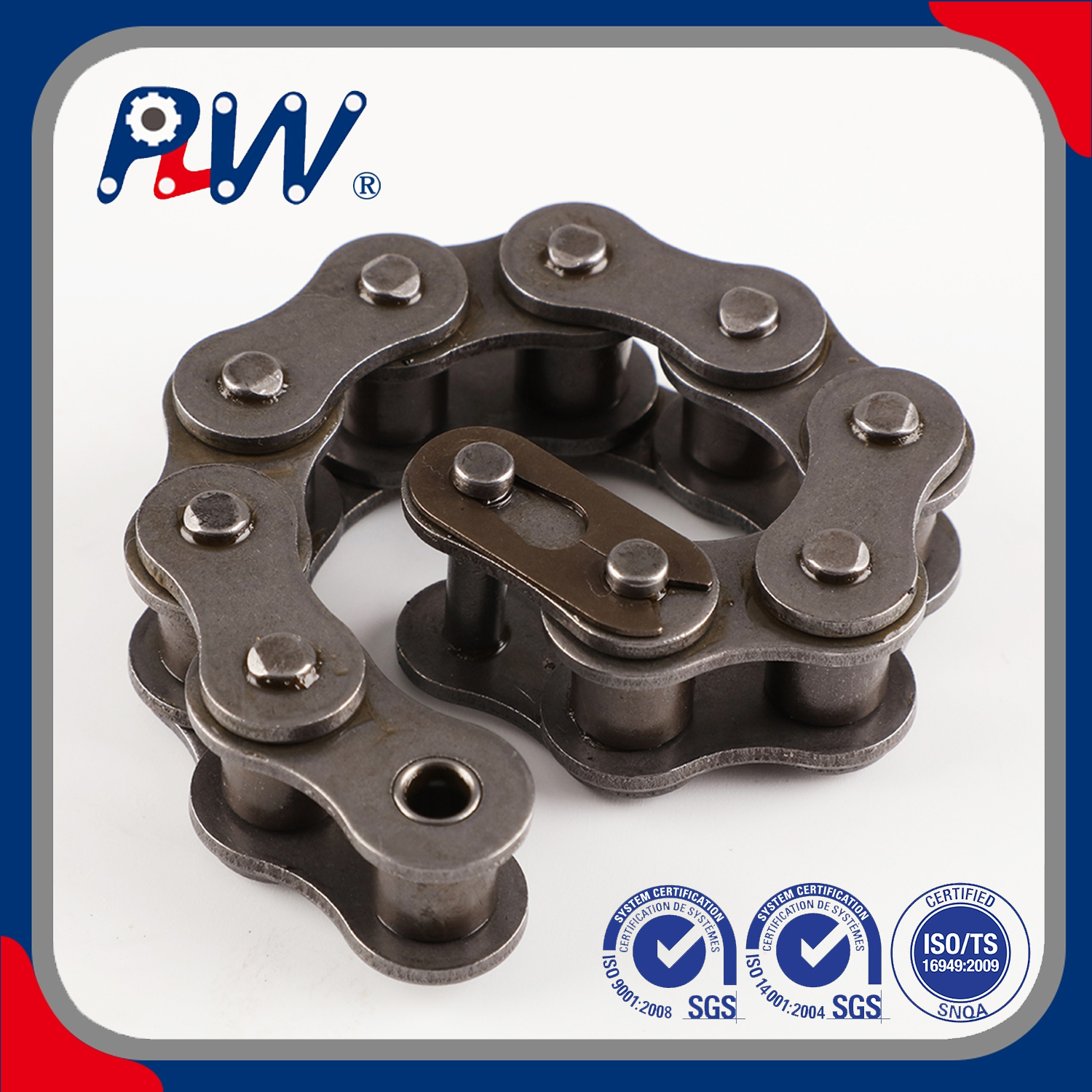
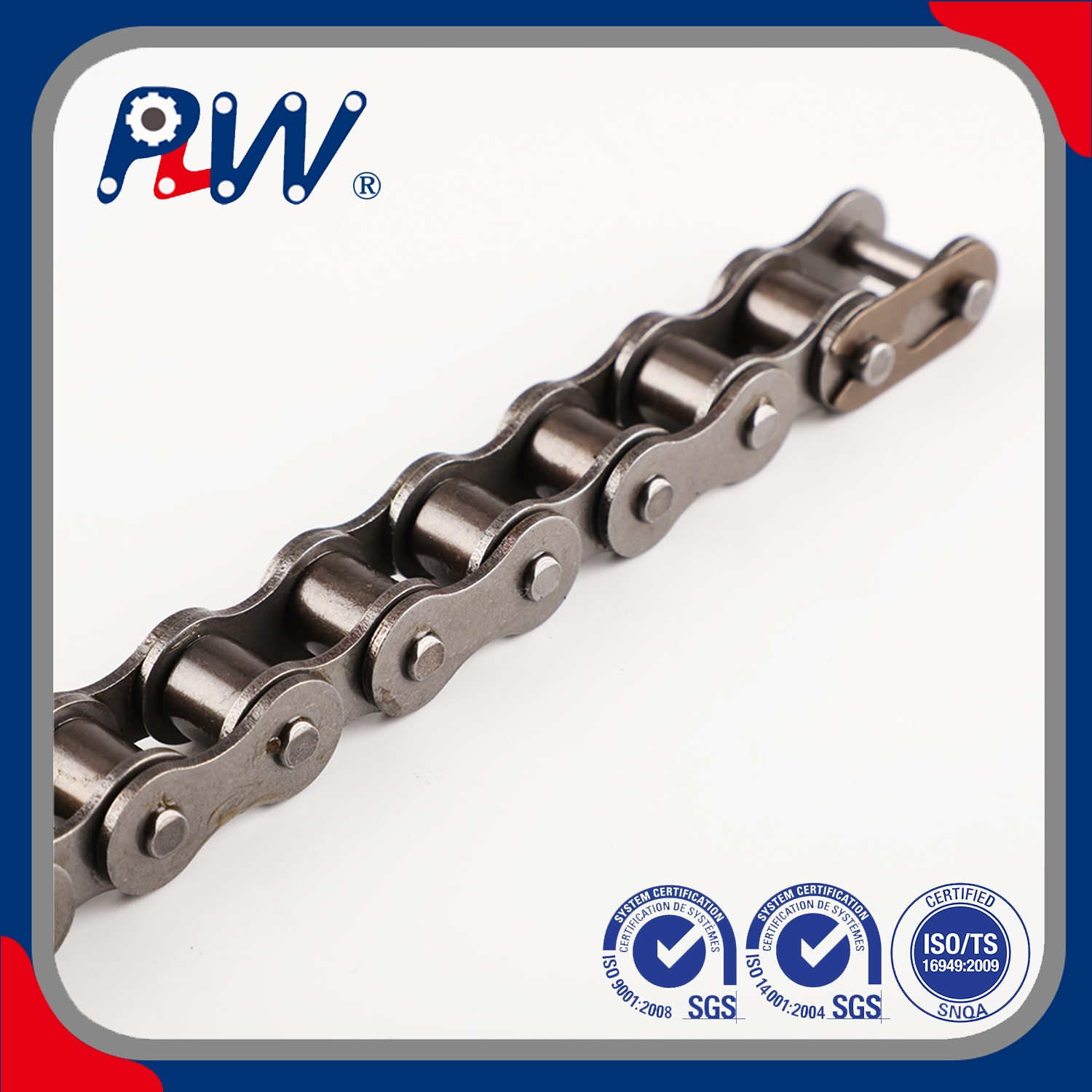
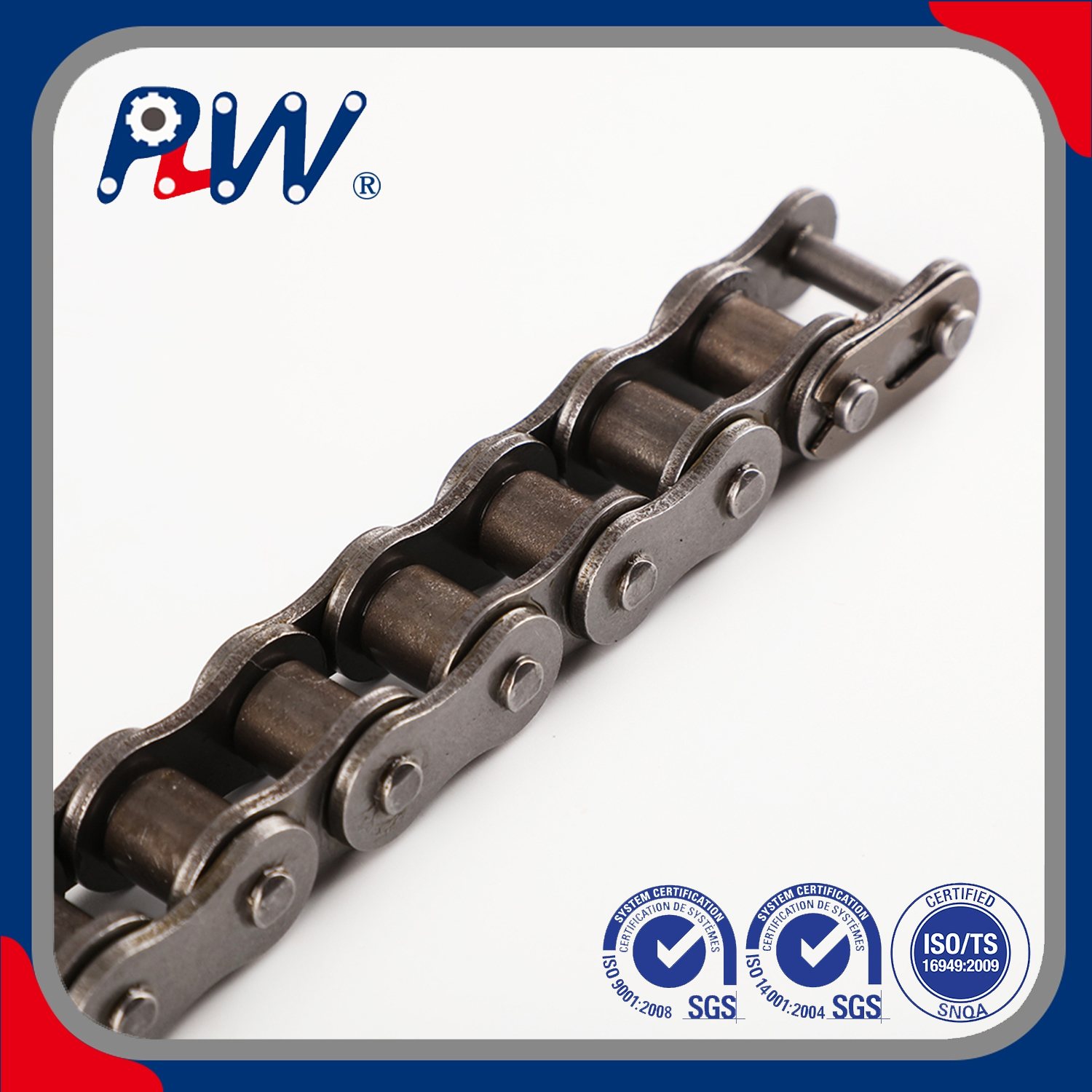
Self-Lubricating Roller Chains are designed to provide reliable and efficient power transmission while reducing the need for frequent external lubrication. The self-lubricating design helps minimize maintenance requirements and supports smooth, stable operation in a wide range of industrial applications.
Manufactured with high-quality materials and precision processing, these roller chains offer excellent wear resistance, durability, and consistent transmission performance. They are suitable for industrial machinery, conveyor systems, automation equipment, material handling systems, and other power transmission applications.
Key Features:
Self-lubricating design for reduced maintenance
Excellent wear resistance and durability
Smooth and reliable operation
Stable power transmission performance
Reduced lubrication requirements
Suitable for continuous-duty industrial applications
Various sizes and specifications available
OEM and customized solutions available
Technical Specifications
Pitch
Roller diameter
Width between inner plates
Pin diameter
Pin length
Inner plate depth
Plate thickness
Transverse pitch
P
d1max
b1min
d2max
Lmax
Lcmax
h2max
t/Tmax
Pt
mm
mm
mm
mm
mm
mm
mm
mm
mm
40SLR
12.700
7.95
7.85
3.96
16.60
17.8
12.00
1.50
-
40SLR-2
12.700
7.95
7.85
3.96
31.00
32.2
12.00
1.50
14.38
40H SLR
12.700
7.95
7.85
3.96
18.80
19.9
12.00
2.03
-
40H SLR-2
12.700
7.95
7.85
3.96
35.50
36.7
12.00
2.03
16.55
40H SLRF1
12.700
7.92
7.85
3.96
17.70
18.9
11.70
2.03/1.50
-
50SLR
15.875
10.16
9.40
5.08
20.70
22.2
15.09
2.03
-
50SLR-2
15.875
10.16
9.40
5.08
38.90
40.4
15.09
2.03
18.11
50H SLR-2
15.875
10.16
9.60
5.08
42.00
43.1
15.09
2.42
19.70
#C 50SLR
15.875
10.16
9.40
5.08
20.70
22.2
15.09
2.03
-
60SLR
19.050
11.91
12.57
5.94
27.50
29.3
18.00
3.25/2.42
-
60SLR-2
19.050
11.91
12.57
5.94
50.30
52.1
18.00
2.42
22.78
12ASLR-3
19.050
11.91
12.57
5.94
71.50
73.3
18.00
2.42
22.78
60H SLR
19.050
11.91
12.57
5.94
29.20
31.0
18.00
3.25
-
60H SLR-2
19.050
11.91
12.57
5.94
55.30
57.1
18.00
3.25
26.11
#C 60SLR
19.050
11.91
12.57
5.94
25.90
27.7
18.20
2.42
-
#C 60SLR-2
19.050
11.91
12.57
5.94
48.80
50.5
18.20
2.42
22.78
80SLR
25.400
15.88
15.75
7.92
32.70
35.0
24.00
3.25
-
80SLR-2
25.400
15.88
15.75
7.92
62.70
64.3
24.00
3.25
29.29
80H SLR
25.400
15.88
15.75
7.92
36.20
38.9
24.00
4.00
-
#C 80SLR
25.400
15.88
15.75
7.92
32.70
35.0
24.00
3.25
-
100SLR
31.750
19.05
18.90
9.53
40.40
44.7
30.00
4.00
-
100SLR-2
31.750
19.05
18.90
9.53
76.40
80.5
30.00
4.00
35.76
#C 20ASLR-2
31.750
19.05
18.90
9.53
76.40
80.5
30.00
4.00
35.76
20ASLR-3
31.750
19.05
18.90
9.53
112.20
116.3
30.00
4.00
35.76
How Does the Self-Lubricating Roller Chain Work?
A self-lubricating roller chain is a roller chain designed to supply lubricant to its own bearing surfaces during operation, reducing or eliminating the need for frequent external oiling.
How it works
A conventional roller chain has several moving contact points:
Pin ↔ bushing
Bushing ↔ roller
Roller ↔ sprocket
In a self-lubricating design, the chain incorporates a lubricating material or lubricant reservoir into components such as the bushings, rollers, or bearing surfaces.
As the chain operates:
The chain articulates around the sprocket. The pins rotate relative to the bushings as each chain link bends.
Heat and pressure cause lubricant to become available at the contact surfaces. Depending on the design, lubricant may migrate from a porous/sintered component, impregnated bearing material, solid lubricant, or internal reservoir.
A thin lubricating film forms between the moving surfaces. This reduces metal-to-metal contact and therefore reduces friction and wear.
The process repeats continuously. As the chain cycles through the sprockets, additional lubricant is supplied to the bearing areas.
Why use one?
Self-lubricating chains are particularly useful where regular lubrication is difficult or undesirable, such as:
Conveyors with limited maintenance access
Food-processing or packaging equipment, when the appropriate certified chain is used
Clean-room or low-contamination environments
Applications where oil contamination is unacceptable
Equipment operating at elevated temperatures or in dusty environments
Automated machinery requiring reduced maintenance
Important distinction
"Self-lubricating" does not necessarily mean the chain never needs maintenance. Different manufacturers achieve self-lubrication in different ways, and the allowable speed, load, temperature, environment, and service life can vary substantially.
Also, some chains marketed as self-lubricating are actually lubrication-free, using special bearing materials rather than continuously releasing conventional oil.
If you tell me where you're using the chain (conveyor, motorcycle, industrial machine, etc.), I can explain the specific self-lubricating mechanism and how it compares with a standard roller chain.
Choose the right chain for the job.
Standards & Compliance
Our self-lubricating roller chains are manufactured in accordance with applicable ISO, DIN, and ASME/ANSI standards, ensuring consistent dimensions, interchangeability, and reliable performance for industrial applications.
Application
Conveyor Systems For continuous conveying equipment where frequent manual chain lubrication increases maintenance workload.
Automation Equipment Suitable for automated production equipment requiring stable transmission and reduced routine maintenance.
Material Handling Equipment For conveying and handling systems where chain access for regular lubrication may be difficult.
Clean Industrial Environments Where excessive external lubricant could contaminate nearby equipment, floors or products.
Hard-to-Access Power Transmission Systems For machinery where routine lubrication points are difficult to reach.
Self-Lubricating Roller Chains are an ideal choice for applications where reliable chain performance, long service life, and reduced maintenance are important.
Need Help Choosing the Right Conveyor Chain? Tell us your application requirements and our engineers will recommend a suitable solution.
A self-lubricating roller chain is designed with special materials or lubrication features that help reduce friction and wear while minimizing the need for frequent external lubrication. It is suitable for applications where regular chain lubrication is difficult or undesirable.
2. How does a self-lubricating roller chain work?
The chain uses specially designed materials or internal lubrication features to provide lubrication at the key contact surfaces during operation. This helps reduce friction between pins, bushings, and rollers, improving wear resistance and service performance.
3. What are the advantages of self-lubricating roller chains?
Key advantages include reduced lubrication requirements, lower maintenance needs, reduced friction and wear, cleaner operation, and reliable performance in suitable industrial applications.
4. Is a self-lubricating roller chain maintenance-free?
Not necessarily. Self-lubricating roller chains generally require less routine lubrication than conventional roller chains, but regular inspection is still recommended. Maintenance requirements depend on the chain design and operating conditions.
5. Can self-lubricating roller chains replace standard roller chains?
In many applications, yes. However, the chain should be selected according to the required load, operating speed, temperature, sprocket configuration, and working environment to ensure proper performance.
6. Are self-lubricating roller chains suitable for high-temperature applications?
Certain models are designed for elevated-temperature applications. The allowable temperature depends on the chain materials and lubrication system. Please contact us with your operating temperature and application requirements for suitable recommendations.
7. What applications are self-lubricating roller chains used for?
They are commonly used in conveyors, packaging machinery, automation equipment, material handling systems, industrial machinery, and other applications where reducing routine lubrication and maintenance is important.
8. Are self-lubricating roller chains corrosion-resistant?
Self-lubrication does not automatically provide corrosion resistance. For humid, outdoor, or corrosive environments, stainless steel, plated, or other corrosion-resistant options may be available depending on the application.
9. Can self-lubricating roller chains be customized?
Yes. Custom options may include chain dimensions, materials, surface treatments, attachments, special rollers, and other application-specific requirements. OEM and custom solutions can be developed based on your drawings or technical specifications.
10. How do I choose the right self-lubricating roller chain?
Key factors include chain pitch, roller diameter, working load, operating speed, temperature, sprocket size, installation conditions, and operating environment. Please provide your application details and required specifications so we can recommend a suitable chain.
Not sure which chain size fits your equipment? Send us your existing chain model, pitch, load, speed and operating environ ent. Our tean can help identify a suitable replacenent.

 Español
  English
  العربية
  Français
  Русский
  Português
  Deutsch
  italiano
  日本語
日本語  한국어
한국어  Nederlands
  Tiếng Việt
  ไทย
ไทย  Polski
  Türkçe
  አማርኛ
አማርኛ  ພາສາລາວ
  ភាសាខ្មែរ
  Bahasa Melayu
  ဗမာစာ
ဗမာစာ  தமிழ்
தமிழ்  Filipino
  Bahasa Indonesia
  magyar
  Română
  Čeština
  Монгол
  қазақ
қазақ  Српски
  हिन्दी
  فارسی
فارسی  Kiswahili
  Slovenčina
  Slovenščina
  Norsk
Norsk  Svenska
  українська
  Ελληνικά
  Suomi
Suomi  Հայերեն
  עברית
עברית  Latine
  Dansk
Dansk  اردو
اردو  Shqip
Shqip  বাংলা
বাংলা  Hrvatski
  Afrikaans
  Gaeilge
  Eesti keel
  Māori
Māori  සිංහල
සිංහල  नेपाली
  Oʻzbekcha
  latviešu
  অসমীয়া
  Aymara
  Azərbaycan dili
  Bamanankan
  Euskara
  Беларуская мова
  भोजपुरी