Introduction
The #40 and #41 roller chains may look alike, but their subtle differences are essential for selecting the right one. Both are widely used in machinery and power transmission systems, but these differences can greatly affect performance, durability, and costs. In this article, we’ll explore the key distinctions between #40 vs #41 Roller Chain and help you choose the best option for your needs.
Key Differences Between #40 and #41 Roller Chains
Pitch and Width
Both #40 and #41 roller chains share the same 1/2-inch pitch, meaning the distance between the pins is the same for both. However, the main difference lies in the inner plate width: #40 has a wider inner plate at 0.312 inches, while #41 is narrower at 0.25 inches. This difference in width gives #40 greater strength and load capacity, making it more suitable for heavy-duty applications.
Roller Diameter and Size
Another notable difference between the two chains is their roller diameter. #40 typically has a larger roller diameter (0.312 inches) compared to #41 (0.306 inches). The larger diameter of #40 contributes to its ability to handle heavier loads and provides more durability in industrial environments. While #41 is slightly smaller, its roller size makes it ideal for precision machinery where space and weight are limited.
Strength and Durability
One of the most significant differences between #40 and #41 is their tensile strength. #40 roller chain can withstand higher tensile forces (ranging from 3,700 to 4,079 lbs), making it better suited for heavy-duty applications like industrial machinery and conveyors. On the other hand, #41 has a lower tensile strength (ranging from 2,400 to 2,866 lbs), making it more appropriate for lighter-duty applications where less strength is required.
Weight and Construction
#40 is generally heavier per foot compared to #41 due to its wider plates and thicker rollers. This extra weight provides more strength but may be a disadvantage in applications where weight is a concern. In contrast, #41 is lighter, which can be advantageous in high-speed applications or environments with space limitations. Its narrower build allows it to be used in more compact machinery.
Suitable Applications for #40 Roller Chain
Heavy Machinery
#40 roller chain is designed for heavy-duty machinery that operates under significant loads. Industries such as mining, agriculture, and construction benefit from #40’s robust construction, making it ideal for high-torque applications and environments where durability is essential. For example, heavy machinery used in construction or industrial conveyors that carry substantial loads rely on the strength of #40 chains to function smoothly.
Durability in Demanding Conditions
The wider inner plates and larger rollers of the #40 chain allow it to perform well in harsh conditions, such as high-impact and abrasive environments. Its superior tensile strength and resistance to wear make it suitable for long-term use in demanding applications. #40’s design ensures longevity, reducing the frequency of replacements and minimizing downtime.
Cost Considerations
While #40 comes at a higher cost due to its robust construction, the chain’s durability and long-term performance make it a more cost-effective option in heavy-duty applications. Over time, the reduced need for replacements and maintenance justifies the initial investment, making it a better choice for industries requiring dependable, long-lasting performance.
Case Study: Industrial Machinery Performance
A manufacturing plant recently upgraded from #41 to #40 roller chains in their conveyor systems. The switch resulted in a 20% reduction in downtime, improving production efficiency and reducing maintenance costs. The stronger and more durable #40 chain allowed the system to handle higher loads, leading to better overall performance in the long run.
Suitable Applications for #41 Roller Chain
Precision Machinery
#41 roller chain excels in applications where precision and compact design are critical. It is ideal for high-speed machines, such as textile equipment, packaging machinery, and small conveyors. The narrow profile of the #41 chain makes it well-suited for lightweight machinery where space constraints are a concern. In high-speed environments, the reduced weight and smaller size of #41 provide a more precise and efficient solution.
Compact Design and Weight Sensitivity
For applications where weight and space are major factors, #41’s narrow profile and lighter weight make it the go-to choice. The chain’s compact size allows it to fit into machinery with limited space, ensuring efficient operation without compromising performance. Small-scale manufacturing, where machinery needs to operate in tight spaces, benefits from #41’s design.
Cost-Effective for Lighter Loads
In contrast to the #40, #41 is more cost-effective for lighter-duty applications. Its lower tensile strength makes it a better option when the machinery doesn’t experience significant load-bearing forces. Industries with lower power transmission requirements, such as food packaging or light manufacturing, often choose #41 to reduce upfront costs and maintenance.
Case Study: Light Manufacturing Setup
In a textile manufacturing plant, #41 roller chains were selected for their cost-effectiveness and precision. The chains were used in the machinery that handles light loads and high-speed operation, resulting in smooth performance and minimal maintenance. The #41’s compact size allowed the machinery to function optimally in limited space.
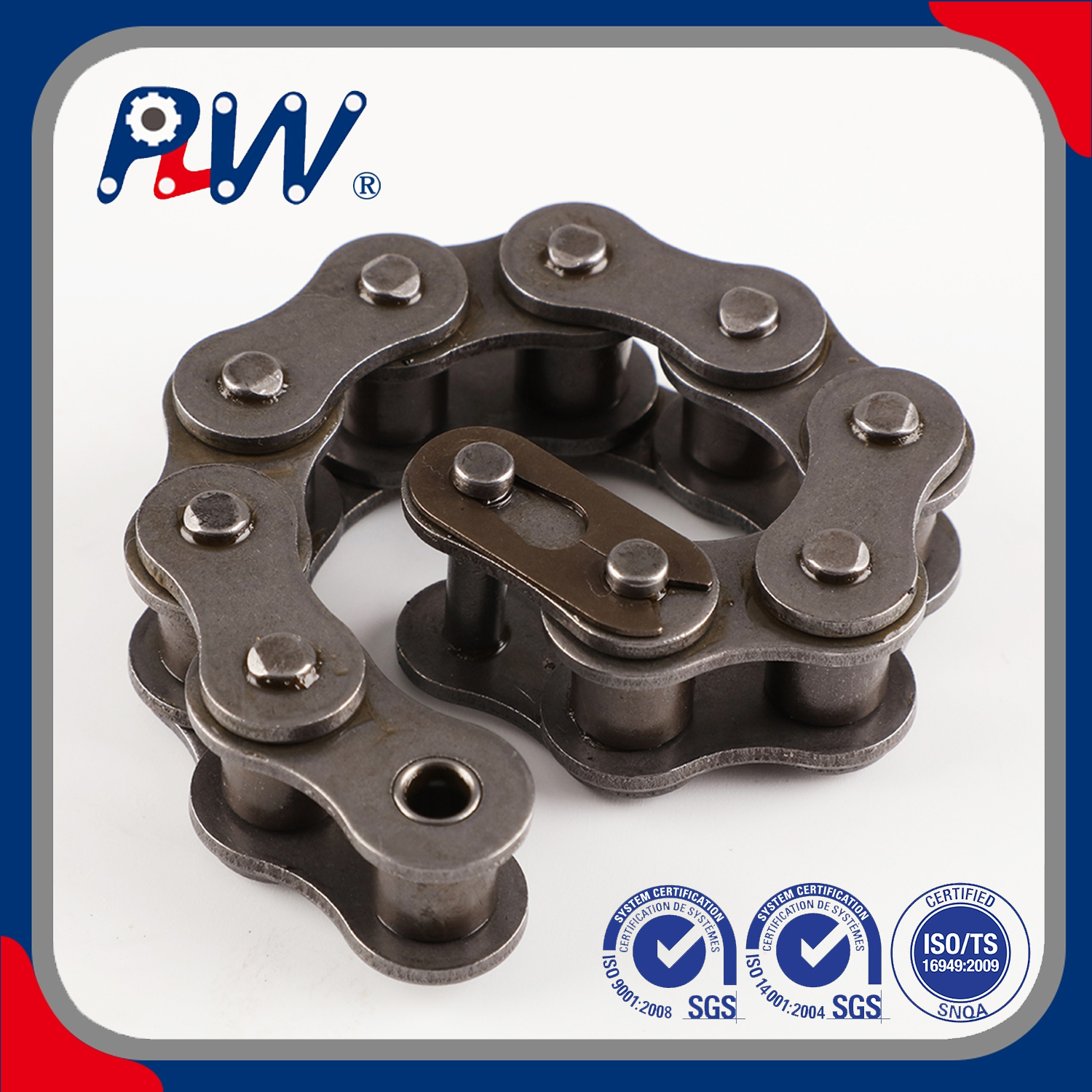
Comparing Load Capacities: #40 vs #41
The #40 and #41 roller chains have significant differences in load capacity, design, and application scenarios. Understanding their specific characteristics and the impact of misuse helps in selecting the right chain for ensuring long-term reliable machinery performance.
| Feature | #40 Roller Chain | #41 Roller Chain |
| Load Capacity | Higher tensile strength (3,700 - 4,079 lbs), ideal for heavy loads. Handles large volumes with ease. | Lower tensile strength (2,400 - 2,866 lbs), better for lighter loads. |
| Construction Impact on Load | Broader plates and thicker rollers distribute the load evenly, reducing stress and ensuring longevity. | Narrower design means less load distribution, limiting its capacity for heavy-duty applications. |
| Typical Use | Used in heavy-duty industrial conveyors, agricultural machinery, and equipment that carry large volumes of goods. | Best for small conveyors, high-speed machines, or environments where load-bearing is minimal. |
| Overloading Consequences | Rarely overloaded in typical applications due to high strength. Less likely to experience elongation. | Overloading leads to elongation, reducing chain lifespan and causing potential failure. |
| Maintenance and Durability | High durability, less frequent maintenance required in heavy-duty settings. | Prone to wear and requires more frequent maintenance in demanding applications. |
| Impact of Misuse | Suitable for high-load environments; improper use is unlikely due to its high strength. | Using #41 in heavy-duty environments can cause premature wear, requiring frequent replacements and increasing costs. |
Tip:Always choose the appropriate roller chain based on load requirements and application conditions. Incorrect chain selection may lead to premature wear and high maintenance costs, affecting the efficiency of your equipment.
Durability and Maintenance Considerations
Durability of #40
#40 roller chain is designed for durability in demanding environments, thanks to its thicker plates and larger rollers. These features allow it to withstand high-stress conditions, such as heavy machinery or industrial conveyors. Its robust construction reduces the frequency of replacements, making it ideal for long-term use in high-load applications. #40 chains provide superior longevity in harsh conditions like high temperatures, dust, and moisture, ultimately lowering overall maintenance and operational costs for industries that rely on heavy-duty equipment.
Maintenance Frequency for #41
While #41 roller chain is lighter and easier to maintain, it is more susceptible to wear in heavy-duty or high-torque environments. Due to its narrower design and lower tensile strength, #41 requires more frequent inspections and maintenance to prevent elongation, misalignment, or failure. Keeping the chain clean, properly lubricated, and regularly checked for wear can extend its life, but in demanding applications, it may need to be replaced more often. #41 is best suited for precision machinery and lighter loads, where wear and tear are less intense.
When to Replace Each Type
| Chain Type | When to Replace | Signs of Wear | Impact of Delayed Replacement | Replacement Tips |
| #40 Roller Chain | Replace when the chain elongates beyond its allowable limit. | Excessive elongation, visible wear on the plates and rollers, loss of tension. | Failure to replace on time can cause misalignment, uneven wear on sprockets, and operational disruptions in heavy machinery. | Regularly check elongation; use proper maintenance intervals to catch wear early. |
| #41 Roller Chain | Replace when elongation exceeds acceptable limits. | Noticeable elongation, reduced performance, and chain skipping on sprockets. | Delayed replacement can cause chain failure, leading to equipment downtime and costly repairs. | Ensure frequent inspections, especially in high-speed or high-precision applications. |
| General Wear Indicators | Both chains need replacement when elongation exceeds 1.5% for fixed center distance or 3% for adjustable distances. | Chain elongation, noise, poor engagement with sprockets, loss of smooth operation. | Using worn chains can lead to equipment damage, frequent downtimes, and reduced overall lifespan of components. | Use a chain wear gauge to measure elongation accurately and replace chains before failure. |
Tip:Regular monitoring and early replacement of roller chains can prevent damage to machinery, reduce downtime, and save on costly repairs. Always adhere to recommended maintenance schedules to maximize operational efficiency.
Proper Care and Lubrication
Proper lubrication is essential to maintaining both #40 and #41 chains. Lubricating the chains reduces friction, preventing unnecessary wear and extending their lifespan. Regular cleaning and inspections are also recommended to remove debris and prevent damage to the rollers and plates.
Sprocket Compatibility and Interchangeability
Why You Can’t Interchange #40 and #41 on the Same Sprockets
Although #40 and #41 roller chains share a 1/2-inch pitch, their differences in roller width and diameter make them incompatible with the same sprockets. The #40 chain has a wider roller diameter and plate width, while #41 is narrower. This discrepancy prevents proper seating on the sprocket teeth, leading to poor engagement, inefficient power transfer, and accelerated wear. Attempting to interchange them can result in operational inefficiencies and potential damage to both the chain and sprockets.
Potential Issues with Using #41 on #40 Sprockets
Using a #41 roller chain on a #40 sprocket may appear feasible, but the narrower roller of the #41 chain doesn’t fit securely into the wider sprocket, causing misalignment. This misalignment leads to uneven wear on both the sprocket and chain, reducing the lifespan of both components. Over time, this can cause skipping, noisy operation, and poor performance. It’s crucial to use the correct chain for the sprocket to ensure optimal function and prevent unnecessary repairs.
Proper Sprocket Matching for Optimal Performance
For smooth operation and to maximize the lifespan of both the chain and sprocket, always ensure the correct sprocket is used with the appropriate roller chain. Each chain type, whether #40 or #41, requires a sprocket that matches its specific roller width and diameter. Refer to the manufacturer’s specifications when selecting sprockets, as using mismatched components will lead to inefficiency, increased wear, and potential mechanical failure. Proper sprocket and chain pairing ensures consistent power transmission and minimizes downtime.
Conclusion
The primary differences between #40 and #41 roller chains lie in their width, strength, applications, and weight. #40 is better suited for heavy-duty, high-torque applications, while #41 is ideal for precision work in compact spaces. By understanding these distinctions, you can make an informed decision based on your specific needs. Choosing the right chain ensures the efficient and reliable operation of your machinery, maximizing performance and minimizing downtime. For industries requiring durable and reliable solutions, HANGZHOU PERPETUAL MACHINERY & EQUIPMENT CO., LTD, offers high-quality roller chains, providing products designed to meet demanding applications while ensuring long-term value.
FAQ
Q: What is the main difference between #40 vs #41 Roller Chain?
A: The main difference lies in the width and tensile strength. #40 Roller Chain has a wider inner plate and higher tensile strength, making it ideal for heavy-duty applications, while #41 Roller Chain is narrower and better suited for lighter loads and precision machinery.
Q: When should I choose #40 vs #41 Roller Chain?
A: Choose #40 Roller Chain for high-torque, heavy-duty machinery, and #41 Roller Chain for lighter, precision applications where space and weight are factors. The #40 vs #41 Roller Chain decision depends on the load and operational requirements.
Q: Can I use #40 Roller Chain with #41 sprockets?
A: No, #40 Roller Chain and #41 Roller Chain are not interchangeable due to differences in roller width and diameter, which can lead to misalignment and poor performance.
Q: What are the cost differences between #40 vs #41 Roller Chain?
A: #40 Roller Chain is more expensive due to its durability and higher strength, making it suitable for heavy-duty applications. In contrast, #41 Roller Chain is more cost-effective for lighter loads and lower-stress environments.
Q: How do I maintain #40 vs #41 Roller Chain?
A: Both chains require regular cleaning and lubrication. #40 Roller Chain needs less frequent maintenance due to its durability, while #41 Roller Chain requires more attention in high-speed or high-precision settings to prevent wear.

 Español
  English
  العربية
  Français
  Русский
  Português
  Deutsch
  italiano
  日本語
日本語  한국어
한국어  Nederlands
  Tiếng Việt
  ไทย
ไทย  Polski
  Türkçe
  አማርኛ
አማርኛ  ພາສາລາວ
  ភាសាខ្មែរ
  Bahasa Melayu
  ဗမာစာ
ဗမာစာ  தமிழ்
தமிழ்  Filipino
  Bahasa Indonesia
  magyar
  Română
  Čeština
  Монгол
  қазақ
қазақ  Српски
  हिन्दी
  فارسی
فارسی  Kiswahili
  Slovenčina
  Slovenščina
  Norsk
Norsk  Svenska
  українська
  Ελληνικά
  Suomi
Suomi  Հայերեն
  עברית
עברית  Latine
  Dansk
Dansk  اردو
اردو  Shqip
Shqip  বাংলা
বাংলা  Hrvatski
  Afrikaans
  Gaeilge
  Eesti keel
  Māori
Māori  සිංහල
සිංහල  नेपाली
  Oʻzbekcha
  latviešu
  অসমীয়া
  Aymara
  Azərbaycan dili
  Bamanankan
  Euskara
  Беларуская мова
  भोजपुरी


