Is a chain still usable if it is only one pitch off? That small mismatch is why many people start looking into an Offset Link. In this article, you will learn what an Offset Link does, when it works well, and what limits you should understand before using one.
What Is an Offset Link Designed to Do?
What an Offset Link Is
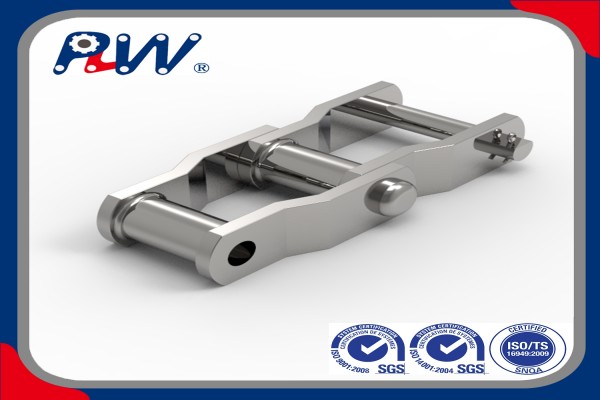
An Offset Link is a special roller chain component used when a standard chain assembly does not match the required length. In simple terms, it lets you make a small but important adjustment without replacing the entire chain. In many industrial setups, roller chains are built from regular inner and outer links that naturally create even-numbered assemblies. That works well in most cases, but not every machine leaves room for an exact standard fit. When the chain ends up just one pitch too short or too long for the application, an Offset Link fills that gap.
You may also see this part referred to as a half link or crank link. These alternate names are useful because buyers, maintenance teams, and equipment manuals do not always use the same term. Even so, the function remains the same: it changes the chain assembly by a single pitch so the chain can be installed correctly in situations where standard link combinations fall short. Rather than acting as a general-purpose replacement for all chain links, it serves a very specific role inside the system.
Why Standard Chain Length Is Sometimes a Problem
Standard roller chain assemblies are practical, but they are not always precise enough for real-world equipment. Machines rarely wear, stretch, or get repaired under ideal conditions, and replacement parts do not always line up perfectly with the original setup. A chain may be almost correct in length and still fail to tension properly. In those cases, being off by a single pitch can create installation problems, poor alignment, or unnecessary strain on the drive system.
The reason this happens is straightforward: standard chain construction is not designed to solve every exact-fit situation. That is where an Offset Link becomes useful. It gives maintenance teams a way to correct a length mismatch that standard link combinations cannot solve on their own. Instead of forcing an incorrect fit or immediately replacing the full chain assembly, they can use this part to achieve the required connection more efficiently.
Chain situation | Why it becomes a problem | How an Offset Link helps |
Chain is one pitch too short | The chain cannot be connected at the required length | Adds the missing pitch needed for installation |
Chain is one pitch too long after adjustment | Tension and fit may be incorrect | Allows a more precise assembly change |
Equipment needs a non-standard chain setup | Standard even-link construction may not work | Makes an odd-numbered chain assembly possible |
In practical terms, the Offset Link is designed to solve a fit problem, not simply add another chain part. That specific purpose is what makes it valuable in chain adjustment and repair work.
When Is an Offset Link the Right Choice?
For Small Chain Length Adjustments
The most common reason to use an Offset Link is to correct a chain length that is off by just one pitch. In practice, this happens more often than many operators expect. A replacement chain may be close to the required length but still not connect properly once it is installed on the sprockets. In that situation, the problem is not a completely wrong chain selection; it is a small mismatch that prevents correct fit and tension. An Offset Link is designed for that exact gap, which is why it is often the fastest and most practical answer when the chain only needs a minor adjustment.
This matters because a roller chain system depends on correct engagement and consistent tension. If the assembly is slightly off, the chain may sit too tight, run too loose, or become harder to install than expected. Using an Offset Link allows the installer to change the chain assembly without starting over with a completely different length. That is the main reason this part remains relevant in maintenance work: it solves a small but disruptive fit problem with a targeted mechanical change rather than a full replacement decision.
For Fast Repairs or Special Chain Setups
An Offset Link is also a practical choice when speed matters more than building the most ideal long-term configuration. In repair situations, a damaged chain can stop production, interrupt material flow, or leave a machine unavailable until the correct replacement arrives. When the rest of the chain is still serviceable, installing an Offset Link can help restore operation faster than replacing the entire assembly. That does not mean it should be treated as the answer to every failure, but in real maintenance conditions, getting a system running again quickly is often a major priority.
Another situation where this part becomes useful is when the chain assembly must end in an odd number of pitches. Standard roller chain construction does not always make that possible with regular links alone. An Offset Link gives technicians a way to build the chain to the required length and layout when the application calls for a non-standard assembly. This is less about convenience and more about achieving a workable configuration that standard link combinations cannot provide.
A practical way to judge whether the part makes sense is to look at the job in terms of immediate need:
● The chain is almost the correct length but cannot be connected as installed
● The equipment must be returned to service quickly after localized chain damage
● The assembly requires an odd-numbered chain length that standard links cannot create
● The adjustment needed is small and specific rather than a full redesign of the chain setup
These are the conditions where an Offset Link is usually chosen not because it is the most advanced option, but because it directly solves the problem in front of the operator.
When It Is Better to Use Another Solution
Even though an Offset Link is useful, it is not the best choice for every application. Some chain systems operate under high loads, continuous stress, or demanding duty cycles where long-term strength matters more than installation convenience. In those environments, relying on an Offset Link may not be the smartest option if a full standard chain assembly can be installed instead. The part is valuable because it solves specific fit and repair issues, but that value should be weighed against the operating demands of the equipment.
Situation | Offset Link is a good choice | Another solution is better |
Chain length is off by one pitch | Yes | No |
Quick repair is needed to reduce downtime | Yes | No |
Odd-numbered chain assembly is required | Yes | No |
Application involves maximum load or high long-term stress | No | Yes |
Full chain replacement is already necessary | No | Yes |
If the chain is heavily worn, badly damaged, or being used in an application where durability is critical, replacing the chain with a proper standard setup is usually the safer path. The key point is not whether an Offset Link can work, but whether it remains the right choice once load, wear, and service expectations are taken seriously.
What Are the Main Benefits and Drawbacks of an Offset Link?
Why People Use an Offset Link
An Offset Link is popular because it solves a specific chain problem quickly, and in maintenance work, speed often matters as much as the part itself. When a roller chain does not fit by a single pitch, replacing the entire assembly can take more time, cost more money, and create unnecessary downtime. In that situation, an Offset Link offers a much more direct fix. It allows the chain to be adjusted or repaired without rebuilding the whole setup, which is why it is often chosen in practical service conditions rather than ideal workshop conditions.
Cost is another major reason people use it. A small corrective part is usually far less expensive than replacing a full chain, especially when the existing chain is still in usable condition. That makes the Offset Link attractive for operations that want to control maintenance expenses while keeping equipment running. The savings are not limited to the purchase price alone. Labor time, machine stoppage, and production delays all add to the real cost of a chain issue, so a part that reduces those disruptions can be valuable even if it is not the most permanent solution.
In many cases, its appeal comes down to three practical advantages:
● It offers a fast way to correct a small but critical chain length problem
● It can reduce repair cost when the rest of the chain does not need replacement
● It helps restore equipment operation with less interruption to normal work
These benefits explain why Offset Links remain common in repair and adjustment tasks. They are not used because they improve every chain system, but because they solve a narrow problem with relatively little time and effort.
The Main Trade-Off to Understand
The biggest drawback of an Offset Link is that it is generally weaker than a standard chain link arrangement. That difference matters because roller chain performance depends on balanced load distribution across the assembly. When one part of the chain is structurally less robust, it can become the point where stress concentrates first. In light-duty or temporary situations, that may be an acceptable compromise. In demanding applications, however, it can affect both service life and confidence in the overall chain setup.
This is why an Offset Link should be seen as a practical solution rather than an automatic best practice. A chain that runs under heavy load, high shock, or continuous industrial duty places more pressure on every component, including the connection point. Under those conditions, even a small reduction in strength can matter over time. More frequent inspection may be necessary, and operators may prefer a full standard chain arrangement when long-term reliability is the main goal.
Factor | Benefit of an Offset Link | Drawback to consider |
Maintenance response | Faster adjustment or repair | May encourage short-term fixes in demanding applications |
Cost | Lower immediate replacement cost | Savings may not outweigh shorter service life in hard use |
Equipment uptime | Less downtime during installation | Reliability can become a concern under sustained load |
Chain performance | Useful for solving exact-fit problems | Generally weaker than a standard link arrangement |
The real trade-off is simple: an Offset Link improves convenience, but that convenience comes with a strength compromise that becomes more important as operating demands increase.
How Do You Choose and Use an Offset Link Correctly?
How to Check If the Offset Link Fits Your Chain
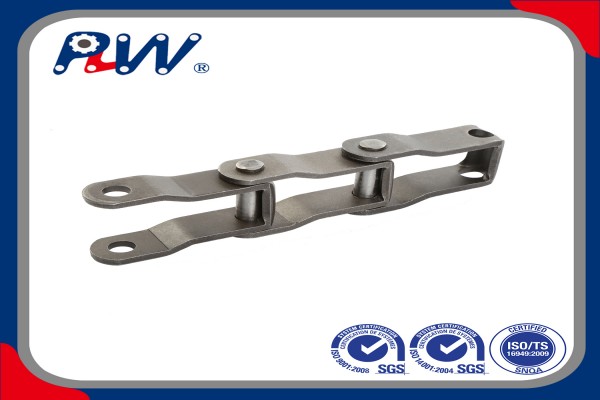
Choosing the right Offset Link starts with compatibility, not convenience. Even if the link appears close in size, it still has to match the chain system correctly to work as intended. The first point to verify is chain size, because an Offset Link is made to fit a specific roller chain dimension rather than act as a universal connector. The second is pitch, since the entire reason for using this part is to correct chain length by one pitch. If the pitch does not match the chain already installed, the link will not solve the fit problem and may create a larger one. Application suitability matters just as much. A chain used in light-duty service does not place the same demands on the link as one running continuously under heavy industrial load.
That is why selection should be treated as a mechanical match, not a quick substitution. An Offset Link that fits physically but does not suit the operating conditions can still lead to poor performance, faster wear, or avoidable maintenance issues. Before installation, the goal is to confirm that the link belongs in that chain system in both dimension and service demand.
What to check | Why it matters |
Chain size | The Offset Link must match the chain’s basic dimensions |
Pitch | The link is intended to correct a one-pitch length issue |
Chain standard | ANSI or metric mismatch can prevent proper fit |
Operating load | Higher loads place greater stress on the link |
Service environment | Corrosion, moisture, or demanding duty can affect suitability |
What Matters Most During Installation
Installation should remain simple, but it still requires care. An Offset Link is often used because it offers a faster adjustment or repair, yet speed should never replace correct positioning. The most important point is alignment. The link needs to sit properly within the chain assembly so it moves in line with the surrounding links rather than creating uneven motion through the drive system. If the side plates or pin are set incorrectly, the chain may bind, wear unevenly, or run less smoothly than expected.
Secure fastening is the second priority. Once the link is installed, the retaining components must be fixed correctly so the assembly remains stable during operation. A loose connection can compromise the whole repair, while overhandling the part during installation may damage it before the chain even returns to service. After the link is secured, the chain should always be checked for free and consistent movement. This final check is not optional. A chain that does not travel smoothly after installation is a sign that fit, alignment, or fastening needs to be corrected before normal operation continues.
A Simple Rule Before You Use One
A practical rule is to ask two questions before choosing an Offset Link: Does it fit the chain correctly, and does the application allow for its limitations? That rule matters because a correct size alone is not enough. An Offset Link may solve the immediate assembly problem, but the operating demands still determine whether it is an appropriate choice.
Use it when the chain needs a precise adjustment or a practical repair and the application supports that decision. Be more cautious when the system runs under high load, constant stress, or conditions where long-term durability matters more than fast installation. In those cases, the smarter choice may be a standard chain arrangement rather than the quickest available fix.
Conclusion
An Offset Link is a practical way to solve specific chain length and repair issues. It works best when chosen for the right application and load conditions. HANGZHOU PERPETUAL MACHINERY & EQUIPMENT CO., LTD. provides reliable chain products with strong performance, helping users improve fit, reduce downtime, and support long-term equipment operation.
FAQ
Q: What is an Offset Link in a roller chain?
A: An Offset Link is a chain component used to adjust roller chain length by one pitch.
Q: When should you use an Offset Link?
A: Use an Offset Link when a chain needs a small length correction or an odd-numbered assembly.
Q: Is an Offset Link as strong as a standard link arrangement?
A: No, an Offset Link is generally weaker, so it may not suit heavy-load or long-term use.
Q: Can an Offset Link be used for chain repair?
A: Yes, an Offset Link can support quick repair when replacing the full chain is unnecessary.

 Español
  English
  العربية
  Français
  Русский
  Português
  Deutsch
  italiano
  日本語
日本語  한국어
한국어  Nederlands
  Tiếng Việt
  ไทย
ไทย  Polski
  Türkçe
  አማርኛ
አማርኛ  ພາສາລາວ
  ភាសាខ្មែរ
  Bahasa Melayu
  ဗမာစာ
ဗမာစာ  தமிழ்
தமிழ்  Filipino
  Bahasa Indonesia
  magyar
  Română
  Čeština
  Монгол
  қазақ
қазақ  Српски
  हिन्दी
  فارسی
فارسی  Kiswahili
  Slovenčina
  Slovenščina
  Norsk
Norsk  Svenska
  українська
  Ελληνικά
  Suomi
Suomi  Հայերեն
  עברית
עברית  Latine
  Dansk
Dansk  اردو
اردو  Shqip
Shqip  বাংলা
বাংলা  Hrvatski
  Afrikaans
  Gaeilge
  Eesti keel
  Māori
Māori  සිංහල
සිංහල  नेपाली
  Oʻzbekcha
  latviešu
  অসমীয়া
  Aymara
  Azərbaycan dili
  Bamanankan
  Euskara
  Беларуская мова
  भोजपुरी


