Introduction
Are roller chain and engineered chain really interchangeable? Not always, and choosing the wrong one can lead to faster wear, more maintenance, and costly downtime. In this article, you will learn how they differ, where each works best, and how to choose the right chain for your application.
What Makes Roller Chain and Engineered Chain Different in the First Place?
Roller chain is designed for efficient, standardized transmission
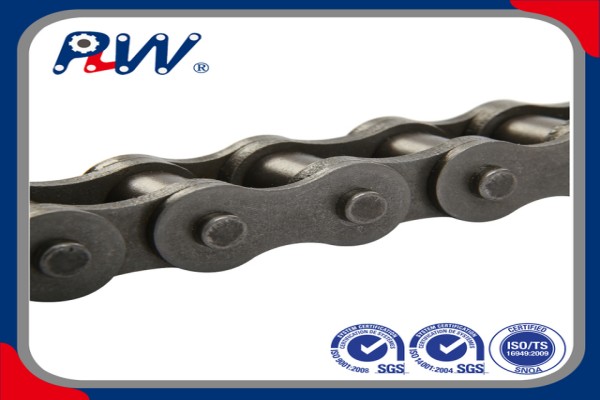
At its core, roller chain is built for smooth and efficient power transfer between sprockets. Its familiar construction of pins, bushings, rollers, and side plates helps reduce friction during engagement, which supports stable motion and dependable transmission in equipment that runs at moderate to relatively high speeds. Another reason roller chain remains widely used is standardization. Many roller chain sizes follow widely recognized dimensional systems, which makes sourcing, replacement, and system matching much easier for manufacturers and maintenance teams. In practice, that means less guesswork when selecting sprockets, less downtime during replacement, and better interchangeability across common industrial applications. This is why roller chain is often the default choice in machinery where consistency, serviceability, and predictable performance matter just as much as load capacity.
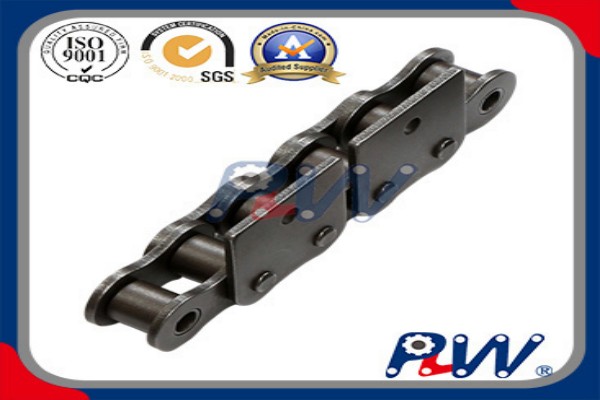
Engineered chain is designed for strength under demanding conditions
Engineered chain serves a different purpose from the start. It is not simply a heavier-looking version of roller chain, but a category developed for environments where loads are higher, shock is more severe, and working conditions are harsher. Depending on the application, engineered chain may use larger pitch dimensions, thicker components, increased clearances, or specialized link forms that help it keep working in the presence of dirt, abrasives, or impact loading. Rather than prioritizing compact standardization or high-speed transmission, it is designed to keep operating where stress is constant and conditions are unforgiving. This makes it more suitable for heavy conveying, dragging, lifting, and material handling systems that would wear out a standard transmission-focused chain much faster.
Chain type | Primary design priority | Typical operating profile | Best fit |
Roller chain | Efficient, standardized power transmission | Smoother motion, moderate-to-higher speed, controlled conditions | General machinery and drive systems |
Engineered chain | Strength and durability under severe duty | Lower speed, heavier load, shock, contamination, abrasive service | Heavy-duty conveying and industrial handling |
The real difference is application duty, not just structure
The most important distinction is not whether one chain looks larger, thicker, or more industrial than the other. The real difference lies in application duty. Roller chain is selected when the job calls for efficient transmission, standardized replacement, and steady operating performance. Engineered chain is selected when the job involves punishing loads, repeated impact, or an environment that would quickly shorten the life of a more conventional chain. For that reason, the first question in chain selection should never be “Which one costs less?” or “Which one looks stronger?” It should be: What exactly will the chain be asked to do every day? Once duty, load pattern, and environment are clear, the difference between the two becomes much easier to define.
Why Roller Chain and Engineered Chain Perform Differently in Use
Speed and load create very different performance expectations
The performance gap between these two chain types starts with the kind of work they are expected to handle. Roller chain is commonly used in medium- to higher-speed drive applications because its roller-based design supports smoother engagement with sprockets and more efficient power transmission. It performs best when loads are relatively steady and the operating environment is reasonably controlled. In these conditions, roller chain can deliver reliable motion, predictable wear behavior, and easy replacement thanks to its standardized dimensions. That is why it is widely used in equipment where transmission efficiency and consistent running matter more than extreme load capacity.
Engineered chain is built around a different performance profile. It is generally better suited to lower-speed applications where loads are heavier, forces fluctuate more sharply, or the system must absorb repeated stress without failing prematurely. In many industrial settings, the challenge is not transmitting motion as efficiently as possible, but surviving harsh duty cycles over time. A chain used in a conveyor, elevator, or drag system may face irregular loading, start-stop shock, and sustained pressure from bulk material. In that context, engineered chain is preferred because its design prioritizes ruggedness and duty resistance over speed-friendly efficiency.
Operating factor | Roller chain | Engineered chain |
Typical speed profile | Medium to higher speed | Lower speed |
Load pattern | More stable and predictable | Heavy or fluctuating loads |
Shock tolerance | Moderate | High |
Environmental tolerance | Better in cleaner conditions | Better in dirty, abrasive conditions |
Service focus | Efficient transmission | Durable heavy-duty operation |
Shock, abrasion, and contamination change the selection logic
In real industrial use, environment often matters as much as load. Shock loading, dust, mud, abrasive particles, and debris can quickly change what counts as the “right” chain. Roller chain depends more heavily on good lubrication and cleaner operating conditions to maintain performance. When contamination enters the wear points, friction rises, wear accelerates, and service life can drop faster than expected. By contrast, engineered chain is typically selected for applications where contamination is not an exception but part of daily operation. Larger clearances and heavier-duty construction help it continue working even when the surroundings are rougher and less forgiving.
Maintenance needs are not the same
Maintenance demands also differ because the failure risks are different. Roller chain usually requires closer attention to lubrication, alignment, and wear monitoring in order to preserve smooth operation and avoid elongation. Engineered chain may still require maintenance, but it is often chosen because it can better tolerate punishing service conditions that would shorten the life of a standard transmission chain. When evaluating lifespan, buyers should look beyond material quality alone and consider operating fit. A well-made roller chain can underperform in a dirty, shock-heavy application, while the right engineered chain may last far longer simply because it matches the duty more closely.
Where Roller Chain Works Better—and Where Engineered Chain Is the Safer Choice
Common applications for roller chain
In real-world equipment selection, roller chain is usually the better fit when the application depends on efficient power transmission, standardized sizing, and straightforward replacement. This is why it appears so often in bicycles, motorcycles, agricultural machinery, packaging equipment, and general industrial drive systems. In these settings, operators typically need a chain that runs smoothly with sprockets, supports predictable motion, and can be sourced or replaced without excessive customization. Standard dimensions are a major advantage here because they simplify maintenance planning and reduce downtime when parts need to be changed. That combination of transmission efficiency and interchangeability makes roller chain especially practical for systems that operate under relatively controlled conditions and do not face constant extreme shock or contamination.
Another reason roller chain works well in these applications is that the equipment itself often values consistency more than brute-duty survivability. A motorcycle or packaging machine, for example, benefits from stable engagement and reliable motion transfer rather than oversized chain construction meant for punishing environments. Agricultural machinery can sometimes operate in rougher conditions, but many of its drive functions still favor the familiar balance that roller chain provides: common specifications, service convenience, and solid performance in standard transmission roles.
Application area | More suitable chain type | Main reason |
Bicycles and motorcycles | Roller chain | Efficient, smooth power transmission |
Packaging and general industrial drives | Roller chain | Standard sizing and easier replacement |
Conveyor systems for bulk materials | Engineered chain | Better durability under heavy-duty service |
Mining, cement, and oil drilling equipment | Engineered chain | Higher load tolerance and stronger resistance to harsh conditions |
Bucket elevators and material handling systems | Engineered chain | More reliable under shock, abrasion, and sustained stress |
Common applications for engineered chain
Engineered chain becomes the safer choice when the application is less about transmission neatness and more about survival under hard use. Heavy conveyor systems, mining equipment, cement plants, bucket elevators, oil drilling operations, and large-scale material handling systems all place greater emphasis on load-carrying ability, shock resistance, and performance in dirty or abrasive surroundings. In these environments, the chain may be exposed to bulk materials, repeated impact, dust, mud, or constant strain over long operating cycles. That is exactly where engineered chain offers a stronger fit. Instead of prioritizing standardization and higher-speed drive efficiency, it is built to remain dependable in conditions that would accelerate wear in more conventional chains.
These applications also tend to carry a higher penalty for failure. When a chain is part of a bucket elevator or a heavy conveying system, unexpected breakdown can interrupt production, damage equipment, and raise maintenance costs quickly. For that reason, engineered chain is often selected not because it is simply “stronger,” but because it is better matched to severe-duty environments where reliability under stress matters most.
How to Choose Between Roller Chain and Engineered Chain
Start by identifying what the chain is actually doing
The first step in chain selection is not checking a catalog or comparing dimensions. It is understanding the job the chain performs inside the system. If the chain’s main role is to transmit power efficiently between sprockets, maintain smooth motion, and fit standardized drive components, roller chain is often the logical starting point. If the chain is being used to move bulk materials, drag loads, lift product vertically, or survive repeated heavy stress in an industrial handling system, engineered chain usually deserves closer attention. In other words, the correct question is not “Which chain is stronger?” but “What duty does this machine ask the chain to perform every day?” That distinction matters because two chains may appear similar in broad category terms while being designed for very different service demands.
A practical way to frame the decision is to look at the application in terms of function rather than product label. Ask whether the chain is expected to prioritize transmission efficiency, easy replacement, and standard compatibility, or whether it must tolerate load concentration, harsh service, and structural abuse over time. Buyers who begin with function usually make better choices than those who begin with appearance or familiarity.
Compare operating conditions before comparing price
Once the application role is clear, the next step is to evaluate the operating environment in full. Chain performance is shaped not only by load rating, but also by speed, shock, contamination, moisture, temperature, and maintenance access. A chain that performs well in a clean, predictable drive system may wear out quickly in a gritty conveyor or a stop-start heavy-duty line. That is why selection should be based on working conditions first and purchase price second. A lower-cost chain that fails early, stretches too quickly, or demands frequent replacement can become the more expensive option once labor and downtime are included.
Selection factor | When roller chain is often the better fit | When engineered chain is often the better fit |
Primary job | Power transmission | Heavy conveying, dragging, lifting |
Operating speed | Medium to higher speed | Lower speed |
Load profile | Steady or moderate | Heavy, variable, or shock-loaded |
Environment | Cleaner, more controlled conditions | Dusty, abrasive, dirty, or harsh conditions |
Replacement needs | Standard sizing and easier interchangeability | Duty-specific performance matters more than standardization |
Cost logic | Lower upfront cost often makes sense in normal service | Higher upfront cost may be justified by durability |
Before making a final choice, it helps to review the application against a simple checklist:
● Load pattern: Is the load steady, or does it spike during start-stop cycles?
● Environment: Will the chain operate around dust, mud, abrasive particles, or moisture?
● Speed: Is the system optimized for smoother, faster transmission or slower heavy-duty movement?
● Maintenance reality: Can lubrication and inspection be performed regularly, or is access limited?
● Failure impact: Would a chain failure be a minor service issue or a major production interruption?
Think about long-term reliability, not just initial cost
The most useful purchasing mindset is total cost of ownership rather than unit price alone. That means looking beyond the invoice and thinking about replacement frequency, lubrication demands, service labor, lost production time, and the effect of failure on surrounding equipment. In many standard drive systems, roller chain remains the more economical solution because it is widely available, easier to replace, and fully capable of delivering reliable transmission in suitable conditions. In severe-duty applications, however, engineered chain may create better long-term value because it is more likely to withstand heavy loads, contamination, and repeated shock without wearing out as quickly.
This is where many selection mistakes happen. Buyers sometimes compare only the purchase price of one chain against another, without considering how often it will need to be replaced or what an unexpected shutdown could cost. A cheaper chain is not truly cheaper if it shortens service intervals or increases operational risk. The better choice is the one that matches the machine’s real duty cycle closely enough to deliver dependable performance over time.
Conclusion
The difference between roller chain and engineered chain lies in design purpose, working conditions, and load demands. Roller chain suits smooth, efficient power transmission, while engineered chain fits heavy-duty, high-impact industrial work. HANGZHOU PERPETUAL MACHINERY & EQUIPMENT CO., LTD. delivers reliable chain solutions that help improve uptime, reduce wear, and support long-term operating value.
FAQ
Q: Is roller chain the same as engineered chain?
A: No. Roller chain is mainly used for standardized power transmission, while engineered chain is designed for heavier loads and harsher operating conditions.
Q: When should I choose roller chain?
A: Choose roller chain for smoother, efficient transmission in applications with moderate loads, cleaner environments, and easier replacement needs.
Q: Which chain is better for heavy-duty conveyors?
A: For bulk handling and shock-heavy conveyors, engineered chain is usually better than roller chain because it handles higher stress and contamination.

 Español
  English
  العربية
  Français
  Русский
  Português
  Deutsch
  italiano
  日本語
日本語  한국어
한국어  Nederlands
  Tiếng Việt
  ไทย
ไทย  Polski
  Türkçe
  አማርኛ
አማርኛ  ພາສາລາວ
  ភាសាខ្មែរ
  Bahasa Melayu
  ဗမာစာ
ဗမာစာ  தமிழ்
தமிழ்  Filipino
  Bahasa Indonesia
  magyar
  Română
  Čeština
  Монгол
  қазақ
қазақ  Српски
  हिन्दी
  فارسی
فارسی  Kiswahili
  Slovenčina
  Slovenščina
  Norsk
Norsk  Svenska
  українська
  Ελληνικά
  Suomi
Suomi  Հայերեն
  עברית
עברית  Latine
  Dansk
Dansk  اردو
اردو  Shqip
Shqip  বাংলা
বাংলা  Hrvatski
  Afrikaans
  Gaeilge
  Eesti keel
  Māori
Māori  සිංහල
සිංහල  नेपाली
  Oʻzbekcha
  latviešu
  অসমীয়া
  Aymara
  Azərbaycan dili
  Bamanankan
  Euskara
  Беларуская мова
  भोजपुरी


