1. Introduction
Ever wondered what makes bevel gears so reliable in high-performance systems? The secret lies in the materials they’re made from.
From automotive to robotics, Bevel gears are essential for efficient power transfer. In this article, we'll dive into the materials used for bevel gears and why selecting the right one is key to their success.
2. What Are Bevel Gears?
Definition of Bevel Gears
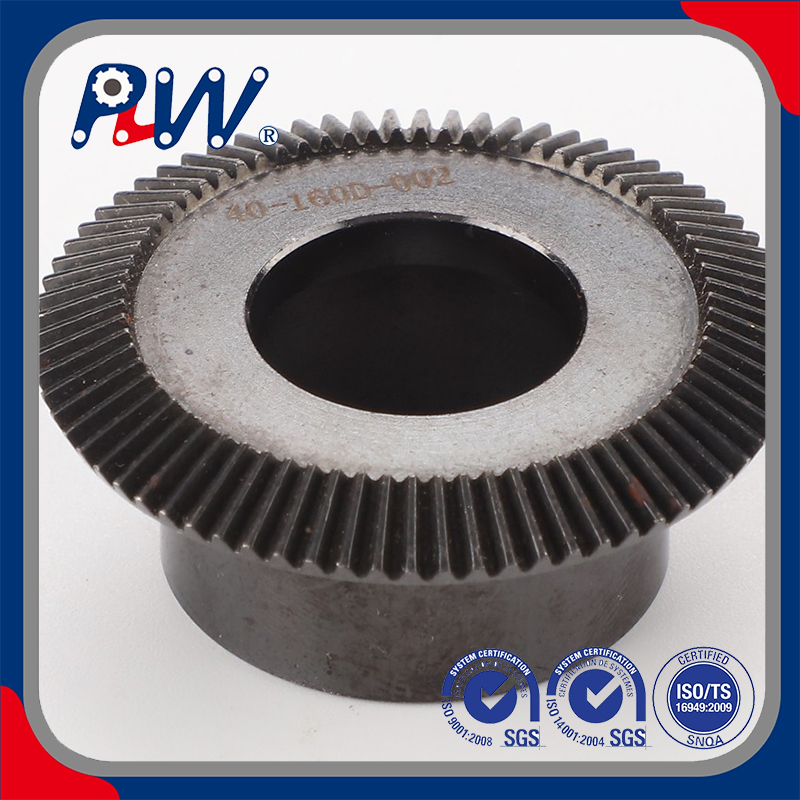
Bevel gears are designed to transmit motion and power between two shafts that intersect at an angle, typically 90 degrees, though other angles are also possible. These gears are used in systems where a change in direction is required, such as automotive transmissions, industrial machinery, and precision systems like robotics and CNC machines. Bevel gears are available in different designs, each suited to different operational requirements, and are manufactured to provide specific benefits in terms of efficiency, noise reduction, and load capacity.
Types of Bevel Gears
Straight Bevel Gears
Straight bevel gears are one of the simplest types of bevel gears, characterized by straight teeth that are aligned along the axis of the gear. These gears are commonly used in general-purpose applications due to their cost-effectiveness. However, they tend to generate more noise and vibration, particularly when operating under heavy load conditions, as the teeth mesh more abruptly compared to other types of bevel gears. This makes straight bevel gears ideal for applications that don’t require high precision, such as basic machinery and systems where cost is a significant factor. While they are effective for power transmission in low-precision setups, the noise and vibrations can be a concern in applications where smooth and quiet operation is needed.
Spiral Bevel Gears
Spiral bevel gears differ from straight bevel gears by featuring curved teeth, which provide a smoother engagement between the gears. This design allows for more gradual meshing, resulting in less noise and vibration, especially under heavy loads or high speeds. Spiral bevel gears are ideal for high-speed and high-load applications due to their ability to transfer power more efficiently and quietly compared to straight bevel gears. They are commonly used in automotive systems, including differential gears, as well as in industrial machinery and other applications where noise reduction is critical. Their smoother operation helps reduce wear and tear, improving the lifespan and performance of the system. The curved teeth also offer better contact over a larger surface area, which contributes to the increased torque handling capabilities of spiral bevel gears.
Hypoid Bevel Gears
Hypoid bevel gears are similar to spiral bevel gears but feature offset shafts. This offset design allows for more compact gear arrangements and is particularly beneficial in applications where space constraints are an issue. Hypoid bevel gears provide enhanced load-bearing capacity compared to their straight or spiral counterparts. The offset shafts improve torque transfer and enable the use of larger gears, resulting in higher torque output. These gears are often used in automotive differentials, where they help reduce the overall size of the drive system while still offering robust torque handling capabilities. Hypoid bevel gears are also common in heavy equipment and industrial machinery, where they contribute to more efficient power transmission and better utilization of space. Their unique design makes them ideal for applications where both load-bearing capacity and space efficiency are essential.
3. Key Factors Influencing Bevel Gear Material Selection
Load Capacity
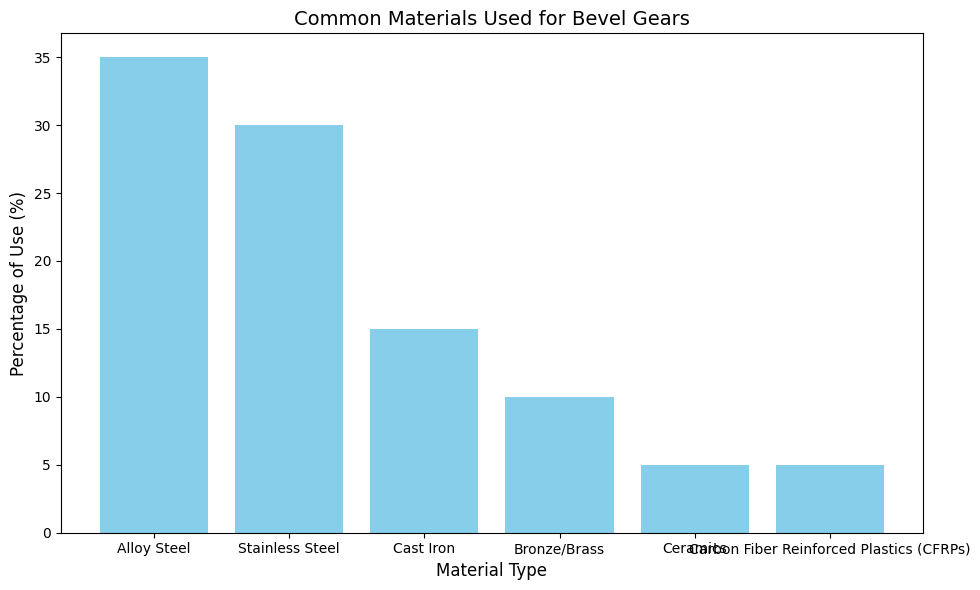
The material used for bevel gears significantly impacts their load-bearing capacity. Gears are subjected to substantial forces during operation, and the material must be able to withstand these loads without failing. The material selected must handle high torque and stress without warping, cracking, or experiencing excessive wear. Materials such as alloy steel and stainless steel are commonly chosen for high-load applications due to their strength and ability to endure heavy use.
Durability and Wear Resistance
Bevel gears need to be durable enough to withstand constant wear and fatigue. The material must resist damage from friction and provide a long operational life. For gears that experience high friction or are exposed to harsh environmental conditions, materials offering excellent wear resistance—like heat-treated alloy steels and stainless steel—are preferred. These materials ensure the bevel gears maintain their precision and performance over time.
Operating Conditions
Bevel gears are often used in challenging environments where they are exposed to temperature extremes, humidity, or corrosive substances. For instance, bevel gears used in marine or food processing industries need to resist corrosion from saltwater or chemicals. Stainless steel and bronze are ideal materials in such cases, offering excellent corrosion resistance and high performance in extreme conditions. The material's ability to perform well under high or low temperatures is also a critical factor in ensuring the gears' reliable operation.
4. Common Materials Used for Bevel Gears
Steel Alloys
Carbon steel is one of the most commonly used materials for bevel gears due to its balance of strength, cost, and availability. It is widely used in standard industrial applications where extreme environmental conditions are not a concern. Carbon steel bevel gears offer good load-bearing capacity and wear resistance under typical operating conditions, making them an economical choice for many industrial systems.
On the other hand, alloy steels, such as chromium and molybdenum alloys, offer enhanced strength, hardness, and wear resistance. These alloys are alloyed with other metals to improve their mechanical properties, making them ideal for high-load, high-precision applications. Alloy steel bevel gears are used in industries that require superior performance, such as automotive, robotics, and aerospace.
Stainless Steel
Stainless steel bevel gears are highly valued for their excellent resistance to corrosion, making them ideal for environments exposed to moisture, chemicals, or saltwater. They are commonly used in food processing, pharmaceutical industries, and marine applications, where hygiene and corrosion resistance are crucial. Stainless steel's durability and strength ensure that these bevel gears can withstand harsh conditions while maintaining their performance.
In food and pharmaceutical industries, stainless steel bevel gears are essential due to their rust and corrosion resistance. These gears must meet stringent hygiene and sanitation standards, and stainless steel ensures that they remain safe and reliable in such environments.
Cast Iron
Cast iron is often chosen for bevel gears that require excellent strength and durability at an affordable price. Cast iron is particularly effective in heavy-duty applications that do not require extremely high precision but need robust performance. Cast iron bevel gears are typically found in large industrial machinery and automotive systems, where strength and reliability are more important than weight and fine precision.
Bronze and Brass
Bronze and brass are ideal materials for bevel gears in low-lubrication environments. These materials offer natural self-lubricating properties, which reduce friction and wear during operation. They also provide excellent resistance to corrosion, making them suitable for marine, aerospace, and other specialized industries. Bronze and brass bevel gears are commonly used in applications where lubrication is minimal, and corrosion resistance is essential for prolonged operation.
In marine applications, where exposure to saltwater is a concern, bronze and brass bevel gears provide exceptional corrosion resistance. These materials are also ideal for aerospace systems, where reducing friction and ensuring smooth operation are critical to performance.
5. Advanced Materials for Bevel Gears
Composite Materials
Carbon fiber reinforced plastics (CFRPs) are lightweight yet strong materials often used in aerospace and high-performance machinery. They offer an excellent strength-to-weight ratio, which is essential for systems where minimizing weight is a priority, such as in aerospace applications. CFRPs provide high strength and durability while being significantly lighter than traditional metals, making them ideal for high-speed applications that require efficient performance without adding unnecessary weight.
Ceramic Materials
Ceramics are increasingly being used for bevel gears in applications where high temperatures are prevalent. These materials can withstand extreme heat without losing their strength or becoming brittle. Ceramics are ideal for use in power plants and other industrial applications where elevated temperatures are common. Their excellent heat resistance ensures that ceramic bevel gears can perform reliably in high-temperature environments.
Additionally, ceramic bevel gears exhibit low friction, reducing wear and extending their operational life. This makes them particularly useful in high-precision machinery where smooth operation and minimal noise are required.
6. Material Treatment and Coatings for Bevel Gears
Hardening and Heat Treatment
Induction hardening is a process used to increase the surface hardness of bevel gears, improving their wear resistance and fatigue strength. This technique is particularly effective for gears that operate under high loads and stresses, as it significantly enhances the gear’s durability. Induction hardening ensures that bevel gears can handle demanding applications without wearing out prematurely.
Carburizing and nitriding are other heat treatment methods that improve the strength and fatigue resistance of bevel gears by introducing carbon or nitrogen into the surface layer of the material. These processes make the bevel gears more resistant to wear, ensuring longer service life and improved performance.
Surface Coatings
Nickel plating and chrome coatings are often applied to bevel gears to provide additional protection against corrosion and wear. These coatings are especially useful in environments where the gears are exposed to moisture, chemicals, or high temperatures. Coatings like these not only enhance the corrosion resistance of bevel gears but also extend their operational life, making them ideal for automotive, marine, and industrial systems that require reliable performance in harsh conditions.
7. Choosing the Right Material for Your Bevel Gears
Industry-Specific Requirements
The material choice for bevel gears depends largely on the specific needs of the industry in which they are used. For example, automotive gears must withstand high loads and stresses, ensuring long-term durability even under harsh conditions. Marine gears, on the other hand, must resist corrosion due to constant exposure to saltwater. Aerospace systems demand lightweight yet high-strength materials, such as carbon fiber reinforced plastics (CFRPs), to reduce weight without compromising performance. Industrial systems like manufacturing machinery may prioritize wear resistance and cost-effectiveness, often favoring alloy steels or cast iron. Understanding the operational environment and performance requirements is crucial when selecting the right material for bevel gears. Factors such as temperature variations, exposure to chemicals, or moisture must be considered to ensure the gears perform optimally.
Cost vs. Performance
When selecting materials for bevel gears, balancing cost with performance is essential. Premium materials like stainless steel and ceramics offer exceptional performance in terms of strength, corrosion resistance, and precision, but they come at a higher cost. Alloy steels and cast iron, though more affordable, still provide adequate performance for less demanding applications, making them ideal for cost-sensitive industries. However, it’s important to carefully assess the performance requirements and potential trade-offs between cost and longevity. While choosing a lower-cost material may initially reduce expenses, investing in a higher-quality material could prevent costly maintenance and downtime over time. By selecting the right material that meets both performance and budget requirements, you can ensure the best value for your bevel gear applications.
8. Conclusion
Choosing the right material for bevel gears is critical to ensuring optimal performance, durability, and cost-effectiveness. Whether selecting alloy steel for heavy-duty applications, stainless steel for corrosion resistance, or advanced ceramics for high-temperature precision, understanding the material properties and their impact on gear performance is essential. At Hangzhou Perpetual Machinery & Equipment Co., Ltd., we prioritize these material considerations to provide high-quality bevel gears that ensure reliable and efficient power transmission for years to come. By making informed choices, you can trust that our bevel gears will meet the demands of your industry.
FAQ
Q: What material is typically used for bevel gears?
A: Bevel gears are commonly made from materials like alloy steel, stainless steel, cast iron, and bronze. These materials offer the necessary strength, durability, and resistance to wear, depending on the application.
Q: Why is stainless steel often chosen for bevel gears?
A: Stainless steel is preferred for bevel gears in corrosive environments due to its excellent corrosion resistance, making it ideal for industries like food processing and marine applications.
Q: How does alloy steel benefit bevel gears?
A: Alloy steel offers enhanced strength, hardness, and wear resistance, making it suitable for bevel gears in high-load, high-performance applications, such as automotive and industrial machinery.
Q: What is the difference between spiral and straight bevel gears?
A: Spiral bevel gears feature curved teeth for smoother, quieter operation, while straight bevel gears have straight teeth and are typically used in low-precision, cost-effective applications.
Q: What are the advantages of using cast iron for bevel gears?
A: Cast iron provides excellent strength and vibration resistance, making it a cost-effective option for bevel gears used in heavy-duty machinery, though it can be prone to brittle failure under shock loading.

 Español
  English
  العربية
  Français
  Русский
  Português
  Deutsch
  italiano
  日本語
日本語  한국어
한국어  Nederlands
  Tiếng Việt
  ไทย
ไทย  Polski
  Türkçe
  አማርኛ
አማርኛ  ພາສາລາວ
  ភាសាខ្មែរ
  Bahasa Melayu
  ဗမာစာ
ဗမာစာ  தமிழ்
தமிழ்  Filipino
  Bahasa Indonesia
  magyar
  Română
  Čeština
  Монгол
  қазақ
қазақ  Српски
  हिन्दी
  فارسی
فارسی  Kiswahili
  Slovenčina
  Slovenščina
  Norsk
Norsk  Svenska
  українська
  Ελληνικά
  Suomi
Suomi  Հայերեն
  עברית
עברית  Latine
  Dansk
Dansk  اردو
اردو  Shqip
Shqip  বাংলা
বাংলা  Hrvatski
  Afrikaans
  Gaeilge
  Eesti keel
  Māori
Māori  සිංහල
සිංහල  नेपाली
  Oʻzbekcha
  latviešu
  অসমীয়া
  Aymara
  Azərbaycan dili
  Bamanankan
  Euskara
  Беларуская мова
  भोजपुरी


