Views: 0 Author: Site Editor Publish Time: 2026-10-08 Origin: Site


Engineers operating in wet, moderately corrosive, or washdown environments face a strict dichotomy. You usually must sacrifice tensile strength to gain the corrosion resistance of stainless steel. Alternatively, you risk rapid metal degradation by deploying standard carbon steel in harsh conditions. This constant trade-off causes premature equipment failure and frustrating maintenance delays.
We introduce nickel-plated chains as a practical intermediate solution. They maintain standard carbon steel load capacities while offering highly robust surface protection. Navigating the exact technical requirements ensures you do not overpay for unnecessary alloys. This article provides a transparent, specification-driven framework for your procurement strategy.
We will help you evaluate, compare, and source the right roller chain for adverse industrial environments. You will learn how to analyze metallurgical data, assess coating uniformity, and match chain limits to your specific operational risks. By understanding these variables, you can optimize both mechanical performance and environmental resilience.
Evaluating industrial chains requires more than checking load limits. You must understand the underlying metallurgy and coating processes. Proper nickel plated chain specifications combine mechanical hardness and precise chemical application. Let us break down the core metrics you must analyze.
The base material dictates the mechanical strength of the assembly. Manufacturers use hardened carbon steel to form the core of a nickel-plated chain. This ensures the component retains a high yield strength and fatigue resistance. However, the plating process introduces a distinct manufacturing risk called hydrogen embrittlement. During electrolytic plating, atomic hydrogen can infiltrate the steel lattice. This infiltration makes high-carbon steel brittle and prone to sudden snapping under load. High-quality manufacturers mandate a post-plating baking process. Baking outgasses the trapped hydrogen. You must verify this thermal stress-relief step exists in the manufacturer data sheets.
Upgrading your environmental protection should not require a full system redesign. Standard dimensional compliance remains critical. Reputable manufacturers build these chains to exact ANSI (e.g., #40, #60, #80) and ISO/DIN parameters. Because the external coating is exceptionally thin, it does not alter the overall pitch or roller diameter. A true corrosion-resistant nickel-plated chain functions as a drop-in replacement. You can install it directly onto existing setups without requiring any sprocket modifications or system recalibrations.
Coating thickness determines the protective lifespan. Standard industry specifications usually require a plating thickness between 10 and 20 microns. However, uniformity matters far more than maximum thickness. Buyers must distinguish between two primary application methods:
Always specify ENP for dynamic applications where internal friction destroys uneven coatings.
Marketing claims hold little value on the factory floor. You need verifiable data to predict component lifespans. Follow these testing standards when reviewing nickel plated chain specifications:
Choosing the correct surface treatment requires balancing mechanical loads against chemical exposure. Engineers frequently debate between zinc, stainless steel, and nickel. Each material utilizes a completely different mechanism to combat oxidation. Understanding these mechanisms prevents costly misapplications.
Zinc serves as a highly effective sacrificial anode. It readily oxidizes before the underlying steel begins to rust. This galvanic protection works wonderfully for static applications. However, zinc coatings are relatively soft. In dynamic chain operations, continuous friction quickly rubs the zinc off the pins and rollers. Once the bare steel emerges, rapid rusting follows. Nickel acts as a hard barrier rather than a sacrificial layer. It provides superior wear resistance and a smoother surface finish. Specify zinc for static outdoor exposure, but rely on nickel for continuous, high-friction drives.
Stainless steel relies on a solid alloy matrix rather than a surface coating. The high chromium content offers ultimate chemical resistance throughout the entire component. However, this chemical immunity comes at a steep mechanical cost. Austenitic stainless steel (304/316) cannot undergo the same heat treatments as carbon steel. Consequently, stainless chains suffer a 30% to 50% reduction in maximum working loads. They elongate and wear out quickly under heavy tension. You should specify nickel plating when high tensile strength and rigid fatigue limits are absolutely non-negotiable.
Financial evaluations guide every procurement cycle. Nickel sits at an attractive medium price point. It costs more than standard zinc plating but significantly less than solid 316 stainless steel. It delivers an optimal return on investment for high-humidity manufacturing, packaging lines, and marine environments. In these zones, full stainless proves structurally insufficient or financially cost-prohibitive. Nickel plating provides the "sweet spot" by maximizing mechanical output while aggressively delaying surface oxidation.
Table 1: Material Performance and Application Matrix
| Material Type | Corrosion Mechanism | Tensile Strength | Wear Resistance | Ideal Application |
|---|---|---|---|---|
| Zinc-Plated Steel | Sacrificial Anode | High (Matches Carbon) | Low | Static outdoor equipment |
| Nickel-Plated Steel | Hard Barrier Coating | High (Matches Carbon) | High | Washdown areas, high humidity |
| 304/316 Stainless | Solid Alloy Matrix | Low (30-50% reduction) | Medium | Extreme chemicals, direct food contact |
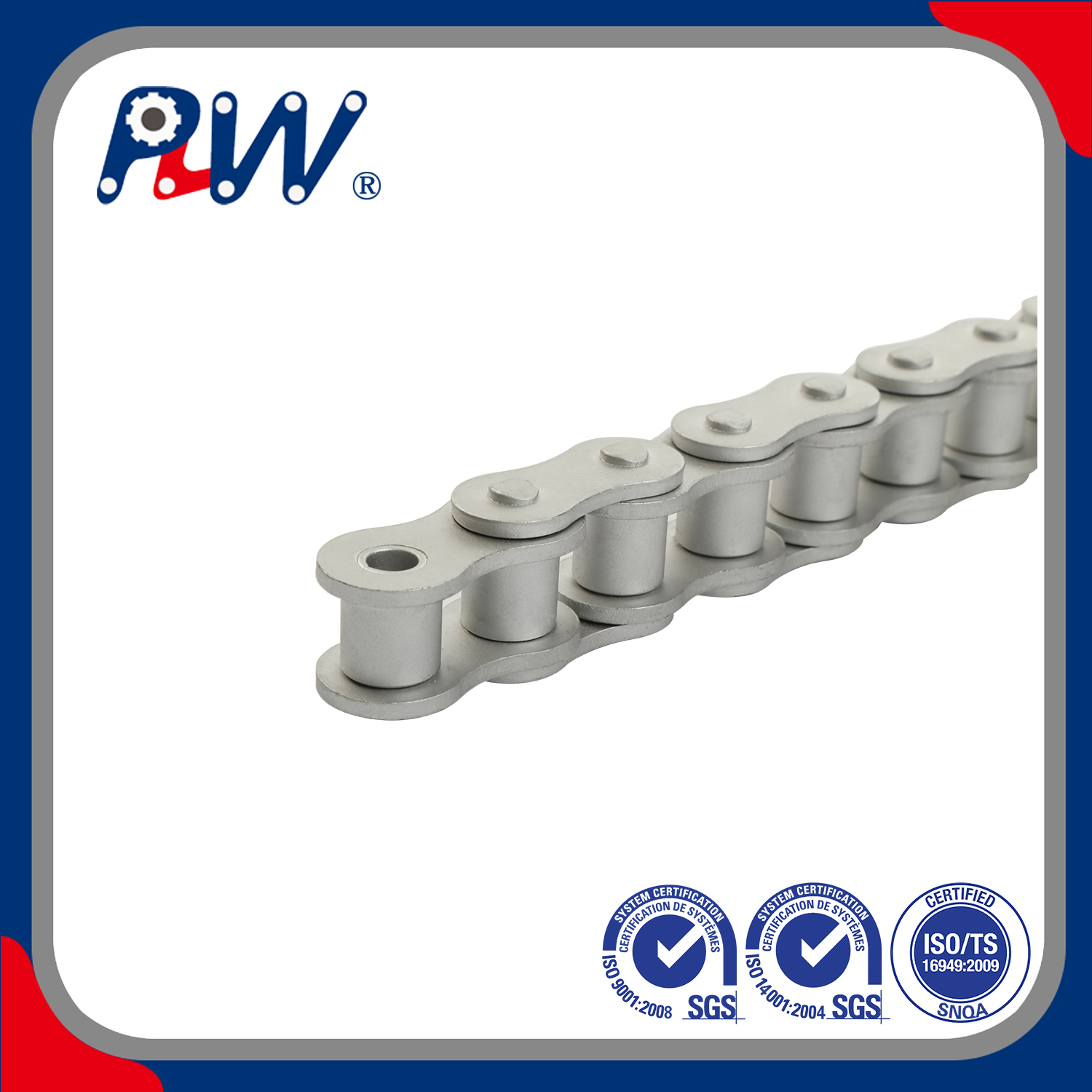
Applying the correct chain requires an honest assessment of your operating environment. Nickel plating performs exceptionally well in specific conditions but fails rapidly in others. Mapping your ambient environment to the correct surface chemistry guarantees operational success.
Coastal and marine environments subject equipment to continuous salt-air exposure. Standard carbon steel rusts within days under these parameters. Nickel plating offers excellent defense against atmospheric chlorides and high ambient moisture. However, engineers must monitor surface integrity carefully. Heavy shock loads can create microscopic fractures in the rigid nickel barrier. Once these micro-fractures occur, saltwater penetrates the carbon steel core. To mitigate this risk, operators must combine the plated chain with heavy-duty marine wax or water-displacing lubricants.
Regulatory compliance dictates material choices in food processing facilities. The USDA and FDA enforce strict guidelines regarding contact surfaces. You must understand the difference between incidental contact and direct contact zones. Nickel plating is widely acceptable for incidental contact areas. These include overhead conveyors, packaging machines, and secondary washdown sectors. The smooth nickel surface resists the caustic foaming agents used during sanitation shifts. Conversely, if the chain directly touches raw food products, regulations strictly mandate 300-series stainless steel. Do not specify nickel for direct food contact applications.
Chemical manufacturing plants present extreme challenges. We must set realistic boundaries for coated carbon steel. Nickel provides excellent resistance against mild alkalis and standard industrial solvents. However, you must warn your engineering teams against using nickel in highly acidic environments. High concentrations of sulfuric, nitric, or hydrochloric acids will strip the nickel coating away rapidly. The acid will then attack the underlying steel, causing catastrophic chain failure. Map high-acid environments directly to stainless steel or specialized engineered polymer solutions instead.
Procuring a high-quality product only solves half the equation. Improper implementation destroys expensive components quickly. Understanding the practical realities of industrial chain behavior helps you avoid common deployment failures.
Skeptical engineers often point out a fundamental reality. Chains elongate due to internal pin and bushing wear, not external plate rust. If a manufacturer only plates the assembled chain, the vital internal bearing surfaces remain unprotected raw steel. Moisture penetrates the joints, creating abrasive rust dust (often called rouge) inside the bushings. This accelerates internal grinding and elongation. You must evaluate whether the manufacturer plates individual components before final assembly. Pre-assembly plating ensures complete internal protection and drastically reduces elongation rates.
Poorly bonded plating poses a significant contamination risk. High-impact loads or tight sprocket articulation create intense surface pressures. Sub-par electrolytic coatings will crack, flake, and peel away under this stress. These metallic flakes can contaminate products or damage surrounding machinery. Spotting sub-par manufacturing early saves significant downtime.
Marketing departments sometimes oversell coated chains as "maintenance-free" solutions. We must dispel this myth immediately. While the nickel barrier strongly delays surface oxidation, it does not provide inherent lubricity. A corrosion-resistant nickel-plated chain still requires consistent, environment-specific lubrication. Running the system dry increases internal friction. High heat and friction will eventually compromise the barrier coating. Implement an automated drip system or schedule routine manual lubrication to maximize the chain's operational lifespan.
Sourcing reliable industrial components requires strict vendor qualification. You cannot rely on generic brochure claims when operational uptime is on the line. Build a robust procurement framework to filter out low-tier suppliers.
Demand transparency from your prospective partners. Instruct your buyers to request actual salt-spray test certificates and detailed material data sheets. You need to see the exact micron thickness specifications and the specific heat-treatment protocols used. If a supplier refuses to provide verifiable ASTM testing data, disqualify them immediately. Legitimate manufacturers proudly share their metallurgical testing results and quality assurance documentation.
Factory-applied lubrication penetrates deeper than manual field application. Recommend shortlisting suppliers who offer custom pre-lubrication services applied directly over the nickel plating at the factory level. Discuss your specific environment with them. If you operate a bakery, request a food-grade H1 synthetic oil. If you manage a port facility, request a heavy-duty marine wax. Proper factory pre-lubrication seals the microscopic pores in the nickel layer, effectively doubling the initial corrosion resistance.
Component selection requires context. Emphasize the importance of buying from manufacturers willing to review your specific environmental variables. A strong partner will ask you about ambient pH levels, washdown frequency, and daily temperature swings. They should review your sprocket sizes and tension loads before recommending a specification. Suppliers who offer application engineering support act as an extension of your own technical team. They ensure you deploy the exact right chemistry for your operational bottleneck.
Specifying a nickel-plated chain remains an exercise in strategic balance. It requires carefully matching heavy mechanical loads against moderate environmental threats. You no longer have to accept the weak tensile strength of stainless steel just to survive a high-humidity environment. Nickel plating delivers the hardened carbon core you need while maintaining a robust, smooth barrier against moisture and mild chemicals.
Take immediate action by auditing your current chain failure modes. Walk the production floor and inspect your discarded components. Are they elongating primarily from heavy load fatigue, or are they seizing up from rust? If standard chains are rusting before they stretch out, nickel plating is the exact fit for your operational bottleneck. Partner with a transparent manufacturer, demand rigorous testing data, and implement proper lubrication protocols to maximize your facility's uptime.
A: No. Because the core material remains heat-treated carbon steel, the tensile strength and working load limits remain identical to standard unplated chains. The nickel coating only affects the surface chemistry, leaving the internal mechanical integrity completely unchanged.
A: Electroless relies on an auto-catalytic chemical reaction, ensuring a perfectly uniform coating thickness even in hard-to-reach areas like the internal bore of a bushing. Electrical (galvanic) plating can pool on the outer edges and leave vital internals vulnerable to rust.
A: Generally, no. While highly effective against moisture and alkalis, nickel coatings degrade quickly in highly acidic conditions. Stainless steel or specific engineered plastics are required for strong acid exposures.


