Choosing the right chain is not just about finding the strongest option. It is about choosing the right material. The right material is what determines how well your chain handles heavy loads, resists corrosion, and delivers excellent performance in years to come.
In this article, we’ll explain the common materials for chains used in power transmission and compare them with how they perform in different environments.
Key Factors Affecting Material Selection
Before we talk about the common materials available for industrial chains, it’s important that you choose chain material based on several factors:
Load capacity: Heavy-duty applications require chain materials with high tensile strength and fatigue resistance. If you’re operating construction equipment, a mining conveyor, or heavy lifting machinery, consider chains with ultra-high-strength material. However, if you’re operating a lighter conveyor system, such a chain material may not be necessary.
Exposure to moisture: Water or humidity is one of the biggest enemies of industrial chains. If you operate your equipment in humid environments, such as food factories or marine environments, corrosion may happen. Thus, using chains with corrosion-resistant material is crucial.
Exposure to chemicals: If you’re operating equipment near chemicals, like acids, alkalis, cleaning agents, and industrial solvents, use chains that are treated to withstand it. Otherwise, they could corrode and degrade, and this can negatively affect your project.
Operating temperature: High temperatures can have an effect on the lubricative effectiveness of the chains. On the other hand, extreme low temperatures can make the chains brittle. Finding a balance, that is, using the right chain for the right temperature, will help prevent premature failure.
Common Materials Used for Industrial Chains
Carbon Steel Chains
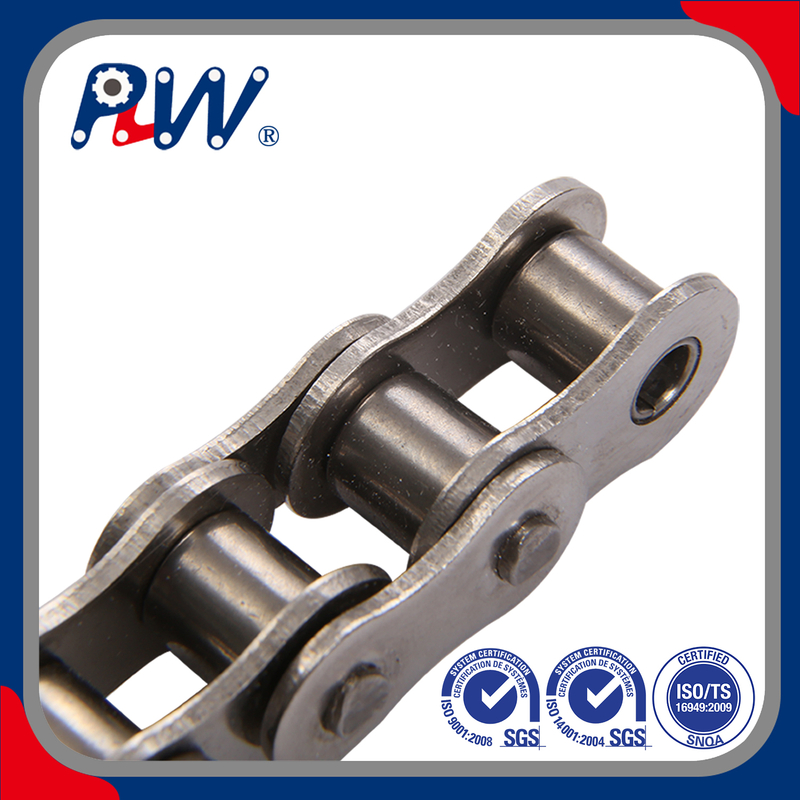
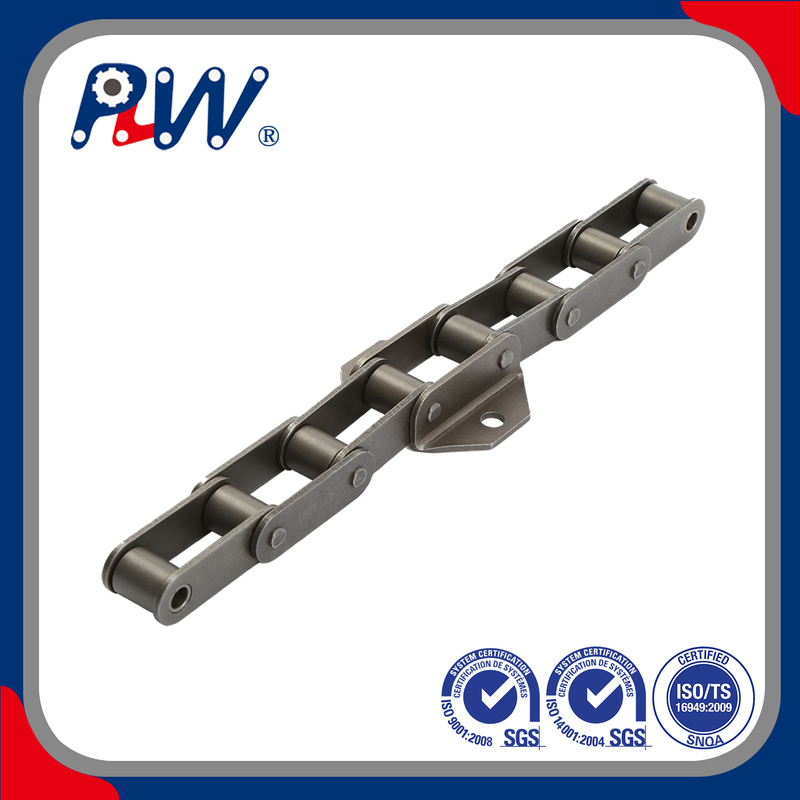
Carbon steel is one of the most common materials used for industrial chains because of its strength, durability, and affordability. Usually, the carbon content is adjusted so that it can have hardness and strength. Some of these carbon steel chains also undergo heat treatment to improve their resistance to wear.
Advantages of Carbon Steel Chains
Some of the advantages of carbon steel chains include the following:
Excellent load capacity: Carbon steel chains have the toughness to handle high loads without giving in. It doesn’t snap or break under pressure, therefore, it can handle the mechanical stress.
Wear resistance: In industrial environments, chains always move. Carbon steel chains resist wear, so you’re not replacing parts every time.
Heat tolerance: As carbon steel chains constantly move, it is not surprising that they get hot. However, they do not get overheated. They maintain their integrity even when exposed to high temperatures, much better than many alternatives.
Limitations of Carbon Steel Chains
Rust: Despite the strength of carbon steel chains, they rust when they are not lubricated properly. When exposed to moisture, they also experience rust, friction, and chain failure in the end.
Weight factor: Carbon steel chains are usually heavier than other chains. They are not lightweight in design.
Common Applications
Conveyor systems: Carbon steel chains are used to move heavy materials in manufacturing plants or mining operations.
Lifting equipment: Carbon steel chains are used in cranes and rigging setups where you need high-strength chains to operate equipment.
Alloy Steel Chains
Alloy steel chains are used in applications where higher strength and durability are needed. Unlike carbon steel, they contain trace elements like nickel, manganese, chromium, and molybdenum. These trace elements are what add to the improved strength and durability. They also undergo precision heat treatment to
Advantages of Alloy Steel Chains
Superior strength: Alloy steel chains have higher tensile strength and a good strength-to-weight ratio, which means they’re suitable for heavy loads.
Fatigue resistance: Even when exposed to mechanical stress, alloy steel machines can put up with it. This is why they are useful in continuous operations.
Wear durability: Alloy steel chains have enhanced hardness, which makes them less susceptible to wear. Thus, they have longer service life, reducing downtime.
Heat and environment tolerance: Alloy steel chains are properly coated to withstand extreme temperatures in industrial conditions.
Limitations of Alloy Steel Chains
Higher cost: Alloy steel chains are more expensive than carbon steel. Thus, if you’re working on a budget-friendly operation, they may not be suitable for use.
Corrosion risk: Alloy steel chains can still rust in corrosive environments when they are not properly coated.
Applications in Power Transmission
Industrial conveyors: Alloy steel chains are used in manufacturing and assembly lines to move heavy materials efficiently.
Mining equipment: Alloy steel chains are used for conveyor systems where equipment experiences extreme loads.
Heavy machinery: Alloy steel chains are used in cranes and bulldozers because of their strength and durability.
Stainless Steel Chains
Stainless steel chains are the best material for chains when it comes to corrosion resistance. They usually contain chromium, which adds a protective coating on the surface to prevent it from corrosion and rust.
There are two common grades of stainless steel chains:
304 stainless steel: This grade of stainless steel resists corrosion and is widely used in applications that require strict hygiene.
316 stainless steel: This grade of stainless steel possesses excellent resistance to saltwater and aggressive chemicals.
Advantages of Stainless Steel Chains
Corrosion resistance: Stainless steel is widely known to naturally resist rust and oxidation. Thus, they are more durable than carbon or alloy steel chains.
Temperature tolerance: Stainless steel chains perform well under high and low temperatures because of their temperature tolerance.
Cleanliness: Stainless steel chains are easy to clean and are hygienic. No wonder it is suitable for food processing and pharmaceutical environments.
Limitations of Stainless Steel Chains
Higher cost: Stainless steel chains cost more than carbon steel or alloy steel because of their superior corrosion resistance.
Lower strength: This may be surprising, but stainless steel doesn’t have the kind of tensile strength alloy steel has. Thus, it is not suitable for heavy load applications.
Applications of Stainless Steel Chains
Food industry: Stainless steel chains are used in hygienic environments such as the food industry. Moreover, these areas are often prone to moisture, so using stainless steel chains resists corrosion.
Pharmaceutical industry: Stainless steel chains are used in pharmaceutical equipment for the production or transportation of medical supplies.
Nickel-Plated Chains
Nickel-plated chains have the corrosion resistance of stainless steel and the improved strength of carbon steel; it’s like a middle ground between the two chains. These chains are plated with nickel on the surface to protect it from rust and corrosion.
Advantages of Nickel-Plated Chains
Enhanced wear resistance: These chains reduce friction and wear, which, in turn increases the lifespan of the chains in industrial environments.
Aesthetic: The nickel plating gives the chain a shiny finish, which makes it easier to clean.
Cost-effective: You don’t need to purchase these chains at a premium price. With an affordable budget, you can get better corrosion resistance than plain carbon steel.
Limitations of Nickel-Plated Chains
Plating wear: Over time, the plating can wear if it is exposed to heavy abrasion. This can potentially cause rust.
Corrosion protection: While nickel serves as a protective barrier, it is not as strong as stainless steel when it comes to corrosion resistance.
Applications of Nickel-Plating Chains
Packaging machinery: These chains are used in clean environments where chains need to resist a moderate amount of moisture.
Food processing equipment: These chains are also used in conveyors and machinery where equipment and product need to be hygienic.
Zinc-Plated Chains
Zinc-plated chains are coated with zinc to help them resist atmospheric corrosion. They are not as corrosion-resistant as stainless steel, but they perform well when exposed to mild moisture or humid environments.
Advantages of Zinc-Plated Chains
Improved appearance: The zinc coating gives the chain a cleaner finish that can be used to improve the visibility of equipment.
Corrosion protection: The zinc coating acts as a protective layer to reduce oxidation, especially when it is used in humid environments.
Limitations of Zinc-Plated Chains
Limited durability: The zinc layer can wear off under heavy abrasion. Thus, it is not completely reliable when it comes to durability.
Not ideal for harsh chemicals: When exposed to chemical environments, the plating might wear off, making the base rust.
Applications of Zinc-Plated Chains
Outdoor machinery: Great for equipment exposed to weather, where rust protection is needed but stainless steel would be overkill.
Agricultural equipment: Common in farm machinery that faces moisture and dirt but doesn’t require extreme corrosion resistance.
Light industrial conveyors: Used in systems where moderate corrosion resistance is enough to keep operations smooth.
How Different Chain Materials Perform in Different Environments
High-Load and Heavy-Duty Environments
High-load applications such as mining or manufacturing expose chains to shock and constant heavy loads. In these environments, the chain material should have high tensile strength, excellent fatigue resistance, and superior wear resistance.
Alloy steel chains are often considered the best here as they withstand repeated mechanical stress without breaking.
Carbon steel chains may also perform well but may wear faster when under high load for a long time.
Corrosive and Chemical Environments
Corrosive and chemical environments such as washdown areas, marine environments, and industrial chemicals can weaken chain parts. Over time, this can result in chain failure and cause significant downtime in industrial operations. Using a chain with strong corrosion resistance is now more important here.
Stainless steel chains are the preferred choice in humid environments. 304 stainless steel chain is used in areas with moisture, while 316 stainless steel is used on chains to protect them from aggressive chemicals.
Food and Beverage Processing Environments
The food and beverage industry needs to be hygienic. Thus, the chains' material must be hygienic and able to handle frequent cleaning.
In this application, stainless steel is best used because of its corrosion resistance and hygienic surface. It is also easy to clean and does not deform when exposed to cleaning materials. Whether you’re working on food packaging lines, beverage bottling plants, or meat processing, these chains do not rust or corrode easily.
Extreme Temperature Environments
Extreme temperature environments, whether high or low, can reduce chain hardness and negatively impact lubrication. Thus, choosing chains that can perform better in those conditions is ideal.
For high temperatures, alloy steel chains are best used because of their heat treatment and improved properties. Specialized stainless steel grades can also be used as long as they have high resistance to corrosion and heat.
For low temperatures, chain material can experience brittleness and lubrication problems. Alloy steel chains and stainless steel chains also perform well in these situations. Just ensure you lubricate regularly.
Outdoor and Agricultural Environments
Outdoor and agricultural environments pose a unique challenge - chains are usually exposed to dust, rain, sun, and even fluctuating temperatures. Chains that perform well in these areas are zinc-plated and nickel-plated chains. These chains are used in outdoor applications for their improved corrosion protection.
Conclusion
In practical terms, no single chain material is the best. The best chain material depends on the application and how its features fit the application. If you carefully consider your load requirements, temperature, and operating environment, you can select a chain that delivers excellent performance.
What is the most commonly used material for industrial chains?
Carbon steel is the most commonly used material for industrial chains. This is because they have high tensile strength and durability. Furthermore, they are cost-effective and are affordable.
Are stainless steel chains stronger than carbon steel chains?
In a general sense, stainless steel is not stronger than carbon steel. Carbon steel possesses strength in heavy-duty lifting and tensile capacity, while stainless steel chains offer superior resistance to chemicals.
Which chain material is best for food processing equipment?
Stainless steel chain material is best used for food processing because it is hygienic and resists corrosion, which is usually prevalent in washdown areas.
What chain material performs best in marine environments?
316 stainless steel grade is the most common material for chains used in marine environments. These chains have longevity and corrosion resistance. However, for heavy-duty applications, carbon steel or alloy steel is best used.

 Español
  English
  العربية
  Français
  Русский
  Português
  Deutsch
  italiano
  日本語
日本語  한국어
한국어  Nederlands
  Tiếng Việt
  ไทย
ไทย  Polski
  Türkçe
  አማርኛ
አማርኛ  ພາສາລາວ
  ភាសាខ្មែរ
  Bahasa Melayu
  ဗမာစာ
ဗမာစာ  தமிழ்
தமிழ்  Filipino
  Bahasa Indonesia
  magyar
  Română
  Čeština
  Монгол
  қазақ
қазақ  Српски
  हिन्दी
  فارسی
فارسی  Kiswahili
  Slovenčina
  Slovenščina
  Norsk
Norsk  Svenska
  українська
  Ελληνικά
  Suomi
Suomi  Հայերեն
  עברית
עברית  Latine
  Dansk
Dansk  اردو
اردو  Shqip
Shqip  বাংলা
বাংলা  Hrvatski
  Afrikaans
  Gaeilge
  Eesti keel
  Māori
Māori  සිංහල
සිංහල  नेपाली
  Oʻzbekcha
  latviešu
  অসমীয়া
  Aymara
  Azərbaycan dili
  Bamanankan
  Euskara
  Беларуская мова
  भोजपुरी