Introduction
Chains are essential in power transmission and material handling across many industries. But when it comes to choosing the right chain, understanding the differences between Roller Chain vs Conveyor Chain is crucial. In this article, we'll explore these differences and help you choose the best chain for your needs, whether it's for speed, load capacity, or environmental suitability.
What is a Roller Chain?
Design and Components
Roller chains are primarily designed for power transmission. They consist of cylindrical rollers, inner and outer plates, bushings, and pins. These components work together to transfer mechanical power by engaging with sprockets. The rollers reduce friction by rolling smoothly over the sprocket teeth, making roller chains highly efficient for power transfer at high speeds. They are standardized, meaning that parts like the rollers and plates are interchangeable, simplifying repairs and replacements.
Speed and Efficiency
Roller chains are built to operate at high speeds, which is essential for applications like bicycles, motorcycles, and industrial machinery. Their design minimizes friction, allowing for smooth power transmission without significant energy loss. Roller chains can efficiently transfer mechanical energy from one sprocket to another, making them ideal for fast-moving systems. However, they are most effective in controlled environments, where dust and debris are minimal.
Environmental Suitability
| Environment | Roller Chain Performance | Recommended Use | Potential Issues | Supporting Data |
| Clean, Controlled | Optimal performance with minimal wear and friction. | Automotive assembly, industrial machinery. | - | Roller chains in clean environments can last 4-6 years with proper lubrication (Source: ANSI Roller Chain Standards). |
| Dusty | Increased wear due to dust accumulation, affecting efficiency. | Not ideal, but can be used with protective covers. | Reduced lifespan by 15-25%, clogging of lubrication. | Wear rates increase by up to 20% in dusty environments (Source: Chain Manufacturer's Guide). |
| Wet/ Moist | Susceptible to rust and corrosion, requiring frequent maintenance. | Limited use with proper lubrication and sealing. | Rust, reduced lubrication efficiency. | Roller chains exposed to moisture can lose 30% of their lifespan within 1-2 years without proper sealing (Source: Chain Lubrication and Care Study). |
| High Temperature | High temperatures (>150°C) can affect lubrication, increasing friction. | Possible with specialized lubricants and seals. | Overheating, accelerated wear and tear. | High-temperature environments can cause chain fatigue, reducing efficiency by 10-20% per 100°C increase (Source: Chain Durability under Thermal Stress Report). |
| Abrasive Conditions | Significant wear due to friction with abrasive particles. | Avoid use in such environments. | Shorter lifespan, decreased performance. | Abrasive conditions can reduce chain life by 30-40% compared to controlled environments (Source: Wear and Tear Analysis of Roller Chains). |
| Corrosive | Can corrode if exposed to chemicals or salt, reducing lifespan. | Requires corrosion-resistant coatings or materials. | Corrosion, material degradation. | Exposure to saline environments can reduce chain life by 50% (Source: Corrosion Testing for Industrial Chains). |
Tip:For roller chains, use corrosion-resistant coatings and lubricants in harsh environments to extend their lifespan and maintain performance.
What is a Conveyor Chain?
Design and Structure
Conveyor chains are designed for material handling with a robust structure that can be customized for different applications. They are built to withstand heavy loads and harsh environments, offering various design options to fit specific industry needs, from mining to food processing.
| Feature | Description | Specific Applications | Key Benefits | Supporting Data |
| Primary Function | Conveyor chains are designed to move materials rather than transfer power. | Transporting bulk materials or products in manufacturing, packaging, mining, and automotive. | Ideal for long-distance material transport. | Conveyor systems with chains are up to 40% more efficient in heavy material handling than other methods (Source: Material Handling Study). |
| Durability | Conveyor chains are built to withstand harsh environments and heavy loads. | Mining, food processing, automotive assembly. | High load-bearing capacity, long lifespan. | Conveyor chains in mining can last 10-15 years with proper maintenance (Source: Mining Equipment Maintenance Report). |
| Roller-top Chains | Chains with rollers on top to reduce friction and ensure smoother material movement. | Food packaging, electronics assembly, automotive. | Smooth material flow, suitable for light items. | Roller-top chains can reduce friction by 30% compared to standard chains (Source: Conveyor Chain Friction Report). |
| Deep Link Chains | Longer links that allow for accommodation of bulkier or oversized materials. | Heavy-duty material transport in industries like construction, recycling. | Accommodates large and bulky items with ease. | Deep link chains handle up to 50% more weight than standard roller chains (Source: Engineering Chains Specifications). |
| Drag Chains | Robust links designed for dragging loose or bulk materials across a track. | Transporting bulk materials in mining, agriculture, and material handling. | Durable, designed for abrasive materials. | Drag chains are designed to carry loads up to 5,000 lbs, ideal for heavy-duty transport (Source: Bulk Material Handling Guide). |
| Slat Chains | Chains with flat slats to support and transport irregular or delicate products. | Used for delicate products in food processing and packaging. | Stable surface for irregular shapes, gentle handling. | Slat chains can handle loads of up to 1,000 kg per section (Source: Slat Conveyor Systems Design). |
| Bucket Attachments | Attachments designed for vertical material transport. | Mining, agriculture (e.g., grain transport). | Ideal for vertical lift, can handle large amounts. | Bucket conveyor chains can elevate up to 2 tons of materials per hour (Source: Bulk Handling Equipment Study). |
| Roller Attachments | Additional rollers reduce friction and ease the movement of heavy materials. | Ideal for large items, such as automotive parts, in factory settings. | Reduces friction, eases movement of heavier loads. | Conveyor systems with rollers reduce energy consumption by 25% compared to traditional chains (Source: Conveyor Energy Efficiency Study). |
| Customizability | Conveyor chains can be customized with slats, buckets, rollers, and other components to fit specific needs. | Automotive assembly, food packaging, mining, agriculture. | High adaptability, can be tailored for different operations. | Customization increases system efficiency by 15-20% in material handling (Source: Conveyor Chain Customization Benefits Report). |
Load and Durability
One of the key differences between conveyor chains and roller chains is load capacity. Conveyor chains are designed to handle heavy loads, often in rugged environments. These chains can transport bulk materials, oversized goods, and heavy items over long distances, making them perfect for industries requiring heavy-duty solutions. Conveyor chains are also built to withstand extreme conditions such as wet, dusty, or corrosive environments, offering superior durability.
Environment and Adaptability
Conveyor chains excel in environments where roller chains may struggle. They are ideal for harsh industrial settings, including those with high temperatures, moisture, and debris. Conveyor chains can be equipped with various attachments like slats and buckets to customize their design for specific transport tasks. This adaptability makes them suitable for a wide range of industries, from mining to food processing.
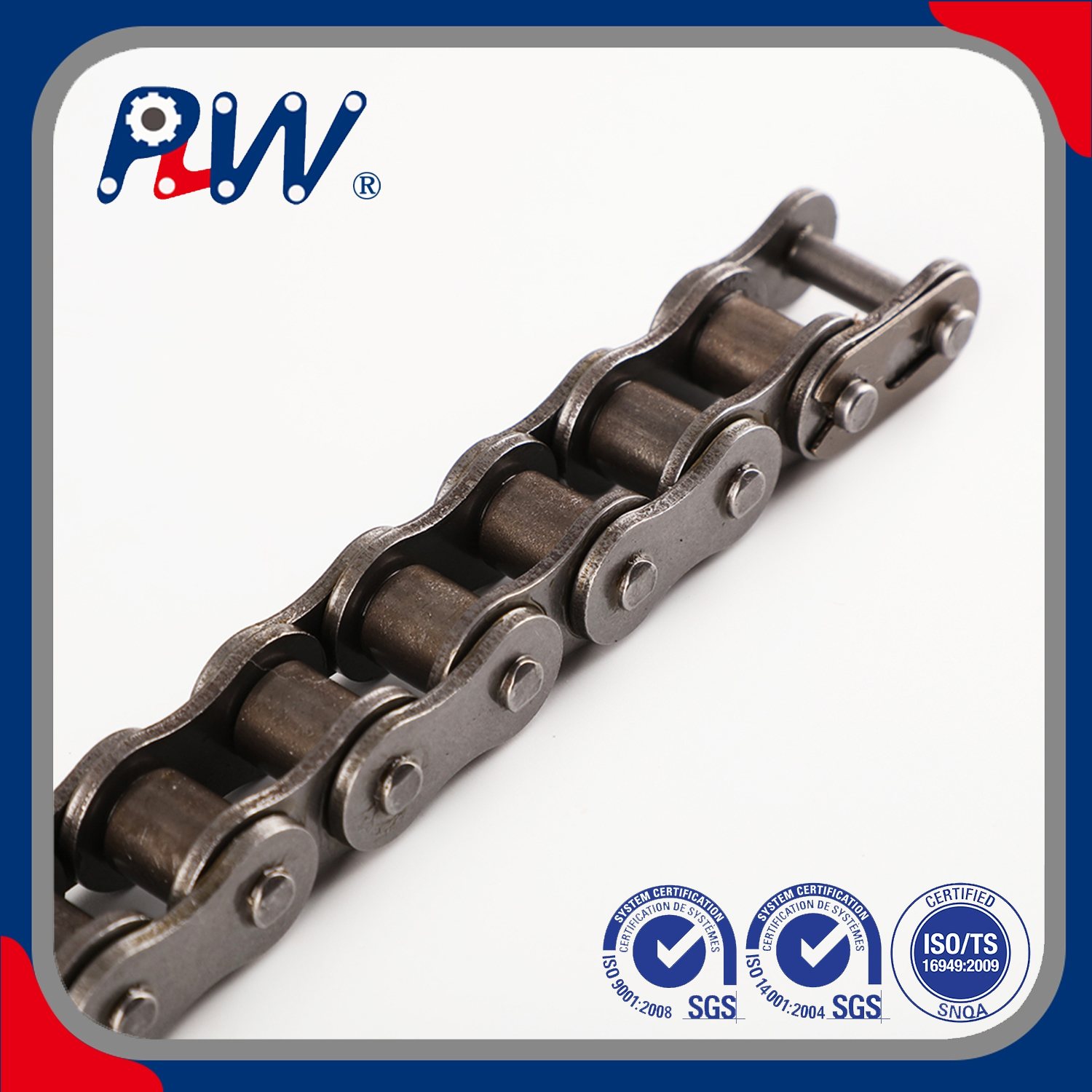
Key Differences Between Roller Chain and Conveyor Chain
Primary Function
The primary function of a roller chain is power transmission between sprockets. It is used in systems that require efficient and high-speed energy transfer, such as engines and industrial machines. On the other hand, a conveyor chain is designed for material handling. It moves items along a conveyor system, often in heavy-duty applications like material transport in factories, warehouses, or processing plants.
Load Capacity and Durability
While roller chains can handle moderate loads, conveyor chains are built for heavy-duty applications. Conveyor chains can bear much heavier loads, such as bulk materials or large items, making them more suitable for industrial environments where heavy lifting is required. Their robust construction allows them to withstand wear from abrasive conditions, unlike roller chains, which are more vulnerable to damage in harsh environments.
Customization
Roller chains are usually standardized and come in limited sizes, making them easy to replace or repair. However, they lack the flexibility of conveyor chains in terms of design. Conveyor chains, by contrast, can be extensively customized with different attachments, such as slats, rollers, or buckets, to suit specific material handling tasks. This flexibility allows conveyor chains to be adapted to a wide variety of operational requirements.
Speed and Efficiency: Roller Chain vs Conveyor Chain
Roller Chain Speed
Roller chains are built for high-speed applications. They are commonly used in systems where quick power transmission is required, such as bicycles, motorcycles, or conveyor belts in assembly lines. The reduced friction in roller chains allows for smooth and rapid operation, making them ideal for high-speed applications.
Conveyor Chain Speed
In contrast, conveyor chains operate at slower speeds. Their primary focus is not speed but consistent and steady transport of materials. Conveyor chains are designed for heavy-duty applications where materials need to be moved continuously over long distances. Speed is less important than the chain's ability to bear heavy loads and perform reliably in harsh environments.
Efficiency in Different Applications
Both roller chains and conveyor chains offer efficiency, but in different ways. Roller chains excel in high-speed power transmission, making them efficient in systems requiring rapid energy transfer. Conveyor chains, on the other hand, are more efficient in material transport, especially when handling heavy and bulky materials in challenging environments. The efficiency of each chain type depends on the specific application it is used for.
Choosing the Right Chain Based on Load and Speed Requirements
Load Requirements
Roller chains are best suited for applications where moderate loads need to be transferred quickly, such as in power transmission systems for machinery. Conveyor chains are ideal for moving heavy, bulk materials, such as in mining or automotive assembly. If your operation requires moving oversized items or materials in harsh conditions, a conveyor chain is the better choice.
Speed Considerations
Roller chains are the preferred option for high-speed operations, such as those found in engines, bicycles, and conveyor systems that require rapid power transfer. Conveyor chains, however, are better for applications where speed is less important, but load capacity and durability are critical. For slow-moving, heavy-duty transport tasks, conveyor chains are the go-to solution.
Environmental Considerations
Consider the environment in which the chain will operate. Roller chains perform best in clean, controlled environments, where dirt and debris are minimal. If your operation involves wet, dusty, or corrosive conditions, a conveyor chain is likely the better option due to its durability and ability to withstand harsh environments.
Customization: Attachments and Design Variations
Roller Chain Design
Roller chains are standardized in their design and primarily used for power transmission. Customization options are limited, but they can be made from different materials, such as stainless steel, for specific applications. Their simplicity and ease of use make them ideal for systems where little modification is needed.
Conveyor Chain Attachments
Conveyor chains offer more flexibility. They can be customized with various attachments, such as slats, rollers, and buckets, to handle different types of materials. These attachments help increase the chain's versatility and make it adaptable to various industrial applications.
Impact on Application
The ability to customize conveyor chains gives them a significant advantage in material handling. For example, adding attachments like slats or buckets can enable the chain to carry different types of materials, from loose bulk items to packaged goods. In contrast, roller chains are better suited for standard, unmodified power transmission systems.
Maintenance and Longevity: Roller Chains vs Conveyor Chains
Roller Chain Maintenance
Roller chains are relatively easy to maintain, requiring regular lubrication and tension adjustments. Routine inspections for wear and tear are essential to ensure their longevity. Proper care can extend their lifespan, but they are best suited for controlled environments where dirt and debris are minimized.
Conveyor Chain Maintenance
Conveyor chains require more frequent maintenance due to exposure to harsh environments. Regular cleaning, lubrication, and inspection of attachments are necessary to keep the system running smoothly. Conveyor chains may need more repairs or replacement of attachments over time, especially in heavy-duty applications.
Comparative Maintenance Requirements
Here’s the table comparing the maintenance requirements of roller chains and conveyor chains, highlighting differences in maintenance frequency, lubrication, environmental adaptability, and more.
| Maintenance Factor | Roller Chains | Conveyor Chains | Key Differences |
| Maintenance Frequency | Requires less frequent maintenance, mainly for lubrication and tension adjustments. | Requires more frequent maintenance due to exposure to harsh conditions and attachments. | Roller chains need maintenance less often, while conveyor chains need more regular attention. |
| Lubrication | Lubrication is needed to reduce friction and prevent wear. | Lubrication is crucial for both the chain and attachments to function smoothly. | Conveyor chains have more components requiring lubrication, increasing the complexity of maintenance. |
| Exposure to Harsh Environments | Performance can degrade in dirty, wet, or abrasive environments, increasing wear. | Built for harsh environments, but regular cleaning and lubrication are needed to maintain performance. | Conveyor chains are designed for harsh conditions but need more care to ensure long-lasting durability. |
| Inspection Requirements | Routine inspections for wear, alignment, and tension. | Requires regular inspection of the chain as well as attachments (e.g., slats, buckets, rollers). | Conveyor chains require more comprehensive inspections due to multiple parts involved. |
| Part Replacement | Easier to replace parts, with standardized sizes available. | Parts such as slats, rollers, and buckets may need to be replaced more often. | Conveyor chains have more parts that may require replacement due to heavy wear. |
| Durability | Long lifespan with proper care, especially in clean environments. | More durable for heavy-duty use, but attachments may wear out faster. | Conveyor chains are built for longer durability but require more attention to attachments. |
Tip:Regular inspection and proper lubrication are key to extending the lifespan of both roller and conveyor chains. However, conveyor chains may require more frequent care due to the additional components and harsher working conditions.
Conclusion
In summary, both Roller Chain vs Conveyor Chain serve unique purposes in various industries. Roller chains are ideal for high-speed power transmission, while conveyor chains excel in heavy-duty material handling. The right choice depends on load capacity, speed, environment, and customization needs. By understanding these differences, you can ensure better efficiency and longer lifespan for your system. HANGZHOU PERPETUAL MACHINERY & EQUIPMENT CO., LTD, provides durable, customizable chains that cater to specific industrial needs, offering reliable solutions for power transmission and material handling in harsh environments.
FAQ
Q: What is the main difference between Roller Chain vs Conveyor Chain?
A: The main difference is that roller chains are used for power transmission, while conveyor chains are designed for material handling. Roller chains are ideal for high-speed applications, while conveyor chains handle heavy loads in harsh environments.
Q: When should I use a Roller Chain vs Conveyor Chain?
A: Use roller chains for high-speed power transmission in clean environments. Opt for conveyor chains when handling bulky materials in industrial settings, especially under heavy-duty conditions.
Q: Why are conveyor chains more durable than roller chains?
A: Conveyor chains are built to withstand harsh environments and heavy loads, while roller chains are designed for lighter, faster applications. Conveyor chains often have more robust components to handle tough conditions.
Q: What industries benefit from Roller Chain vs Conveyor Chain?
A: Roller chains are commonly used in automotive and machinery industries, while conveyor chains are ideal for mining, food processing, and heavy manufacturing due to their material handling capacity.

 Español
  English
  العربية
  Français
  Русский
  Português
  Deutsch
  italiano
  日本語
日本語  한국어
한국어  Nederlands
  Tiếng Việt
  ไทย
ไทย  Polski
  Türkçe
  አማርኛ
አማርኛ  ພາສາລາວ
  ភាសាខ្មែរ
  Bahasa Melayu
  ဗမာစာ
ဗမာစာ  தமிழ்
தமிழ்  Filipino
  Bahasa Indonesia
  magyar
  Română
  Čeština
  Монгол
  қазақ
қазақ  Српски
  हिन्दी
  فارسی
فارسی  Kiswahili
  Slovenčina
  Slovenščina
  Norsk
Norsk  Svenska
  українська
  Ελληνικά
  Suomi
Suomi  Հայերեն
  עברית
עברית  Latine
  Dansk
Dansk  اردو
اردو  Shqip
Shqip  বাংলা
বাংলা  Hrvatski
  Afrikaans
  Gaeilge
  Eesti keel
  Māori
Māori  සිංහල
සිංහල  नेपाली
  Oʻzbekcha
  latviešu
  অসমীয়া
  Aymara
  Azərbaycan dili
  Bamanankan
  Euskara
  Беларуская мова
  भोजपुरी


