Helical gears are key components in many machines, offering smooth, efficient power transmission. The material used in these gears plays a vital role in their performance, durability, and overall efficiency.
In this article, we’ll dive into the materials used for helical gears. You’ll discover how the right material can enhance gear functionality and optimize long-term performance.
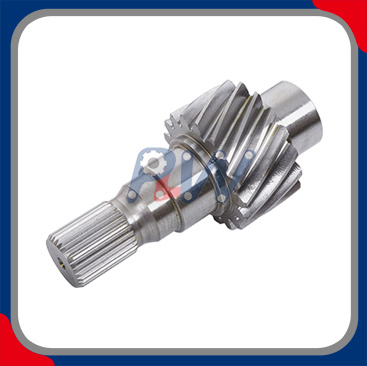
Understanding the Role of Material in Helical Gears
What Makes Material Selection Critical for Helical Gears?
The material used for helical gears is pivotal in determining how well the gears perform under stress, how long they last, and how effectively they can transmit power. Several factors contribute to this selection, including the gear's load capacity, efficiency, noise reduction, and durability. In particular, materials with high tensile strength and wear resistance are favored in helical gear manufacturing, as they can endure significant mechanical stresses without deforming or breaking.
A few key considerations when selecting material for helical gears include:
● Strength and Load-Bearing Capacity: Materials must have sufficient strength to handle the torque and load without failing.
● Durability and Wear Resistance: The material must withstand constant friction without excessive wear, ensuring long-term reliability.
● Noise Reduction: The smooth meshing of helical gears is crucial for minimizing noise and vibration during operation. The right material can help achieve quieter, more efficient performance.
● Manufacturing Feasibility: The material must be suitable for the manufacturing processes required, such as machining, heat treatment, or casting.
The Functionality of Helical Gears in Different Applications
Helical gears are used in a variety of applications across different industries, including automotive, aerospace, and industrial machinery. The material chosen for the gear depends on the specific requirements of the application. For example, gears used in high-speed, high-torque systems need materials that can withstand greater forces and temperatures. Conversely, gears in low-speed, low-torque applications may prioritize cost-effectiveness and vibration damping.
● Automotive Industry: In car transmissions, helical gears are favored for their ability to transmit power smoothly with less noise compared to straight-cut gears. Materials such as carbon steel and alloy steel are commonly used for their strength and durability, which can handle the high torque typically found in automotive applications.
● Aerospace Industry: In aerospace, gears are subjected to extreme conditions, including high speeds and fluctuating temperatures. The need for lightweight components that can handle high loads makes titanium alloys and composites the preferred choice for helical gears in this industry. These materials ensure high performance while keeping the weight of the components to a minimum.
● Industrial Machinery: Industrial machinery, such as gearboxes, conveyors, and compressors, often uses helical gears due to their ability to handle heavy loads and operate continuously without frequent failures. Steel and cast iron are commonly used in these applications because of their durability and wear resistance under continuous use.
By selecting the appropriate material for each application, industries can optimize gear performance and ensure the longevity of their equipment.
Common Materials Used for Helical Gears
Steel: The Most Popular Choice for Helical Gears
Steel is by far the most widely used material for manufacturing helical gears due to its excellent mechanical properties, which include high strength, durability, and wear resistance. Steel gears are capable of withstanding high levels of stress and torque, making them ideal for a wide range of applications, from automotive to heavy machinery.
Types of Steel for Helical Gears:
● Carbon Steel: Carbon steel is the most cost-effective choice for general-purpose helical gears. It provides adequate strength and durability for medium-load applications, but it may not offer the same resistance to corrosion as alloy steel or stainless steel. Carbon steel gears are often used in automotive and industrial machinery.
● Alloy Steel: Alloy steel is a more advanced material that includes additional elements such as chromium, molybdenum, or nickel. These alloying elements enhance the steel's hardness, strength, and heat resistance, making it suitable for high-load and high-temperature applications. 20CrMnTi, for example, is commonly used for carburized helical gears that are subjected to heavy loads and high stress, providing superior wear resistance and toughness.
● Stainless Steel: Stainless steel offers exceptional resistance to corrosion, making it ideal for environments where gears are exposed to moisture or chemicals. However, it is generally more expensive than carbon and alloy steel, and it is typically used in specialized applications, such as marine or chemical industries.
For industrial machinery, carbon steel helical gears, such as those produced by Hangzhou Perpetual Machinery & Equipment Co., Ltd., are commonly used in gearboxes and other mechanical systems, offering an excellent balance of cost, performance, and durability.
When durability and corrosion resistance are priorities, alloy steel or stainless steel is often the better choice for helical gears.
Cast Iron for Helical Gears
Cast iron is another material used for helical gears, especially in applications that involve low to medium loads. Cast iron has excellent machinability and vibration damping properties, making it ideal for applications where reducing noise and vibration is a priority.
Advantages and Disadvantages of Cast Iron:
Advantages | Disadvantages |
Good vibration damping capabilities | Lower tensile strength compared to steel |
Cost-effective for low to medium load applications | Prone to brittleness under high-impact conditions |
Excellent machinability, reducing manufacturing costs | Not suitable for high-speed applications |
While cast iron gears may not be as strong as steel, they are well-suited for low-speed, heavy-load applications such as pumps, conveyors, and slow-moving industrial machinery.
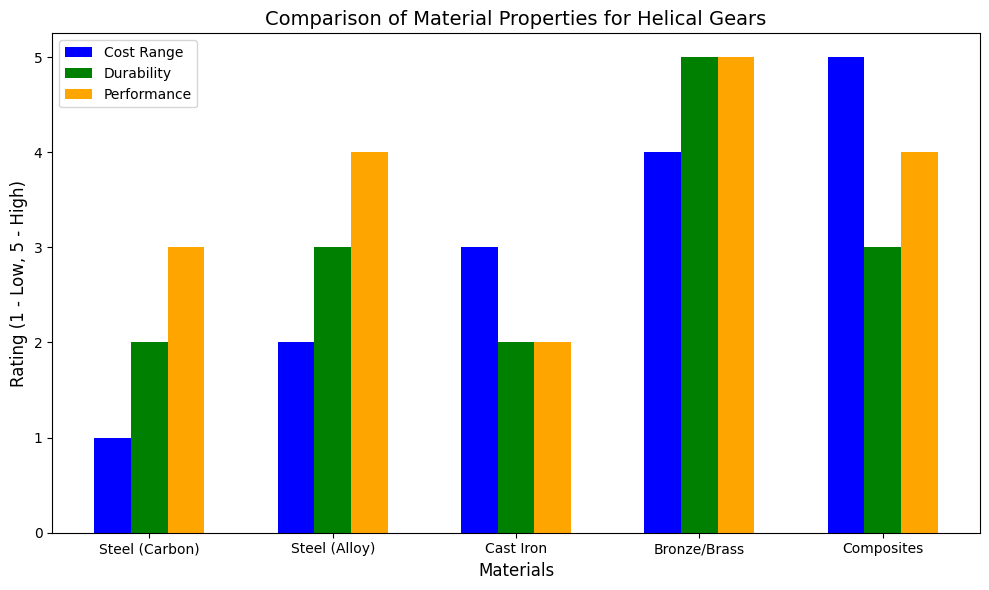
Below is a comparison chart showcasing the key properties (cost range, durability, and performance) of various materials used in helical gear production:
At Hangzhou Perpetual Machinery & Equipment Co., Ltd., we specialize in the production of high-performance PLW helical gears, designed for demanding applications in industrial machinery and automotive systems. Our helical gears are manufactured from carbon steel, specifically 20CrMnTi, which is carburized and quenched to provide superior wear resistance and enhanced load capacity.
Key Features of PLW Helical Gears:
● High Load Capacity: Our gears are designed to handle heavy loads and perform efficiently under high-stress conditions.
● Smooth Meshing Performance: The progressive meshing of the teeth reduces noise and vibration, providing a quieter and more efficient operation compared to spur gears.
● Wide Range of Applications: Suitable for use in gearboxes, compressors, conveyors, machine tool spindles, automotive drive axles, and more.
● International Standards Compliance: Our helical gears are manufactured in compliance with international standards like ISO 6336, DIN 3990, and AGMA 2001, ensuring high geometric accuracy and reliable performance.
Available Materials:
We offer PLW helical gears in various materials, including:
● Carbon Steel (20CrMnTi) for high-load applications.
● 45# Steel for medium-load applications, which is quenched and tempered for improved durability.
● Cast Iron (HT200) for low-speed, light-load applications.
Our products are packaged securely in plastic bags, carton boxes, and plywood cases, ensuring they arrive in perfect condition for installation and use.
Advanced Materials for Specialized Helical Gears
Alloy Materials: Enhancing Performance and Durability
For specialized applications requiring even higher performance, alloy materials like bronze and brass are often used in helical gear manufacturing. These alloys are chosen for their excellent wear resistance and ability to perform in high-temperature environments.
● Bronze: Bronze is often used in marine and chemical processing industries because of its corrosion resistance, especially in environments exposed to moisture or chemicals. It offers great durability, making it ideal for gear systems that undergo continuous operation under harsh conditions.
● Brass: Brass is another cost-effective alloy that offers corrosion resistance and excellent wear properties. It is commonly used in applications that require gears to operate in low-speed environments, such as machinery with limited space or where quiet operation is essential.
If you're working in industries that require corrosion-resistant gears, such as marine or chemical processing, bronze and brass should be considered for helical gear systems.
Composite Materials for Lightweight and High-Torque Applications
In recent years, composite materials have gained popularity for use in high-performance, lightweight helical gears. Composites such as carbon fiber and glass-reinforced plastics offer a high strength-to-weight ratio, making them ideal for aerospace, automotive, and other high-performance applications where reducing weight is essential without compromising strength.
While these materials offer excellent performance in certain environments, they can be expensive and may not offer the same level of durability as metals like steel or cast iron in high-load applications.
How Material Affects the Cost of Helical Gears
Cost-Benefit Analysis of Material Choices for Helical Gears
Choosing the right material for helical gears is not only about performance but also about managing costs effectively. Different materials come at varying price points, and the long-term benefits of a more expensive material must be weighed against its upfront cost.
Here’s a comparative analysis of the material costs and their benefits in helical gear production:
Material | Cost Range | Durability | Performance | Ideal Applications |
Steel (Carbon) | Low | Medium | High | Automotive, general machinery |
Steel (Alloy) | Medium | High | Very High | Industrial, high-load machinery |
Cast Iron | Low | Medium | Medium | Pumps, conveyors, light loads |
Bronze/Brass | High | High | Very High | Marine, chemical industries |
Composites | Very High | Medium | High | Aerospace, high-performance vehicles |
By analyzing the total cost over the lifespan of the gears, it becomes evident that opting for high-performance materials, such as alloy steel or bronze, may offer better long-term value despite their higher initial cost.
Manufacturing Processes for Different Materials in Helical Gears
Machining and Heat Treatment: Enhancing Material Properties
The manufacturing process is crucial in enhancing the material properties of helical gears. Most helical gears are produced by machining or casting processes, and heat treatment is often applied to improve the hardness and fatigue resistance of the gear.
For steel gears, processes such as carburizing or case hardening are commonly used. These treatments harden the outer layer of the gear while keeping the inner core softer, ensuring that the gear can withstand both wear and shock loads.
Material-Specific Manufacturing Considerations
Each material requires a specific manufacturing approach to achieve optimal results. Steel and alloy steel, for example, require precise machining and heat treatment, whereas cast iron is often cast into molds. Composites, on the other hand, require specialized processes like molding or 3D printing, which can increase manufacturing complexity and cost.
When working with advanced materials like composites or alloys, ensure that your manufacturing facility has the appropriate equipment and expertise to handle these materials.
Conclusion
In conclusion, the material selected for helical gears plays a significant role in determining their performance, longevity, and cost-effectiveness. Whether it's steel for its durability, cast iron for its machinability, or bronze for its corrosion resistance, each material has its unique advantages and drawbacks. By understanding the operational requirements and material properties, industries can make informed decisions that optimize gear performance and minimize costs.
For industries such as machinery and automotive, carbon steel helical gears, like those produced by Hangzhou Perpetual Machinery & Equipment Co., Ltd., offer a balance of strength, efficiency, and affordability. With certifications like DIN 3990 and ISO 6336, these gears meet the highest international standards for geometric accuracy and load capacity.
FAQ
Q: What material is commonly used for helical gears?
A: The most common materials for helical gears are steel (carbon, alloy, and stainless steel) due to their strength, durability, and wear resistance. Steel provides excellent performance for high-load applications.
Q: Why is material choice important for helical gears?
A: The material of helical gears affects their load capacity, durability, and noise reduction. The right material ensures efficient performance and reduces wear and tear over time.
Q: How does material impact the efficiency of helical gears?
A: A higher-quality material, such as alloy steel, improves the strength and wear resistance of helical gears, enhancing their efficiency in transmitting power smoothly and quietly.
Q: Can composite materials be used for helical gears?
A: Yes, composite materials like carbon fiber can be used for lightweight, high-torque applications. They reduce the gear’s weight while maintaining strength, but they may not be as durable as metals for heavy-duty use.
Q: What is the advantage of using steel in helical gears?
A: Steel, especially alloy steel, offers high strength, durability, and wear resistance, making it ideal for helical gears that need to handle heavy loads and operate in demanding conditions.

 Español
  English
  العربية
  Français
  Русский
  Português
  Deutsch
  italiano
  日本語
日本語  한국어
한국어  Nederlands
  Tiếng Việt
  ไทย
ไทย  Polski
  Türkçe
  አማርኛ
አማርኛ  ພາສາລາວ
  ភាសាខ្មែរ
  Bahasa Melayu
  ဗမာစာ
ဗမာစာ  தமிழ்
தமிழ்  Filipino
  Bahasa Indonesia
  magyar
  Română
  Čeština
  Монгол
  қазақ
қазақ  Српски
  हिन्दी
  فارسی
فارسی  Kiswahili
  Slovenčina
  Slovenščina
  Norsk
Norsk  Svenska
  українська
  Ελληνικά
  Suomi
Suomi  Հայերեն
  עברית
עברית  Latine
  Dansk
Dansk  اردو
اردو  Shqip
Shqip  বাংলা
বাংলা  Hrvatski
  Afrikaans
  Gaeilge
  Eesti keel
  Māori
Māori  සිංහල
සිංහල  नेपाली
  Oʻzbekcha
  latviešu
  অসমীয়া
  Aymara
  Azərbaycan dili
  Bamanankan
  Euskara
  Беларуская мова
  भोजपुरी


