Views: 0 Author: Site Editor Publish Time: 2026-03-16 Origin: Site


Replacing a roller chain seems simple, until 40 and 41 look almost the same. Pick the wrong one, and you may face poor fit, faster wear, or lower reliability. In this article, you will learn the real difference between them, how that difference affects performance, and which chain makes more sense for your equipment.
At first glance, 40 and 41 roller chain seem close enough to be treated as near equivalents. They are often discussed together because they belong to the same general size range, and that can make the choice look more minor than it really is. In practice, though, small dimensional differences in a chain can affect how it carries load, how it fits within a drive system, and how long it holds up under daily use. That is why this comparison matters so much during replacement or equipment selection.
The most important distinction is structural. A 40 roller chain is built with a wider, heavier form, while a 41 chain has a narrower, lighter profile. That difference influences far more than appearance. A wider chain body generally supports a sturdier overall build, which helps the chain tolerate more demanding work. By contrast, the narrower profile of 41 makes it easier to use where space is more limited or where the machine does not need the added bulk of a heavier chain. Even when two chains look similar in a catalog or on a machine, these design differences can lead to very different results once the system is running.
Feature | 40 Roller Chain | 41 Roller Chain |
General build | Wider and heavier | Narrower and lighter |
Strength profile | Better suited to higher loads | Better suited to lighter loads |
Space efficiency | Takes up more room | Easier to use in tighter layouts |
Typical use logic | Chosen for durability and tougher service | Chosen for compactness and lighter-duty work |
The reason 40 is commonly viewed as the stronger option is not just that it is bigger. Its heavier construction gives it a more solid working profile in applications where the chain is exposed to higher loads, longer operating cycles, or rougher conditions. In real-world terms, that means it is often the safer choice for equipment that cannot afford frequent chain stretch, unstable operation, or premature wear. Rather than thinking of 40 as simply oversized, it makes more sense to view it as a chain built for more demanding service.
This matters especially in machinery that runs under steady stress. A more robust chain can handle that stress with better stability over time, which helps reduce maintenance pressure and unexpected replacement. For buyers, the value of 40 is less about raw specification language and more about confidence: it is usually chosen when the application asks the chain to do more work, more often, under less forgiving conditions.
That does not make 41 a lesser choice. In the right application, it is the smarter one. A 41 roller chain is better understood as a purposeful option for lighter-duty systems, compact machinery, and layouts where extra chain width may be unnecessary or inconvenient. Its narrower design can be useful when the machine needs a more compact drive arrangement or when the operating load does not justify stepping up to a heavier chain.
A practical way to think about 41 is this:
● It suits applications where the load is moderate rather than severe.
● It works well when machine space is tighter.
● It can be a sensible choice when a lighter chain design matches the job more efficiently.
In other words, 41 is not just a reduced version of 40. It serves a different purpose. The decision between them is not about choosing better versus worse, but about matching chain construction to the actual demands of the equipment.
The performance gap between 40 and 41 roller chain becomes much clearer once the chain is placed under real operating load. A 40 chain generally lasts longer in harder-working applications because its heavier construction is better suited to repeated stress, higher torque, and more demanding duty cycles. In equipment that runs for long hours or carries heavier loads, that extra structural strength helps the chain resist premature wear, elongation, and instability. This is why 40 is often preferred in systems where durability matters more than compact size.
By contrast, 41 roller chain can perform very well when the application stays within its intended range. In lighter-duty machinery, it can deliver smooth, reliable operation without the added size and weight of a heavier chain. The problem starts when it is expected to do more than it was designed for. If a narrower, lighter chain is used in a system with frequent shock loads, heavy resistance, or long continuous operation, wear tends to appear sooner. That shorter service life does not mean 41 is inferior in general; it means performance depends heavily on matching the chain to the real demands of the machine.
Operating factor | 40 Roller Chain | 41 Roller Chain |
Load handling | Better for heavier working loads | Better for lighter loads |
Durability under stress | More resistant to wear in demanding use | More likely to wear faster if overloaded |
Long-run stability | Better suited to continuous or tougher duty cycles | Performs best in less demanding setups |
Best service-life outcome | Achieved in heavy-duty applications | Achieved when used within lighter-duty limits |
Chain selection is not only about picking the strongest option available. In many machines, layout and operating environment matter just as much as load capacity. A more compact roller chain can be the better fit when equipment is built around limited clearance, smaller drive components, or a tighter machine envelope. In those situations, 41 offers a practical advantage because its narrower build can work more comfortably where a bulkier chain may be unnecessary or awkward to install.
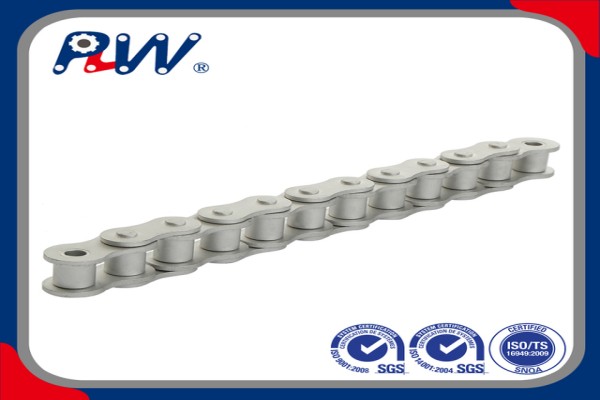
Operating conditions also shape the right choice. A machine exposed to dirt, vibration, impact, or heavier resistance usually benefits from the stronger construction of 40. But not every system works under those conditions. In lighter machines with more controlled loads, a compact chain can support efficient operation without adding unnecessary mass or size. Buyers often focus first on strength, but real-world performance also depends on whether the chain suits the machine’s physical design, working intensity, and available space.
A practical way to think about operating fit is to check three things before choosing:
● how much load the chain will carry on a regular basis
● how much room the machine allows around the drive system
● whether the equipment runs under light, moderate, or consistently demanding conditions
A 40 roller chain is usually the better option when the application places more consistent stress on the drive system. That does not only mean obviously heavy machinery. It also includes equipment that runs for long periods, handles repeated starts and stops, works under higher resistance, or operates in conditions where downtime is costly. In those cases, the decision is less about choosing the physically larger chain and more about choosing a chain with a greater margin for load, wear, and long-term stability.
The strongest reason to choose 40 is reliability under pressure. If the machine is expected to run under a meaningful workload every day, a heavier-duty chain reduces the chance that the system will be pushed too close to its limits. That extra tolerance matters in rougher environments as well. Dust, vibration, shock loading, or uneven operating conditions tend to expose weaknesses faster, so a more robust chain often makes better sense even if the equipment itself is not the largest in the facility. For buyers, 40 is often the safer choice when the application leaves little room for failure or premature wear.
A 41 roller chain makes more sense when the application does not truly require the additional strength and width of 40. In lighter-duty systems, selecting the heavier chain simply because it sounds stronger can lead to an unnecessarily bulky setup. When the machine runs under moderate load and the design benefits from a narrower profile, 41 becomes a more efficient match. It is especially useful in equipment where space around the drive system is limited or where a more compact chain better suits the overall layout.
This choice is really about fit. If the job does not involve sustained heavy loading, frequent shock, or harsh service conditions, using 41 can be the more practical route. It allows the drive system to stay compact without adding chain size that the application does not need. That makes it a deliberate engineering choice rather than a compromise. In the right setup, 41 delivers the performance required without overspecifying the chain.
Application question | Choose 40 if... | Choose 41 if... |
How demanding is the load? | The system handles heavier or more continuous load | The load is moderate or light |
How tough is the environment? | The machine faces rougher conditions, vibration, or higher stress | The operating environment is more controlled |
How much space is available? | Space is not the primary limitation | A narrower chain suits the machine layout better |
What matters most? | Durability and safety margin | Compact fit and right-sized performance |
If you are deciding between the two, start by looking at how the machine actually works rather than how the chains compare on paper. A heavy, continuous, or high-stress application usually points toward 40 because it gives the system more working durability and more room for unexpected strain. A lighter, tighter, and less demanding setup usually points toward 41 because it matches the application without adding unnecessary bulk.
A useful decision framework is to ask:
● Does the machine run under frequent stress or long operating hours?
● Is there limited space around the drive system?
● Would extra chain strength improve reliability, or would it simply add size without real benefit?
Those questions usually make the choice clearer than comparing chain numbers alone.
In practice, roller chain identification usually starts with the part number stamped on the box, shown in a catalog, or listed on a replacement order. That number often tells you the chain standard and pitch before you even measure anything. In ANSI-style naming, numbers such as 40 or 41 are commonly used in North American listings, and buyers often rely on them when matching a worn chain to an existing sprocket. At a practical level, the number helps narrow the chain family, but it does not tell the whole story by itself. Two chains may look close in size, yet differ in width, strength, or intended duty.
British Standard notation is usually handled differently in listings, often with part names that follow another numbering convention rather than the familiar ANSI format. For maintenance teams and buyers, the important point is not memorizing every system but recognizing that chain numbers are tied to a standard. If the part number comes from one system and the replacement comes from another, the chain should be cross-checked carefully instead of being assumed equivalent based on appearance alone. That is especially important when a machine has already been modified, repaired with mixed components, or sourced from different markets.
Identification cue | What it usually tells you | Why it matters in practice |
Base number such as 40 or 41 | Chain size family and standard reference | Helps match pitch and general dimensions |
Standard format | ANSI-style or another naming system | Prevents ordering the wrong chain type |
Suffix or added letters | Construction variation or configuration | Shows whether the chain differs from the basic version |
Strand description | Single, double, or multiple strands | Affects load capability and replacement accuracy |
Beyond the base number, real part names often include suffixes or markings that change the meaning of the chain description. These additions may indicate heavy-duty construction, straight sidebar design, or strand count. In actual product listings, that extra terminology is important because it separates a standard chain from one built for a more specific job. A buyer who stops at the base size may end up ordering something that fits dimensionally but does not match the original chain’s construction or service capability.
This is why identification in practice usually combines part number reading with visual checking. A heavy-duty version may look similar to a standard chain at a glance, while a multiple-strand chain can be mistaken for a simple width variation if inspected too quickly. The language used in part names is not just catalog detail; it reflects how the chain is built and how it is expected to perform once installed.
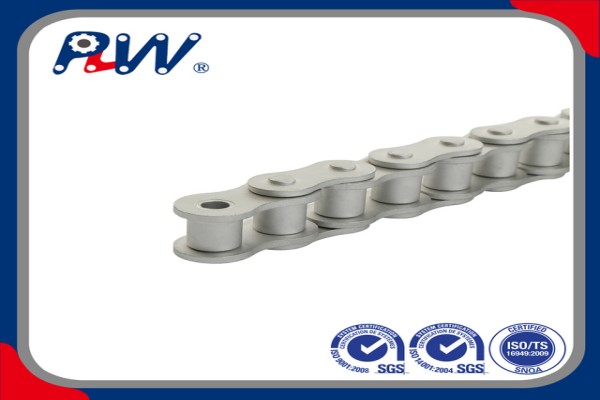
When markings are unclear or the chain has been in service for a long time, inspection shifts attention to the visible parts most closely tied to wear. The components most often checked are:
● Pins, because wear here contributes directly to chain elongation
● Bushings, since internal wear affects joint movement and service life
● Rollers, which show contact wear and engagement problems
● Plates, where cracking, bending, or distortion may appear
● Connecting links, because they are common checkpoints during replacement and repair
These parts matter not only for maintenance but also for identification. A chain may be labeled one way on paper, but wear patterns on pins, bushings, rollers, and plates often reveal whether it has been overloaded, poorly lubricated, or mismatched with the sprocket. In day-to-day maintenance, that connection between naming and physical inspection is what allows a roller chain to be identified accurately enough for the next replacement decision.
40 roller chain is wider and stronger for heavier work, while 41 fits lighter, tighter setups. The right choice depends on load, space, and sprocket fit, not looks alone. HANGZHOU PERPETUAL MACHINERY & EQUIPMENT CO., LTD. delivers reliable roller chain solutions with durable quality and dependable service.
A: The main roller chain difference is width and strength: 40 is wider and stronger, while 41 is narrower and lighter.
A: A roller chain replacement is not automatic, because fit, load, and sprocket compatibility must match.
A: For higher loads and tougher duty, 40 roller chain is usually the safer choice.
A: Choose 41 roller chain for lighter-duty equipment, tighter spaces, and applications with lower load demands.


