Introduction
Measuring a roller chain correctly is essential for optimal machinery performance. If not measured accurately, a roller chain can cause inefficiency and costly repairs. Proper sizing ensures smooth operation and reduces wear. In this article, we will cover how to measure roller chains effectively, from pitch to roller diameter. You’ll learn the tools needed and the key dimensions to consider, ensuring your chain fits perfectly with your sprockets.
Tools Required for Measuring Roller Chain
Calipers for Precise Measurements
To measure roller chains accurately, calipers are essential tools. They provide precision when measuring key dimensions such as roller diameter and pitch, which are critical for ensuring compatibility with sprockets. A caliper allows you to capture small, precise measurements, reducing the risk of errors that could affect the chain's fit and performance. Digital calipers, which offer both metric and imperial units, are especially useful for greater versatility and accuracy when measuring roller chains in industrial applications.
Ruler or Tape Measure
While a ruler or tape measure can serve as a backup tool, they are less reliable for precise measurements compared to calipers. This is especially true for smaller chains, where even slight measurement discrepancies can lead to misfit and operational issues. For basic length measurements or when calipers are unavailable, a tape measure can be a quick option, but it's essential to double-check the results for accuracy, especially if the chain is heavily worn.
Optional Tools
Chain Wear Gauge: This specialized tool is crucial for assessing chain elongation. As roller chains wear over time, they stretch, which can affect system performance. A chain wear gauge helps identify elongation early, allowing you to replace the chain before it leads to further mechanical issues or damage.
Master Link Removal Tool: If your roller chain uses a master link, this tool is helpful for temporarily removing it to facilitate more accurate measurements. It simplifies the process of measuring chain length and ensures precision, especially in chains with complex links or worn connections.
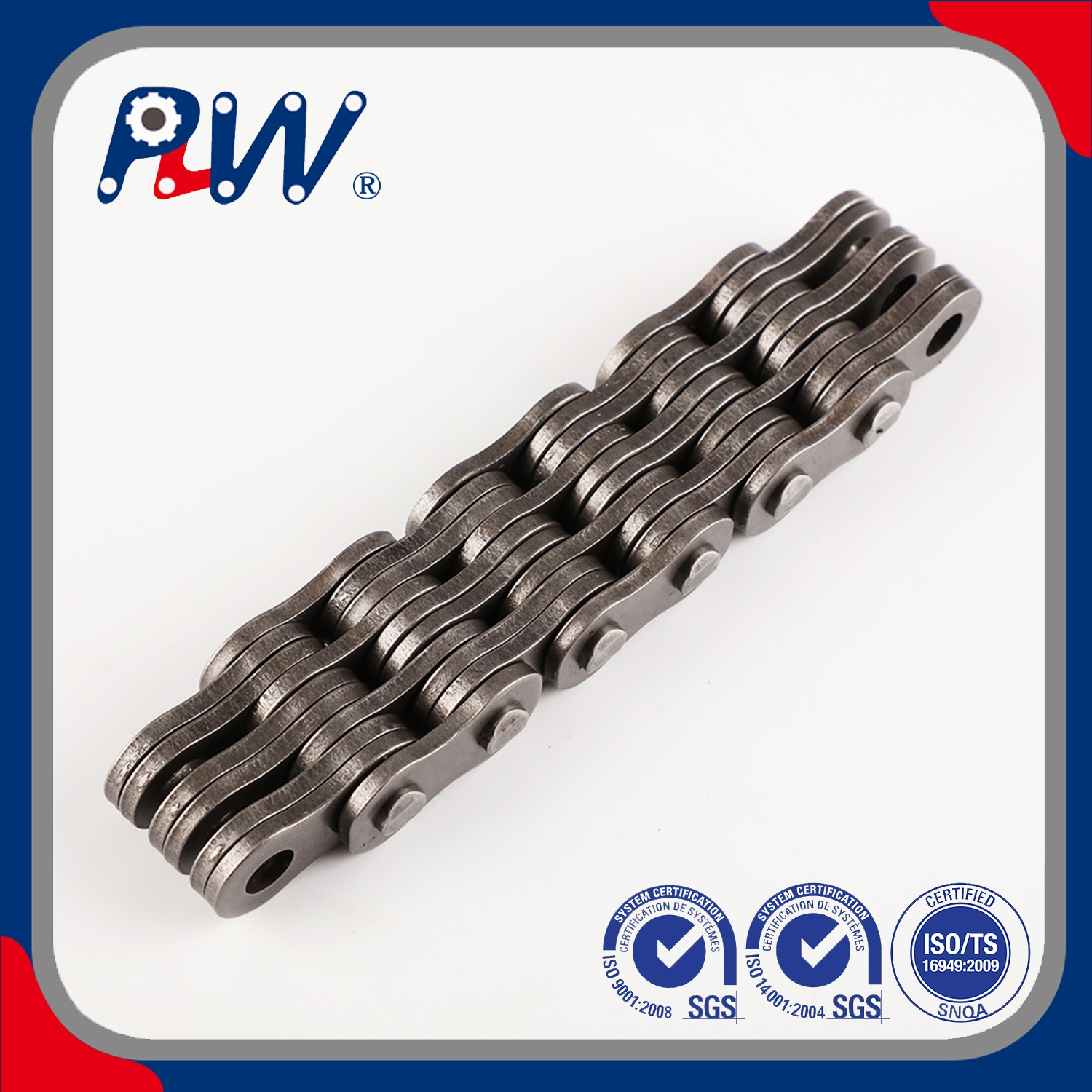
Key Dimensions to Measure
Chain Pitch
Pitch is the distance between the centers of two adjacent pins. This is one of the most important measurements when identifying a roller chain. The pitch directly affects how the chain fits onto sprockets. A chain with the wrong pitch will cause poor engagement with the sprocket, resulting in inefficiency and premature wear.
How to measure pitch:
| Step | Measurement | How to Measure | Importance | Example/Standard Application |
| Step 1: Locate a Section of Chain | Chain Section | Select a straight section of the roller chain, free of twists or bends. This ensures accurate measurement. | A straight section of the chain is essential for ensuring accurate and consistent pitch measurement. | Select a section with 5-10 links for a more accurate result. |
| Step 2: Measure the Distance Between Pins | Distance Between Pin Centers | Using calipers, measure the distance from the center of one pin to the center of the next. | This is the key dimension for pitch, and accuracy here ensures compatibility with the sprocket. | For example, if you're measuring a #40 chain, measure the center-to-center distance between two pins. |
| Step 3: Measure a Longer Section for Precision | Total Section Length | For better accuracy, measure a longer section of the chain. Then, divide the total distance by the number of links in that section. | Measuring a longer section helps average out any slight discrepancies in individual measurements, increasing accuracy. | Measure a section with 10-20 links and divide by the number of links for more precision. |
| Step 4: Subtract Roller Diameter (if applicable) | Adjustment for Roller Diameter | If the chain is still installed, measure the total distance from the outside of one roller to the outside of the next, and subtract the roller diameter. | This compensates for the roller diameter, giving you the exact pitch (distance between pin centers). | If the total distance across two rollers is 21.21 mm and the roller diameter is 8.51 mm, subtract 8.51 mm to get a pitch of 12.7 mm. |
Roller Diameter
The roller diameter is the measurement from one side of the roller to the other. This is crucial because the roller's size determines how it fits within the sprocket teeth. Too large or too small a roller can lead to poor sprocket engagement, causing vibration and wear.
How to measure roller diameter:
| Step | Measurement | How to Measure | Importance | Example/Standard Application |
| Step 1: Position the Caliper | Caliper Setup | Place the caliper across the roller, ensuring it is perpendicular to the roller’s axis. | Proper alignment ensures an accurate measurement of the roller diameter at its widest point. | Hold the caliper at a 90-degree angle to the roller for precise measurement. |
| Step 2: Measure the Roller Diameter | Roller Diameter (d1) | Using the caliper, measure the width of the roller at the widest point. This is typically across the cylindrical part of the roller. | Measuring the diameter correctly ensures the chain fits properly with the sprocket. Incorrect roller size can cause misalignment and inefficiency. | For example, measure the diameter of a #40 chain roller, which should be around 0.312 inches (7.92 mm). |
| Step 3: Double-Check for Accuracy | Confirm Measurement | After measuring once, recheck the roller diameter in a different position to ensure accuracy. | Double-checking prevents errors from misalignment and ensures consistency, especially with larger rollers. | For a #50 chain, the roller diameter should be around 0.375 inches (9.53 mm). |
| Step 4: Account for Wear (if applicable) | Consider Worn Rollers | If the chain is worn, the roller diameter may have reduced. Measure on a fresh or less worn section for accuracy. | Measuring worn rollers can lead to inaccurate results. Ensure you're using a section with minimal wear for more precise sizing. | A worn #60 chain roller might measure slightly smaller than 0.469 inches (11.91 mm). |
Inner Width
The inner width measures the space between the inner link plates. This dimension ensures that the roller chain fits properly with your sprockets, allowing the chain to move smoothly without friction.
| Step | Measurement | How to Measure | Importance | Example/Standard Application |
| Step 1: Position the Caliper | Caliper Setup | Place the caliper inside the roller, measuring across the space between the two inner plates. Ensure the caliper is aligned straight. | Correct alignment ensures an accurate measurement of the inner width and avoids errors caused by misalignment. | Hold the caliper perpendicular to the plates, ensuring it touches both inner sides evenly. |
| Step 2: Measure the Inner Width | Inner Width (b1) | Measure the internal width between the two inner plates, directly across the roller. This space determines how the chain fits onto the sprockets. | Accurate inner width measurement is essential for proper sprocket engagement, ensuring smooth operation and preventing friction. | For example, #40 chain might have an inner width of 0.312 inches (7.94 mm). |
| Step 3: Double-Check for Consistency | Check for Consistency | After measuring once, recheck the inner width at different points across the roller to ensure consistency. | Double-checking prevents errors caused by slight variations or wear, ensuring the chain fits properly across the entire length. | A worn section of the #50 chain might have slightly reduced inner width, which could cause misalignment. |
| Step 4: Account for Wear (if applicable) | Consider Worn Inner Plates | For chains with wear, the inner width could be slightly increased. Measure on a less worn section to get accurate results. | Worn inner plates can affect the inner width, leading to incorrect measurements. Ensure the section is free from excessive wear for precision. | A worn #60 chain might show an increase in inner width due to plate wear, affecting the sprocket fit. |
Step-by-Step Guide to Measuring Your Roller Chain
Chain Measurement Procedure
| Step | Measurement | How to Measure | Importance | Example/Standard Application |
| Step 1: Check for Chain Markings | Chain Markings | Look for size markings stamped on the outer plate of the chain. Common markings for ANSI and BS chains. | Helps confirm the chain size and serves as a reference for measurements. Makes it easier to identify the correct chain. | ANSI Chains: 40, 50, 60; BS Chains: 08B, 10B. |
| Step 2: Measure the Roller Diameter | Roller Diameter (d1) | Use calipers to measure the diameter of one roller. Measure across the widest point of the roller. | Ensures proper fit with the sprocket. An incorrect roller diameter causes misalignment and inefficient power transmission. | #40 Chain Roller Diameter: 0.312 inches (7.92 mm), Range: 0.310 - 0.315 inches |
| Step 3: Measure the Pitch | Pitch (P) | Measure the distance between the centers of two adjacent pins using calipers. Measure the distance from the outside of one roller to the next, subtract roller diameter. | Pitch determines sprocket compatibility. Incorrect pitch causes poor engagement, wear, and system failure. | #40 Chain Pitch: 0.500 inches (12.7 mm), Range: 0.490 - 0.510 inches |
| Step 4: Measure the Inner Width | Inner Width (b1) | Measure the internal width between the inner plates of the chain. Done at the roller, across the inner faces of the plates. | Ensures the chain fits the sprockets properly, allowing smooth operation. Incorrect inner width causes friction and noise. | #40 Chain Inner Width: 0.312 inches (7.94 mm), Range: 0.310 - 0.320 inches |
Standard Roller Chain Measurements (Example: ANSI #40)
| Measurement | Size | Measurement Range | Standard Application |
| Roller Diameter | 0.312 inches (7.92 mm) | 0.310 - 0.315 inches | Used in general machinery like conveyors and industrial machines. Ensures proper engagement with the sprocket. |
| Pitch | 0.500 inches (12.7 mm) | 0.490 - 0.510 inches | Common pitch size for industrial applications. Ensures compatibility with standard sprockets for smooth operation. |
| Inner Width | 0.312 inches (7.94 mm) | 0.310 - 0.320 inches | Ensures the chain fits properly with sprockets, reducing friction and enhancing operational life in light-to-medium-duty systems. |
Understanding Chain Wear and Elongation
Identifying Stretched Chains
As roller chains undergo normal use, they naturally experience elongation, which causes the chain to stretch. This elongation leads to a loss of tension, preventing the chain from maintaining a proper fit with the sprockets. While some wear and stretch is inevitable over time, once a chain stretches beyond its acceptable limit, it can cause significant operational issues, such as slipping, misalignment, and increased friction. These issues result in decreased efficiency, higher maintenance costs, and potentially damaging effects on both the chain and sprockets. Monitoring chain wear and replacing it in a timely manner helps ensure that your equipment continues to run smoothly without excessive wear.
How to Check for Chain Wear
To check for chain wear, measure the total length of a set number of links (typically 10 or more) and compare it to the original length of the chain. If the chain is longer by 2-3% compared to its original size, it's an indication that the chain has stretched beyond its acceptable limit. A chain that has elongated this much will no longer fit properly with the sprockets, causing inefficient operation and potential damage to the system. Regular monitoring of this elongation ensures that chains are replaced before they cause more extensive issues, preventing costly repairs or downtime.
Using a Chain Wear Gauge
A chain wear gauge is a specialized tool designed to measure chain elongation with great accuracy. It is inserted between the inner plates of the chain, where it checks whether the chain has stretched beyond its usable limit. The gauge measures the amount of elongation and provides an indication of whether the chain is still within acceptable limits for operation. By using a wear gauge regularly, you can identify when a chain is no longer functioning at its optimal capacity, preventing further damage to the sprockets and ensuring timely replacements. This tool is an effective way to prevent unexpected chain failures and ensure the longevity of your machinery.
Common Roller Chain Measurement Mistakes to Avoid
Measuring on a Bent or Tensioned Chain
Measuring a roller chain that is bent or under tension can lead to inaccurate readings. When the chain is bent, its geometry is altered, which will distort measurements such as pitch, roller diameter, and width. Tensioned chains also stretch slightly under load, causing the measurements to differ from the relaxed chain state. Always ensure the chain is laid flat and relaxed before taking any measurements. This helps avoid errors and ensures that the chain’s dimensions are measured correctly, resulting in accurate sizing and proper fit with sprockets.
Incorrectly Measuring Pin-to-Pin
One of the most common mistakes when measuring roller chain pitch is incorrectly measuring from the edge of one pin to the edge of the next. The pitch of a chain is defined as the distance between the centers of two adjacent pins. Measuring from edge to edge will result in an incorrect pitch, leading to poor sprocket engagement and misalignment. To avoid this, always use calipers to measure from the center of one pin to the center of the next pin. This method ensures that the chain is properly sized for its corresponding sprockets and avoids potential performance issues.
Mixing Metric and Imperial Units
When measuring roller chains, it is crucial to use consistent units throughout the process. Mixing metric and imperial units can lead to significant discrepancies in the final measurements, which may cause incorrect sizing and compatibility issues. For example, measuring roller diameter in inches and pitch in millimeters without proper conversion can result in an improperly sized chain, leading to poor sprocket engagement and chain failure. Always ensure that either all measurements are in metric or all are in imperial units, and if necessary, carefully convert between them for accuracy.
The Importance of Accurate Roller Chain Sizing
Sprocket Engagement and Performance
Accurate roller chain sizing is crucial for ensuring that the chain engages properly with the sprockets, facilitating smooth and efficient operation. When the chain is correctly sized, it fits perfectly into the sprocket teeth, allowing for consistent power transmission without slipping or skipping. Improper sizing can result in slippage, causing the chain to lose engagement with the sprockets. This leads to inefficient power transfer, unnecessary wear on the chain and sprockets, and overall reduced system performance. Correct chain sizing maximizes the chain's lifespan and maintains optimal operation, preventing these issues.
Lifespan and Durability of Machinery
A properly sized roller chain contributes significantly to the longevity of both the chain itself and the machinery it operates. When the chain is correctly sized, it maintains the right tension and fit, reducing friction between the chain and sprockets, which minimizes wear. Additionally, proper sizing helps prevent overloading of the bearings and other components, which could lead to premature failure. Over time, incorrect chain sizing causes excessive strain on the system, leading to frequent repairs and reduced machinery lifespan. Correct sizing helps ensure a longer, more reliable operational life for both the chain and its associated equipment.
Preventing Damage to Equipment
Incorrectly sized roller chains can lead to severe mechanical issues such as misalignment, excessive wear, and even complete equipment failure. When a chain is too large or too small, it doesn’t mesh properly with the sprockets, causing unnecessary strain on both the chain and sprocket teeth. Over time, this misalignment increases friction, leading to premature wear, overheating, and potential failure of key components like bearings or shafts. Proper sizing of the roller chain ensures that the equipment runs smoothly, reducing the risk of costly downtime, repairs, and replacements while enhancing the overall efficiency and reliability of the machinery.
Conclusion
Accurately measuring roller chains is crucial for the optimal performance and longevity of your machinery. By following the step-by-step guide, you can measure key dimensions like pitch, roller diameter, and inner width to ensure compatibility with sprockets. Understanding these measurements helps avoid costly mistakes and enhances machine efficiency. For reliable roller chains and high-quality machinery parts, HANGZHOU PERPETUAL MACHINERY & EQUIPMENT CO., LTD provides durable, precision-engineered solutions that ensure optimal performance, extended equipment life, and reduced maintenance costs. Their products are designed to meet your specific needs and ensure smooth operation.
FAQ
Q: What is a roller chain?
A: A roller chain is a type of chain used in mechanical systems to transmit power between sprockets. It consists of rollers, pins, and links, providing efficient power transfer in machinery.
Q: How do I measure the pitch of a roller chain?
A: To measure the pitch of a roller chain, use calipers to measure the distance between the centers of two adjacent pins. This ensures compatibility with sprockets for smooth operation.
Q: Why is accurate roller chain sizing important?
A: Accurate roller chain sizing ensures proper engagement with sprockets, preventing misalignment, slippage, and excessive wear, thus extending the lifespan of both the chain and machinery.
Q: How can I check if my roller chain is worn out?
A: Use a chain wear gauge to measure elongation. If the chain is longer by 2-3%, it's time to replace it. Regular checks help prevent further damage to sprockets and machinery.
Q: What tools are required for measuring a roller chain?
A: You’ll need calipers to measure the roller diameter, pitch, and inner width. Optional tools include a chain wear gauge and master link removal tool for added accuracy.

 Español
  English
  العربية
  Français
  Русский
  Português
  Deutsch
  italiano
  日本語
日本語  한국어
한국어  Nederlands
  Tiếng Việt
  ไทย
ไทย  Polski
  Türkçe
  አማርኛ
አማርኛ  ພາສາລາວ
  ភាសាខ្មែរ
  Bahasa Melayu
  ဗမာစာ
ဗမာစာ  தமிழ்
தமிழ்  Filipino
  Bahasa Indonesia
  magyar
  Română
  Čeština
  Монгол
  қазақ
қазақ  Српски
  हिन्दी
  فارسی
فارسی  Kiswahili
  Slovenčina
  Slovenščina
  Norsk
Norsk  Svenska
  українська
  Ελληνικά
  Suomi
Suomi  Հայերեն
  עברית
עברית  Latine
  Dansk
Dansk  اردو
اردو  Shqip
Shqip  বাংলা
বাংলা  Hrvatski
  Afrikaans
  Gaeilge
  Eesti keel
  Māori
Māori  සිංහල
සිංහල  नेपाली
  Oʻzbekcha
  latviešu
  অসমীয়া
  Aymara
  Azərbaycan dili
  Bamanankan
  Euskara
  Беларуская мова
  भोजपुरी


