Downtime during peak harvest or planting seasons represents a devastating financial loss. A single broken link can halt an entire harvesting fleet. The resulting delays cost thousands of dollars per hour. Replacing a snapped chain under field conditions wastes critical daylight. You need a reliable transmission setup to keep machinery running efficiently. Selecting the right capacity is not simply about matching physical dimensions. You must align dynamic load expectations against material strength. You also have to factor in harsh environmental realities. Dust, mud, and continuous vibration destroy weak components rapidly. This guide provides a robust technical and commercial framework. It helps you evaluate and specify the most effective agricultural chains for your heavy-duty machinery. You will learn how to measure baseline compatibility and assess structural materials. We also cover practical strategies for minimizing wear risks in the field.
Key Takeaways
- Accurate measurement of pitch, roller diameter, and inner width is non-negotiable for baseline compatibility.
- Dynamic loads and environmental stressors (dust, moisture, shock) dictate required tensile strength and material treatments.
- Specific attachment styles, such as A type steel agricultural chains, are required for particular conveying and elevating applications.
- Evaluating an agricultural chains supplier based on metallurgical consistency and inventory reliability is as critical as the chain specifications themselves.
Framing the Decision: Matching Chain Capacity to Operational Loads
Selecting the wrong chain capacity introduces severe operational risks. Undersizing a chain is a dangerous mistake. It often leads to catastrophic failure during peak operations. When a chain snaps under load, it damages surrounding machinery components. Bearings shatter and sprockets warp. You lose valuable production time repairing this collateral damage.
Conversely, oversizing carries its own set of problems. Many operators believe bigger is always better. This assumption is incorrect. Oversized chains add unnecessary weight to your equipment. They increase fuel consumption and require more horsepower to drive. They also carry a higher initial price tag. Furthermore, bulky chains often fail to fit within the spatial constraints of existing machine guards. You must find the optimal middle ground.
The core objective is balancing your initial investment against wear life and maintenance intervals. A highly durable chain costs more upfront. However, it extends the time between replacement cycles. You save money on labor and lost production. Achieving this balance requires careful analysis of your specific operational loads.
Engineers evaluate capacity using two distinct dimensions. First, they look at Ultimate Tensile Strength (UTS). UTS represents the absolute breaking point. If forces exceed this limit, the metal snaps. Second, they evaluate the Working Load Limit (WLL). WLL defines the safe operational zone for continuous use. You should never size a chain based merely on average operating loads. Agricultural machinery frequently encounters sudden shock loads. Hitting a large rock or a dense patch of crop spikes the tension dramatically. You must specify a capacity robust enough to absorb these peak shock loads without yielding.
Best Practices for Load Evaluation
- Review historical failure logs to identify recurring shock load damage.
- Consult machinery manuals for baseline horsepower and torque outputs.
- Add a safety factor multiplier to account for unexpected field debris.
- Differentiate between continuous drive applications and intermittent heavy lifting.
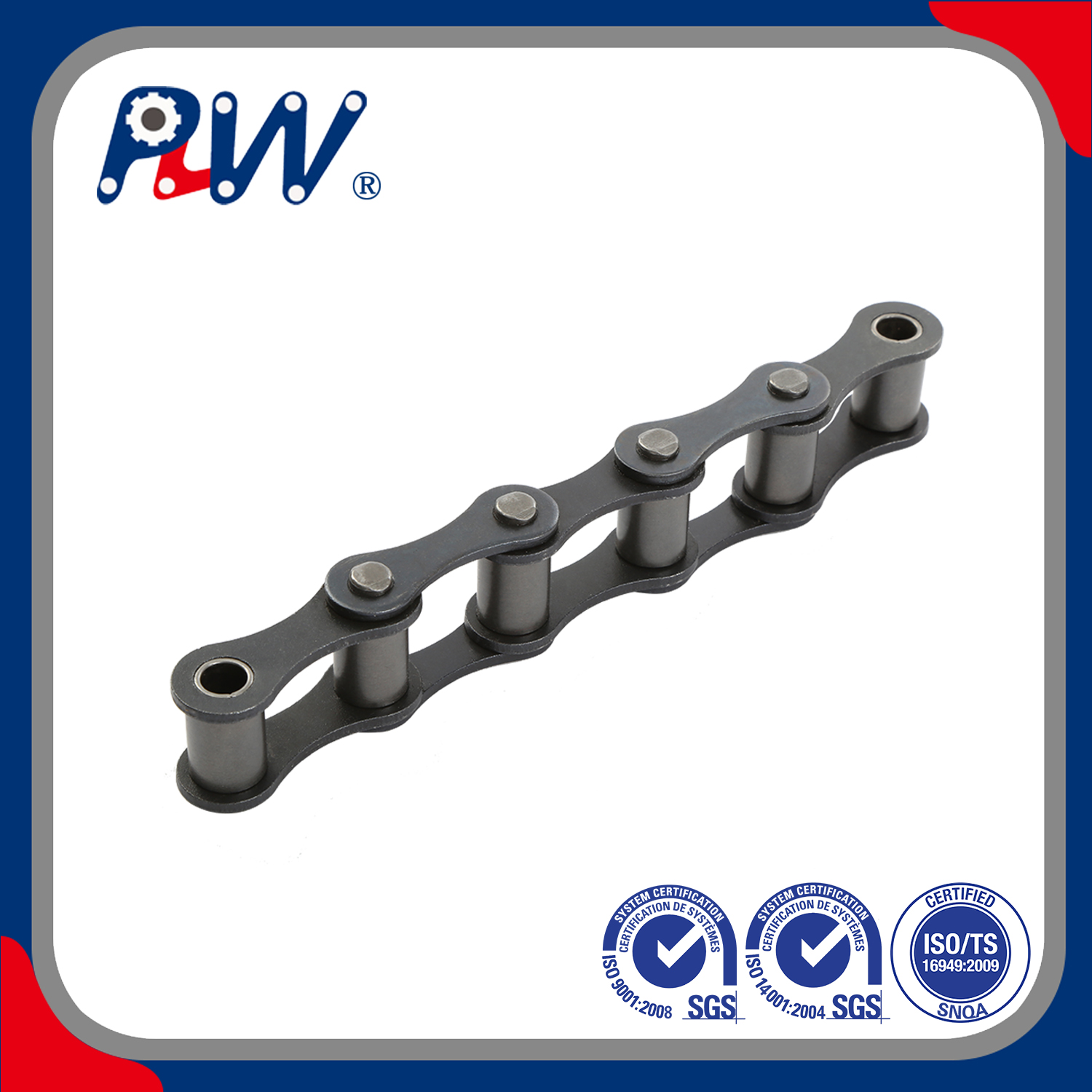
Core Agricultural Chains Specifications to Evaluate
Accurate measurement is the foundation of compatibility. You cannot guess component sizes. Visual similarity is highly deceptive. Two chains might look identical from a distance. However, a fraction of a millimeter difference causes rapid sprocket wear. You must master the fundamental measurement steps.
Follow these precise steps to identify your existing chain size:
- Measure the Pitch: Calculate the exact distance between the centers of two adjacent pins. This is the most critical dimension.
- Measure the Roller Diameter: Determine the outside diameter of the roller. This dictates how it seats inside the sprocket teeth.
- Measure the Inner Width: Calculate the distance between the inner side plates. This ensures the sprocket teeth clear the plates smoothly.
- Measure the Pin Diameter: Check the thickness of the connecting pins. This directly correlates to the shear strength of the assembly.
You must understand how to read and interpret manufacturer data. Integrating the correct agricultural chains specifications ensures seamless integration. Spec sheets provide detailed blueprints. They list pin lengths, plate thicknesses, and average tensile strengths. Compare these figures directly against your measurement data.
A crucial technical nuance is the difference between standard series and heavy series components. Standard variants serve well for uniform, predictable loads. Heavy series variants utilize significantly thicker side plates. This added thickness dramatically improves fatigue resistance. If your equipment operates on uneven terrain, you need this fatigue resistance. The thicker plates prevent micro-cracks from forming under continuous stress.
Always use precision digital calipers for measurement. Rulers and tape measures are entirely inadequate. We strongly recommend measuring multiple links simultaneously. Take the measurement across five or ten pitches. Divide the total by the number of pitches. This method averages out minor manufacturing variations. It also helps you detect early signs of elongation in older components.
Comparison of Standard and Heavy-Duty Chain Characteristics
| Feature | Standard Series | Heavy Series |
| Side Plate Thickness | Standard gauge steel | Thicker, high-gauge steel |
| Fatigue Resistance | Moderate | Exceptionally high |
| Shock Load Capacity | Sufficient for normal use | Designed for severe impact |
| Weight Profile | Lighter, fuel-efficient | Heavier, requires robust drives |
Selecting the Right Type and Material for the Application
Different machinery applications demand vastly different solutions. Combine harvesters require high-speed drive systems. These components must transmit maximum power smoothly. Balers utilize specialized roller configurations. They face continuous compression forces. Manure spreaders operate in highly corrosive environments. Their drive systems require maximum chemical resistance. Elevators and conveyors lift heavy, abrasive materials vertically. They need structural rigidity above all else.
Attachment variations play a huge role in material handling. You will frequently encounter a type steel agricultural chains in these scenarios. These models feature specific attachment plates. Engineers weld or bolt flights, buckets, and slats to these attachments. They are prominent in grain elevators and heavy-duty conveyors. Their robust construction provides excellent high-impact resistance. They handle the violent scooping action required in grain handling without bending.
Environmental stressors dictate your material choices. Abrasive soils act like grinding paste. Sand and grit penetrate the clearances between pins and bushings. This causes rapid internal wear. Corrosive fertilizers eat away raw carbon steel quickly. Extreme weather introduces severe moisture and rust risks.
You combat these realities through specific metallurgical treatments. Heat treatments like case hardening create a tough outer layer on the pins. This layer resists abrasive soil. Plating options offer chemical protection. Zinc or nickel plating shields the base steel from corrosive fertilizers. Specialized alloys, including varying grades of stainless steel, provide ultimate weather resistance. However, stainless steel often sacrifices some tensile strength. You must weigh the need for corrosion resistance against your overall strength requirements.
Common Material Mistakes
- Using standard carbon steel in fertilizer spreading applications.
- Ignoring the need for hardened pins in sandy, abrasive soils.
- Assuming stainless steel provides the same load capacity as hardened carbon steel.
Implementation Realities and Wear Risks
Procuring the perfect component is only half the battle. Poor installation ruins even the most expensive parts. Improper tensioning is a leading cause of premature failure. A loose fit causes the rollers to jump the sprocket teeth. This creates massive shock loads. A tight fit places excessive strain on the machine's bearings. The metal stretches and snaps prematurely.
Misalignment is equally destructive. If the driving and driven sprockets do not align perfectly, they grind against the side plates. This friction generates immense heat. It strips away protective coatings and weakens the metal structure. Furthermore, mixing old sprockets with a fresh installation is a terrible practice. Worn sprocket teeth have altered pitch diameters. They force the new rollers out of their natural seating position. This accelerates wear exponentially.
You must challenge the "install and forget" mentality. Maintenance is an ongoing requirement. High-dust agricultural environments demand realistic lubrication strategies. Standard wet oil attracts dust. It forms a thick, abrasive sludge. This sludge destroys the pins and bushings from the inside. Instead, use dry-film lubricants or specially formulated agricultural greases. These products repel dust while providing internal boundary lubrication.
It is crucial to understand elongation. Chains do not actually stretch like rubber bands. Instead, the internal pins and bushings wear down over time. As material grinds away, the space between the links increases. This phenomenon is known as elongation. You must monitor this wear actively. Measure the elongation percentage regularly. Industry standards dictate replacing the assembly when elongation reaches 3%. Continuing past this point causes the rollers to gouge the sprockets. Establishing proactive replacement schedules prevents catastrophic failure and protects your expensive drivetrain components.
How to Shortlist an Agricultural Chains Supplier
Your components are only as reliable as the company manufacturing them. Partnering with a reputable agricultural chains supplier ensures consistent performance. You need a vendor capable of meeting strict industrial tolerances. Vetting potential partners requires a logical, methodical approach.
Start by evaluating their Quality Assurance (QA) protocols. Look for recognized ISO certifications. These certifications prove the facility follows standardized manufacturing processes. Request transparent metallurgical testing data. A trustworthy vendor will happily provide certificates of analysis. These documents verify the steel grade and the depth of heat treatments. Never accept generic claims of "high quality." Demand empirical data.
Next, assess their availability and supply chain resilience. Agricultural seasons operate on tight windows. You cannot wait six weeks for a replacement part during the fall harvest. Ask potential vendors about their inventory depth. Can they deliver replacements rapidly during critical periods? Do they maintain regional distribution centers? A robust supply chain minimizes your downtime risks.
Finally, evaluate their technical support capabilities. A true partner does more than ship boxes. They offer active engineering support. Do they have application engineers on staff? Can they help you audit your current drive setups? A great vendor will analyze your recurring failure points. They will suggest upgrades, such as moving from a standard to a heavy series. They help you solve systemic problems rather than just selling you replacement parts.
Before committing to a massive order, take a concrete next step. Recommend initiating a pilot test. Request engineering samples for your high-stakes OEM machinery or large-fleet applications. Install these samples on a few problematic machines. Monitor their performance closely over a season. This real-world testing proves the supplier's claims before you risk your entire operation's budget.
Conclusion
Selecting the optimal power transmission components demands a rigorous, analytical approach. You must evaluate your dynamic loads carefully. You must account for abrasive and corrosive environmental factors. Relying on precise measurements guarantees baseline compatibility. Applying specific metallurgical treatments protects your investment against harsh field conditions. Do not leave your operational success to chance or guesswork.
Always remember the hidden economics of machinery parts. The cheapest initial option rarely saves you money. Budget components often carry massive hidden penalties. They fail prematurely. They cause frequent downtime. They damage related drivetrain components. The ultimate price includes lost production hours and emergency labor costs.
Take proactive steps today to secure your equipment's reliability. Consult your internal engineering team to audit your current drive systems. Contact a qualified vendor for a specific capacity and material audit. By aligning your specifications with reality, you protect your harvest and maximize your operational efficiency.
FAQ
Q: How do I accurately measure agricultural chains specifications in the field?
A: Always use precision digital calipers. Measure the pitch across multiple links (e.g., 5 or 10 pitches) and divide by the number of links. This accounts for minor manufacturing variances and existing wear. Then, carefully measure the roller diameter, inner width, and pin diameter to match manufacturer spec sheets.
Q: What are A type steel agricultural chains used for?
A: They are engineered for heavy-duty conveying and elevating tasks. They feature specific integrated attachments (like A1 or A2 styles). These attachments allow operators to mount buckets, flights, or slats securely. You find them primarily in grain elevators and crop conveyors requiring high-impact resistance.
Q: When should I upgrade to a heavy-duty chain series?
A: Upgrade when you experience frequent side-plate fatigue or cracking. If your machinery encounters repeated shock loads from field debris, heavy-duty variants are necessary. You should also upgrade if you have recently increased the horsepower or torque output of your driving machinery.
Q: Can I run a new agricultural chain on worn sprockets?
A: No. Doing so is a costly mistake. Worn sprocket teeth have altered pitch diameters. They fail to engage new rollers correctly. This mismatch accelerates wear on the new components exponentially. You should always replace chains and sprockets together as a matched set.

 Español
  English
  العربية
  Français
  Русский
  Português
  Deutsch
  italiano
  日本語
日本語  한국어
한국어  Nederlands
  Tiếng Việt
  ไทย
ไทย  Polski
  Türkçe
  አማርኛ
አማርኛ  ພາສາລາວ
  ភាសាខ្មែរ
  Bahasa Melayu
  ဗမာစာ
ဗမာစာ  தமிழ்
தமிழ்  Filipino
  Bahasa Indonesia
  magyar
  Română
  Čeština
  Монгол
  қазақ
қазақ  Српски
  हिन्दी
  فارسی
فارسی  Kiswahili
  Slovenčina
  Slovenščina
  Norsk
Norsk  Svenska
  українська
  Ελληνικά
  Suomi
Suomi  Հայերեն
  עברית
עברית  Latine
  Dansk
Dansk  اردو
اردو  Shqip
Shqip  বাংলা
বাংলা  Hrvatski
  Afrikaans
  Gaeilge
  Eesti keel
  Māori
Māori  සිංහල
සිංහල  नेपाली
  Oʻzbekcha
  latviešu
  অসমীয়া
  Aymara
  Azərbaycan dili
  Bamanankan
  Euskara
  Беларуская мова
  भोजपुरी


