Agricultural machinery OEMs face a rigid supply chain reality. Planting and harvesting seasons are fixed. Nature waits for no one. If you delay equipment assembly, farmers miss critical weather windows. Because of this, component delays are completely unacceptable. Every procurement cycle presents a massive core conflict. You must balance the capital tied up in inventory against the risk of stockouts during peak production. Minimum Order Quantities (MOQ) drain your available cash flow. Meanwhile, unpredictable lead times threaten your entire assembly schedule.
This article provides procurement managers and engineers with a highly verifiable framework. You will learn how to negotiate, forecast, and plan your procurement cycles effectively. We aim to help you secure reliable components without sacrificing profit margins. By mastering these variables, you keep production lines moving smoothly all year long.
Key Takeaways
- Customization directly dictates MOQ; aligning internal engineering with standard specifications where possible reduces upfront volume requirements.
- Blanket orders and forecasted scheduling mitigate volatile lead times, shifting inventory risk away from the OEM.
- Accurate RFQ preparation—including precise technical drawings and mating chain details—is the highest-leverage action to secure firm lead times.
- Evaluating a supplier requires looking past unit cost and verifying their raw material stock and in-house machining capacity.
The Cost-Availability Tradeoff in Agricultural Procurement
Framing the Business Problem
OEM cash flow strongly prefers low minimum order quantities. Conversely, factory production efficiency mandates high volumes. Manufacturers need large batches to cover expensive setup costs. Changing machine tooling takes hours. Factories must amortize these setup costs across thousands of units to maintain profitability. This friction creates a significant business problem for procurement teams. If you order too few parts, factories reject the purchase order or inflate the unit price. If you order too many, you trap vital cash in excess inventory. You must navigate this tradeoff carefully. A successful procurement strategy finds the middle ground. It aligns factory efficiency needs with your internal cash flow constraints.
Seasonality Risks
Missed delivery windows carry devastating financial impacts in the agricultural sector. The window for planting or harvesting often lasts only a few weeks. If your components arrive post-harvest, you cannot sell the assembled machinery until the following year.
- Extended Carrying Costs: Unused inventory sits in your warehouse for a full twelve months. You pay for storage space, insurance, and security.
- Cash Flow Drain: Capital remains frozen in metal parts rather than funding new R&D or marketing efforts.
- Obsolescence Risk: Engineering updates might render stored parts obsolete before the next season begins.
Missing a deadline does not just delay revenue. It actively multiplies your operational expenses.
The "Custom vs. Standard" Dilemma
Standard catalog components offer distinct advantages. They provide low MOQ and extremely short lead times. Manufacturers run standard parts continuously. They keep safety stock readily available. Custom geometries present a completely different scenario. Specialized features, such as mud-clearing teeth or unique bore sizes, require significant tooling investments. They also demand longer production queues. Custom parts force factories to halt standard production lines. They must install new hobs and recalibrate heat-treatment ovens.
Table: Custom vs. Standard Component Sourcing
| Feature | Standard Catalog Parts | Custom Geometries |
| MOQ Requirements | Very low (often single digits) | High (driven by setup costs) |
| Lead Time | Days to weeks | Months (includes tooling creation) |
| Tooling Costs | None (amortized by manufacturer) | High upfront investment |
| Flexibility | High (easy to swap suppliers) | Low (locked into one vendor) |
Strategies to Negotiate MOQ Without Sacrificing Margins
Tooling Amortization
Negotiating custom part volumes requires strategic financial thinking. Manufacturers often demand high MOQs simply to recover their initial tooling expenses. You can shift this dynamic entirely. Offer to pay upfront for custom tooling or cutting dies. This upfront payment motivates the manufacturer to lower the required MOQ for the actual production run. They no longer carry the financial risk of unrecovered setup costs. You gain the flexibility to order smaller, more manageable batches throughout the year. This strategy protects your unit margins while keeping inventory levels remarkably lean.
Component Standardization
Engineering departments often design unique drive systems for every new tractor or combine model. This habit destroys purchasing leverage. You should actively discuss the value of standardization with your design team. By standardizing your agricultural sprockets specifications across different equipment models, you consolidate purchasing volumes. Instead of buying 500 units of three different designs, you buy 1,500 units of one unified design. This massive volume increase gives you incredible negotiating power. Factories gladly lower unit costs for larger standardized runs. It simplifies their production schedule and reduces their internal waste.
System-Level Purchasing
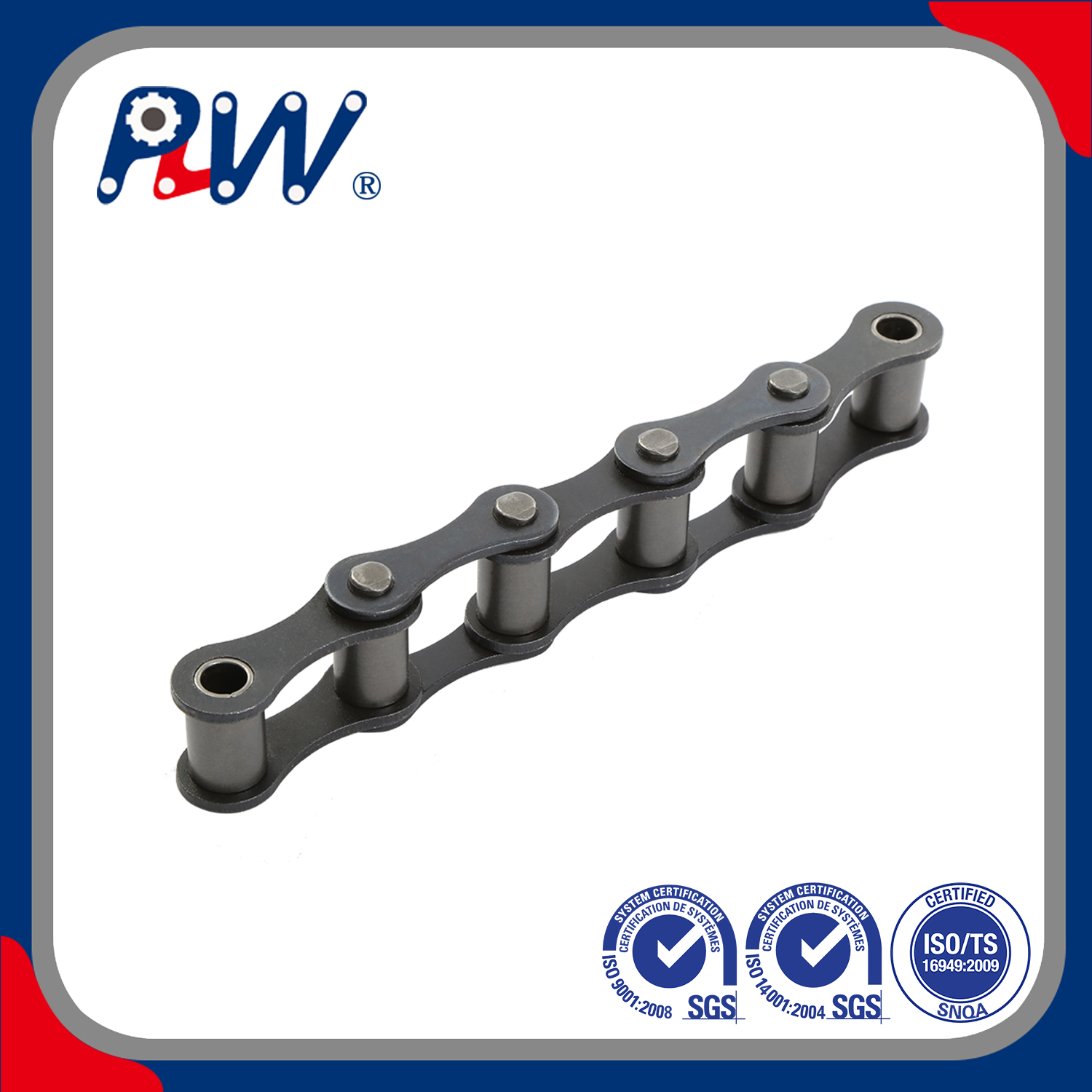
Procurement teams often buy components in isolation. You can achieve better results through kitting and system-level purchasing. Ordering sprockets concurrently with mating components, such as a type steel agricultural chains, increases your total order value. Suppliers love bundled orders. It guarantees them a larger share of your wallet. In exchange for this larger overall contract, they often grant leverage to negotiate lower MOQs on individual line items. System-level purchasing also guarantees that mating parts fit together perfectly. The supplier assumes responsibility for the dimensional compatibility of the entire drive assembly.
Reducing Lead Time Variability in Supply Chains
Blanket Purchase Orders
Volatile lead times disrupt assembly schedules and frustrate floor managers. You can neutralize these spikes by issuing a 12-month blanket purchase order. A blanket order outlines your total annual volume. It includes scheduled, staggered delivery releases. This commitment allows suppliers to secure raw materials early. They lock in steel prices before market fluctuations occur. They can machine parts during their slower months and hold them for your designated release dates. Blanket orders provide predictability for both parties. You get guaranteed delivery dates. The supplier gets guaranteed revenue.
Safety Stock Agreements
Service Level Agreements (SLAs) offer another powerful tool for lead time reduction. You can discuss setting up an SLA where the supplier holds a mutually agreed-upon percentage of safety stock. For example, they might agree to hold 20% of your annual volume in their own warehouse. You must highlight transparent assumptions during these negotiations. Carrying fees might be baked into the final unit price. The supplier assumes warehouse costs, insurance, and handling fees. You must evaluate if the slight increase in unit cost justifies the absolute elimination of stockout risks.
Material Sourcing Proximity
Offshore raw material shortages represent a severe hidden risk. Global logistics networks remain highly vulnerable to port strikes, canal blockages, and geopolitical tensions. You must identify where your supplier buys their steel. Favor suppliers who maintain deep local inventories. They should stock carbon and alloy steels suitable for heavy-duty applications. A supplier with a warehouse full of 1045 or 4140 steel billets can start machining immediately. They do not wait six weeks for a cargo ship to arrive. Material proximity directly guarantees production speed.
How to Evaluate an Agricultural Sprockets Supplier
Production Autonomy vs. Outsourcing
You must evaluate whether the vendor controls the end-to-end manufacturing process. Do they handle cutting, hobbing, and heat treatment in-house? Or do they subcontract these critical steps? In-house control directly correlates to reliable lead times. When a supplier subcontracts heat treatment, they lose control of the schedule. They wait in line behind other companies. Finding a fully autonomous agricultural sprockets supplier mitigates this risk entirely.
Chart: In-House Production vs. Subcontracting Risks
| Production Stage | In-House Control Benefits | Subcontracting Risks |
| Gear Hobbing | Immediate scheduling adjustments | Queue delays at third-party shops |
| Heat Treatment | Strict hardness validation (HRC) | Inconsistent batch hardening |
| Surface Coating | Rapid turnaround times | Transit damage between facilities |
Quality and Compliance Audits
Procurement teams must verify specific quality metrics before signing any contracts. You cannot rely on marketing brochures. You need hard data.
- ISO Certifications: Verify active ISO 9001 compliance to ensure standard operating procedures exist.
- Heat Treatment Reports: Request past documentation showing Rockwell hardness (HRC) results. Proper hardening ensures maximum wear resistance in abrasive soil conditions.
- Dimensional Inspection Records: Ask for First Article Inspection (FAI) reports. Check their tolerance bands against industry standards like DIN or ANSI.
- Material Test Reports (MTR): Ensure they provide mill certs proving the chemical composition of the raw steel.
Agility and Crisis Response
Every agricultural season brings unexpected challenges. You might need expedited orders due to a sudden spike in equipment sales. You might require a design revision mid-production. You must assess the supplier's track record for handling these crises. Look for evidence of flexible machining cells. Rigid, high-volume-only production lines cannot pivot quickly. Flexible cells utilize advanced CNC technology to swap setups rapidly. Ask the supplier for a case study detailing how they handled a recent emergency order for another OEM.
The OEM Buyer’s RFQ Checklist for Accurate Forecasting
Technical Documentation
Vague Request for Quotations (RFQs) generate inaccurate lead times. You must specify your needs with absolute clarity. Provide complete CAD files and detailed 2D drawings. Ensure these drawings display acceptable tolerance bands clearly. Material grade callouts must be precise. Do not simply write "steel." Specify "AISI 1045" or "AISI 4140". When you design custom agricultural sprockets, ambiguity is your worst enemy. If the factory has to guess your requirements, they will pad the lead time to protect themselves.
Surface and Heat Treatment Specs
Surface treatments drastically alter production timelines. You must clarify requirements like induction hardening, carburizing, or black oxide coating upfront. These additions require distinct production steps. They directly impact both MOQ requirements and lead times. Heat treatment ovens operate efficiently only when full. The factory must batch your parts with similar orders to run a cost-effective cycle. If you require a highly unique hardening depth, you might have to pay for the entire oven batch. This instantly increases your MOQ.
Demand Forecasting Transparency
Suppliers reward transparency. Outline your production needs clearly. Share a 6-to-12-month production forecast during the RFQ phase. This proactive step allows the supplier to offer optimized pricing tiers. They can plan their raw material purchases effectively. They can schedule machine time months in advance. Realistic delivery schedules emerge from honest demand forecasting. Do not hide your true volume expectations hoping for a better spot price. Build a collaborative relationship based on shared data and mutual trust.
Conclusion
Planning MOQ and lead time is a highly collaborative effort. It requires continuous communication between engineering and procurement teams. It is not just a simple purchasing transaction. Shortlisting the right manufacturing partner mitigates the inherent risks of agricultural seasonality. You must balance cash flow constraints with the absolute necessity of on-time delivery. Standardize your components where possible. Utilize blanket purchase orders to secure materials early. Demand transparent quality documentation from your vendors. As a clear next step, we prompt you to audit your current demand forecasts immediately. Submit your updated technical drawings to your manufacturing partners for a detailed, realistic lead-time assessment today.
FAQ
Q: What is the typical lead time for custom agricultural sprockets?
A: Lead times generally range from 8 to 12 weeks for custom designs. Prototyping and tooling creation take roughly 4 to 6 weeks. Full production runs require an additional 4 to 6 weeks. Timelines heavily depend on local raw material availability and specific heat-treatment requirements.
Q: Can I get a low MOQ for heavy-duty agricultural applications?
A: Yes, it is possible. However, low MOQs for custom heavy-duty parts incur significantly higher per-unit costs. The manufacturer must spread expensive machine setup time and specialized heat-treatment batching costs across a much smaller number of units.
Q: How do material specifications affect production timelines?
A: Requesting specialized alloys or non-standard heat treatments extends lead times. Manufacturers typically keep standard carbon steels readily in stock. Special alloys require custom mill orders, which can add weeks to the schedule before machining even begins.

 Español
  English
  العربية
  Français
  Русский
  Português
  Deutsch
  italiano
  日本語
日本語  한국어
한국어  Nederlands
  Tiếng Việt
  ไทย
ไทย  Polski
  Türkçe
  አማርኛ
አማርኛ  ພາສາລາວ
  ភាសាខ្មែរ
  Bahasa Melayu
  ဗမာစာ
ဗမာစာ  தமிழ்
தமிழ்  Filipino
  Bahasa Indonesia
  magyar
  Română
  Čeština
  Монгол
  қазақ
қазақ  Српски
  हिन्दी
  فارسی
فارسی  Kiswahili
  Slovenčina
  Slovenščina
  Norsk
Norsk  Svenska
  українська
  Ελληνικά
  Suomi
Suomi  Հայերեն
  עברית
עברית  Latine
  Dansk
Dansk  اردو
اردو  Shqip
Shqip  বাংলা
বাংলা  Hrvatski
  Afrikaans
  Gaeilge
  Eesti keel
  Māori
Māori  සිංහල
සිංහල  नेपाली
  Oʻzbekcha
  latviešu
  অসমীয়া
  Aymara
  Azərbaycan dili
  Bamanankan
  Euskara
  Беларуская мова
  भोजपुरी


