Ever wondered how power is efficiently transferred between intersecting shafts? Bevel gears play a vital role in making this possible. From automotive gearboxes to robotics, their design directly impacts performance and longevity.
In this guide, we’ll explore the types of bevel gears, key design principles, and how to enhance their performance. Get ready to unlock the secrets behind precision bevel gear design.
This comprehensive guide will cover the following aspects of bevel gear design:
● The different types of bevel gears and their applications.
● Essential design principles for ensuring high efficiency, durability, and precision.
● Advanced considerations for materials, tooth profiles, and manufacturing techniques.
● Key testing methods to ensure the performance and reliability of bevel gears.
● Practical tips for overcoming common challenges in bevel gear design and troubleshooting.
Understanding Bevel Gears
What is a Bevel Gear?
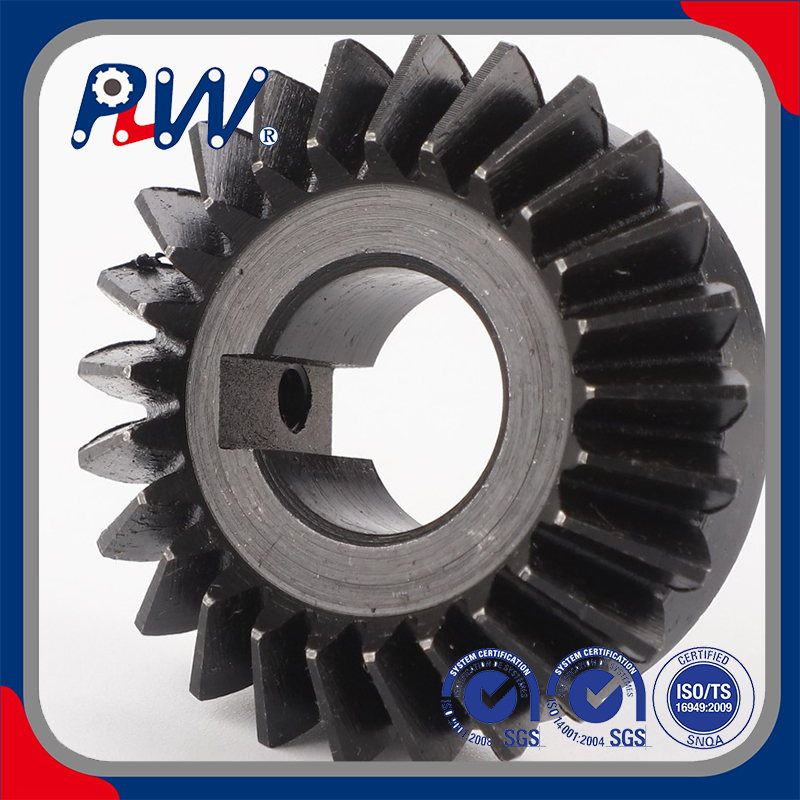
A bevel gear is a mechanical gear designed to transmit power between two shafts that typically intersect at a 90-degree angle. The teeth of bevel gears are conically shaped, and they engage with the corresponding teeth of another gear to transfer rotational motion. These gears are used to change the direction of rotation and transmit torque between intersecting shafts. Bevel gears come in several types, including straight bevel gears, spiral bevel gears, and hypoid bevel gears, each offering different advantages in terms of load capacity, efficiency, and noise reduction.
The Importance of Bevel Gear Design
Bevel gears are not just used for simple torque transmission; they are integral in transferring power between shafts that operate at varying angles, typically 90°. They are commonly employed in complex systems like automotive transmissions, industrial machinery, robotics, and HVAC systems, where high torque and precision alignment are critical for performance. When designed correctly, bevel gears ensure smooth power transfer, reducing the chances of breakdowns, improving energy efficiency, and lowering maintenance costs. Their importance extends to various applications, ranging from light-duty precision systems to heavy-duty industrial machinery. A well-designed bevel gear can significantly enhance the overall performance and lifespan of the machinery in which it is installed.
Key Challenges in Bevel Gear Design
Designing bevel gears involves overcoming several challenges to ensure optimal performance. One of the most common issues is gear misalignment, which can lead to uneven load distribution and increased wear on the gear teeth. This can also result in higher noise levels and vibrations, which are undesirable in many precision applications. Another challenge is ensuring that the gear teeth mesh smoothly, as poor meshing can cause increased friction, wear, and energy loss. Additionally, bevel gears are often subjected to high loads, requiring the use of durable materials and precise manufacturing techniques to prevent failures. Designers also have to consider the operating environment, such as temperature, humidity, and exposure to corrosive substances, which may require the use of specialized coatings or materials.
Types of Bevel Gears
Bevel gears come in several designs, each suited to different applications depending on the required torque, speed, and noise tolerance. Understanding the characteristics of each type is crucial for selecting the right gear for your application.
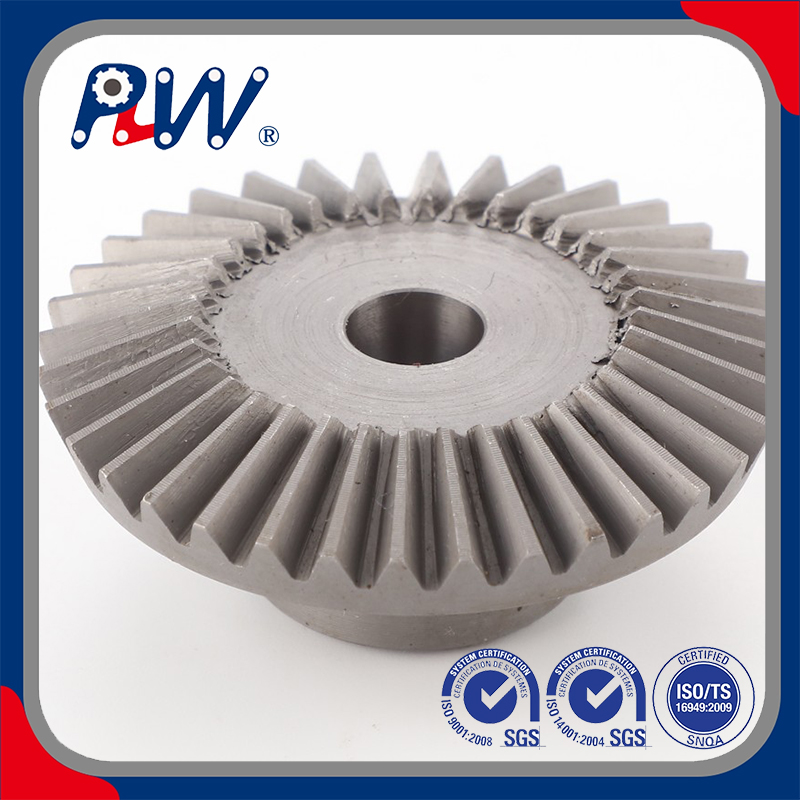
● Straight Bevel Gears: These gears have straight teeth that meet at an angle. They are relatively easy to manufacture and cost-effective but tend to generate more noise and vibrations compared to other bevel gears. Straight bevel gears are commonly used in low-precision applications where cost is a primary concern.
● Spiral Bevel Gears: These gears have curved teeth, which provide a smoother engagement compared to straight bevel gears. This results in reduced noise, lower vibration, and higher efficiency, making spiral bevel gears ideal for high-speed applications or environments where low noise is essential. They are widely used in applications such as automotive differentials, industrial machinery, and high-performance equipment.
● Hypoid Bevel Gears: These gears are similar to spiral bevel gears but with the added feature of offset shafts. This offset allows for greater torque transfer and smoother operation. Hypoid bevel gears are commonly used in automotive differentials and heavy-duty industrial machinery. They are designed to handle high loads and provide efficient power transmission in applications requiring offset shafts.
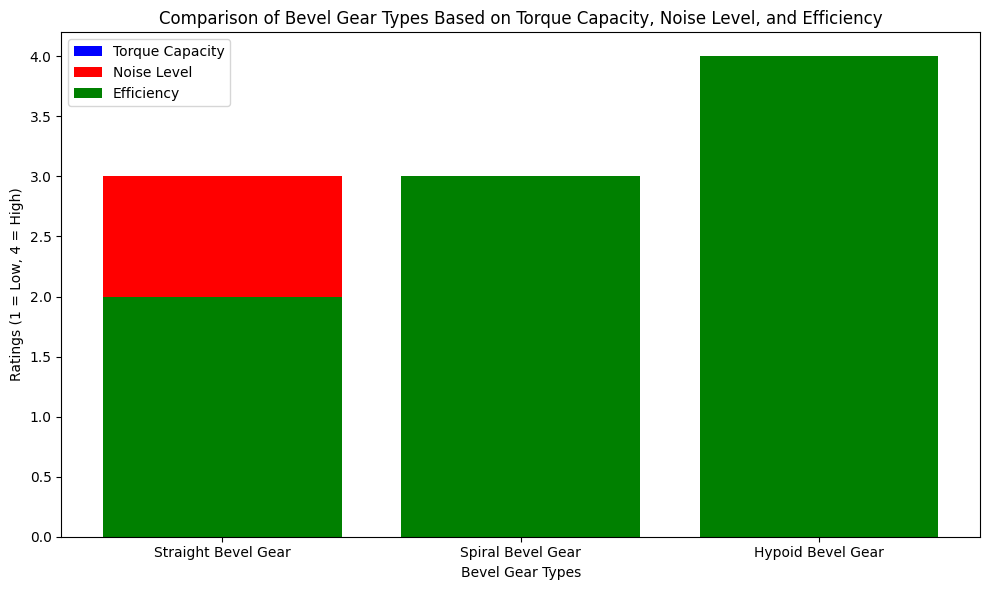
Gear Type | Torque Capacity | Noise Level | Efficiency | Common Applications |
Straight Bevel Gear | Moderate | High | Moderate | General machinery, low-cost applications |
Spiral Bevel Gear | High | Low | High | Automotive, high-speed machinery, industrial automation |
Hypoid Bevel Gear | Very High | Low | Very High | Automotive differentials, heavy machinery, industrial systems |
Bevel Gear Applications
Bevel gears are used in a wide range of applications where power needs to be transmitted between intersecting shafts. Some of the key areas where bevel gears are essential include:
● Automotive Transmissions: Bevel gears are a critical component in automotive differentials, which distribute power from the engine to the wheels. Hypoid bevel gears are often used in these applications due to their ability to handle high torque and provide smooth operation.
● Industrial Machinery: Bevel gears are used in conveyors, mills, and various other industrial machines. Spiral bevel gears are commonly used in high-speed applications like CNC machines and industrial robots, where low noise and high efficiency are essential.
● Robotics: In robotics, bevel gears help transmit power between shafts that are not aligned in a straight line. The precision and low backlash required in robotic systems make spiral bevel gears the preferred choice.
● HVAC Systems: Bevel gears are used in HVAC systems to drive fan motors, pumps, and other components. Low noise and high efficiency are essential in these applications, making spiral bevel gears an ideal solution.
Bevel Gear Design Principles
Design Factors to Consider
When designing bevel gears, several critical factors must be considered to ensure optimal performance and longevity. These factors include material selection, tooth geometry, and load distribution.
● Material Selection: Bevel gears are typically made from materials such as carbon steel, alloy steel, and stainless steel. The choice of material affects the gear's strength, wear resistance, and ability to withstand harsh operating conditions. For applications where corrosion is a concern, such as in marine or food processing equipment, stainless steel or specially coated bevel gears may be required.
● Tooth Geometry: The shape and profile of the gear teeth are crucial for ensuring smooth engagement and efficient power transmission. Spiral bevel gears, for instance, have curved teeth that engage gradually, resulting in less friction and smoother operation. The number of teeth and the angle at which they meet also affect the efficiency and noise levels.
● Load Distribution: Even load distribution is essential for preventing premature wear and failure of the bevel gears. Uneven load distribution can lead to higher stress on specific teeth, causing them to wear out faster. This can be minimized through careful design and manufacturing processes.
Calculating Bevel Gear Ratios
The bevel gear ratio determines the relationship between the input and output shaft speeds. This ratio is essential for ensuring that the gears operate efficiently and transmit the correct amount of torque. For bevel gears, the ratio is calculated by dividing the number of teeth on the output gear by the number of teeth on the input gear. It is crucial to select the correct gear ratio to ensure the right performance characteristics, such as torque, speed, and load capacity.
Load Capacity and Gear Strength
The load capacity of a bevel gear is determined by several factors, including the material used, the tooth geometry, and the precision of manufacturing. High-load applications require bevel gears made from high-strength materials like alloy steel or stainless steel. Additionally, gears with optimized tooth geometry and a high number of teeth per inch will generally have a higher load-bearing capacity. Designers should always consider the maximum load that the gear will experience during operation to avoid gear failure.
Design Factor | Effect on Performance | Optimal Characteristics |
Material Selection | Affects strength, wear resistance, and corrosion resistance | High-strength alloys, stainless steel for corrosive environments |
Tooth Geometry | Determines meshing smoothness, friction, and efficiency | Spiral teeth for smooth meshing, low friction |
Load Distribution | Prevents uneven wear and gear failure | Evenly distributed load across teeth |
Advanced Bevel Gear Design Concepts
Tooth Geometry and Profiles
Tooth geometry plays a significant role in determining how well bevel gears mesh and how efficiently they transfer power. In spiral bevel gears, the teeth are curved, allowing them to mesh more smoothly than straight bevel gears. This reduces friction, which not only enhances efficiency but also lowers the noise levels. Additionally, the spiral angle (ranging from 20° to 45°) is a key factor in determining the gear's performance. A higher spiral angle generally increases the gear's efficiency and torque transfer but can also increase the complexity of the manufacturing process.
Spiral Bevel Gears vs. Straight Bevel Gears
Spiral bevel gears are ideal for applications that require high performance, low noise, and smooth operation. These gears are typically used in automotive transmissions, high-speed machinery, and robotics. Their tooth design allows for gradual engagement, which reduces friction and results in a smoother, quieter operation. Straight bevel gears, on the other hand, are simpler to manufacture and cost less, but they tend to generate more noise and vibrations due to the abrupt engagement of their teeth.
Hypoid Bevel Gears: Design Considerations
Hypoid bevel gears are unique because their shafts do not intersect. This allows for greater torque transfer and smoother operation, especially in automotive applications like differentials. When designing hypoid bevel gears, it is important to consider the offset between the shafts, as well as the tooth contact ratio and material selection. The offset allows for more efficient torque transfer, but it also requires precise alignment to ensure smooth meshing.
Material Selection and Treatment for Bevel Gears
Materials for Bevel Gears
The material selection for bevel gears is crucial for ensuring their durability and performance under load. Carbon steel is commonly used for general-purpose bevel gears due to its good strength and cost-effectiveness. Alloy steels, such as 40Cr and 20CrMnTi, offer enhanced wear resistance and are ideal for heavy-duty applications. Stainless steel is often used for gears exposed to corrosive environments or for food-grade applications. The choice of material affects not only the gear's strength and wear resistance but also its resistance to corrosion, especially in industries such as food processing, marine, and medical devices.
Heat Treatment Processes
Heat treatment processes, such as carburizing and quenching, are used to increase the hardness and wear resistance of bevel gears. Carburizing involves introducing carbon into the surface of the gear at high temperatures, creating a hardened surface that resists wear. Quenching involves rapidly cooling the gear to harden the material and improve its strength. These processes help ensure that bevel gears can withstand the high stresses they are subjected to during operation.
Conclusion
Bevel gears are essential components for transferring power between intersecting shafts in various applications. At Hangzhou Perpetual Machinery & Equipment Co., Ltd., we specialize in precision-engineered bevel gears that ensure optimal performance across automotive, robotics, and industrial machinery. Key design factors like material selection, tooth geometry, and load distribution directly impact efficiency, noise levels, and durability.
The future of bevel gear design lies in innovations like 3D printing for complex tooth profiles and advancements in heat treatment processes, enhancing durability and wear resistance. Hangzhou Perpetual Machinery & Equipment Co., Ltd. continues to lead in providing high-quality bevel gears tailored to meet evolving industry demands for efficiency and performance.
FAQ
Q: What is a bevel gear?
A: A bevel gear is a mechanical component used to transfer power between two intersecting shafts, typically at a 90-degree angle. Its conical teeth help ensure smooth operation in various applications, including automotive systems, robotics, and industrial machinery.
Q: How do bevel gears work?
A: Bevel gears work by meshing their conical teeth with another bevel gear to transfer rotational motion and torque between intersecting shafts. This allows for the redirection of power in machinery, often used when shafts are not aligned.
Q: Why are spiral bevel gears preferred over straight bevel gears?
A: Spiral bevel gears are preferred for their smoother tooth engagement, which reduces noise and vibration. They provide higher efficiency and are ideal for high-speed and high-torque applications compared to straight bevel gears.
Q: What factors should be considered when designing bevel gears?
A: When designing bevel gears, factors like material selection, tooth geometry, load distribution, and gear ratio should be carefully considered. These factors influence efficiency, noise levels, durability, and the overall performance of the gear system.
Q: How do bevel gears contribute to efficiency in mechanical systems?
A: Bevel gears contribute to efficiency by ensuring precise power transfer with minimal energy loss. Spiral and hypoid bevel gears, in particular, offer higher transmission efficiency compared to straight bevel gears, thanks to their smoother tooth engagement.

 Español
  English
  العربية
  Français
  Русский
  Português
  Deutsch
  italiano
  日本語
日本語  한국어
한국어  Nederlands
  Tiếng Việt
  ไทย
ไทย  Polski
  Türkçe
  አማርኛ
አማርኛ  ພາສາລາວ
  ភាសាខ្មែរ
  Bahasa Melayu
  ဗမာစာ
ဗမာစာ  தமிழ்
தமிழ்  Filipino
  Bahasa Indonesia
  magyar
  Română
  Čeština
  Монгол
  қазақ
қазақ  Српски
  हिन्दी
  فارسی
فارسی  Kiswahili
  Slovenčina
  Slovenščina
  Norsk
Norsk  Svenska
  українська
  Ελληνικά
  Suomi
Suomi  Հայերեն
  עברית
עברית  Latine
  Dansk
Dansk  اردو
اردو  Shqip
Shqip  বাংলা
বাংলা  Hrvatski
  Afrikaans
  Gaeilge
  Eesti keel
  Māori
Māori  සිංහල
සිංහල  नेपाली
  Oʻzbekcha
  latviešu
  অসমীয়া
  Aymara
  Azərbaycan dili
  Bamanankan
  Euskara
  Беларуская мова
  भोजपुरी


