Choosing the right chain for power transmission systems can affect the performance and lifespan of equipment. While both roller chains and toothed chains are commonly used, they are designed for different operating conditions.
In this article, you’ll learn the key differences between a roller chain and a toothed chain so that you can choose the best solution for your business.
Understanding Chain Drive Systems
A chain drive transfers mechanical power between rotating shafts by engaging a chain with the sprocket. It provides positive engagement, making it suitable for applications that require speed and smooth transmission. It usually consists of a driving and driven sprocket, chain, shaft, lubrication system, and tensioning mechanism.
As there are different types of chain, selecting the wrong chain can lead to premature wear, increased vibration, and frequent downtime.
What Is a Roller Chain?
Structure and Design of a Roller Chain
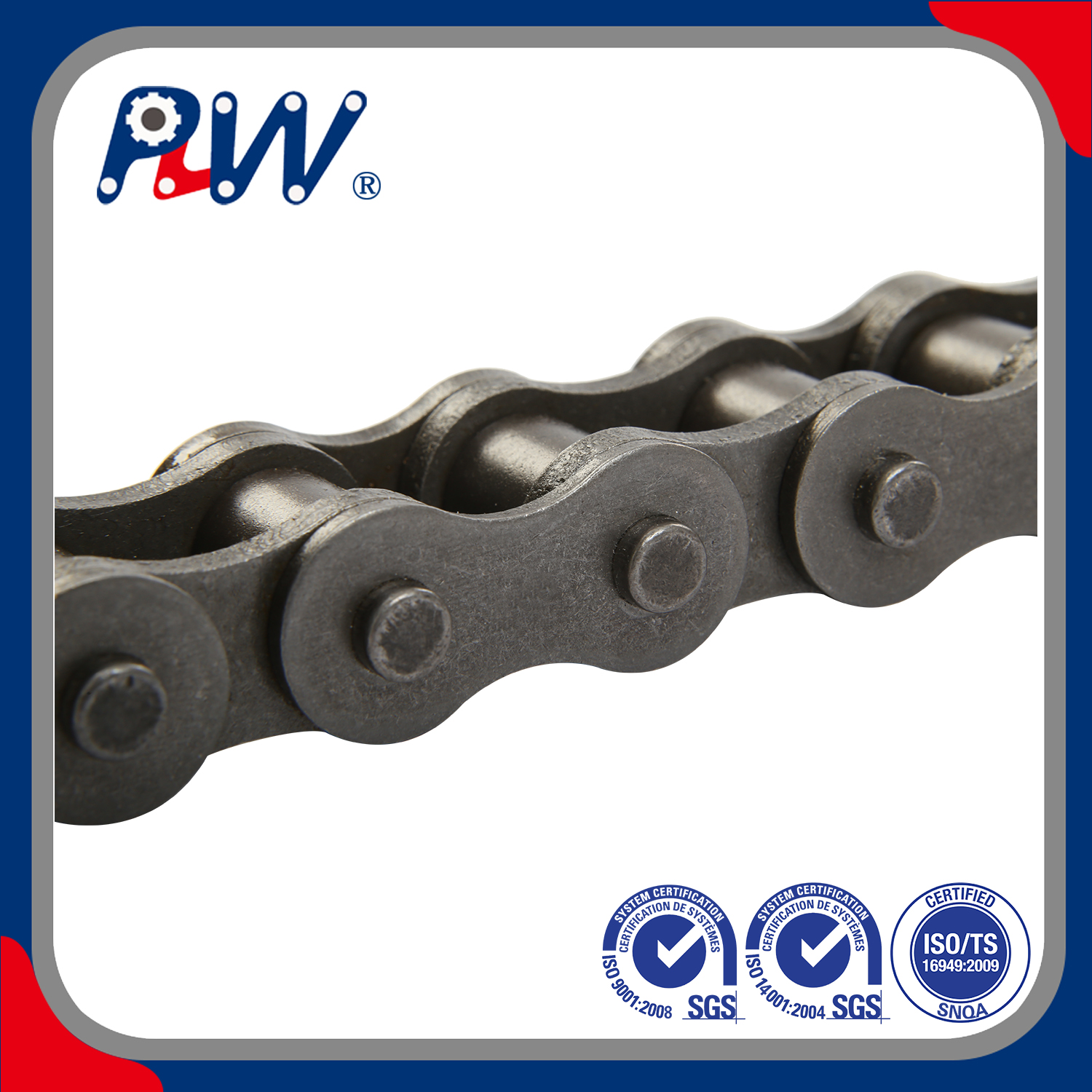
A roller chain is made up of repeating links connected by pins. Major components include inner plates, outer plates, pins, and bushings. Roller chains usually engage with the sprocket teeth and reduce friction.
The rollers rotate freely around the bushings as the chain engages the sprocket. This rolling action minimizes sliding friction, helping improve efficiency while reducing wear.
How Roller Chains Work
As the driving sprocket rotates, its teeth engage the rollers of the chain. The chain then pulls the driven sprocket, transferring torque from one shaft to another.
Each roller rotates while engaging and disengaging the sprocket teeth, which reduces friction. This is unlike direct metal-to-metal sliding that causes overheating and friction. As a result of this design mechanism, roller chains can transmit high loads efficiently over long operating periods.
Common Types of Roller Chains
Standard roller chains: These roller chains are the most commonly used chains in industrial machinery. They are strong, durable, and affordable.
Double-pitch roller chains: These chains have longer link spacing than standard chains. They have lower weight and reduce operating noise.
Heavy-duty roller chains: These types of chains use thicker plates and stronger pins to withstand mechanical stress, demanding environments, and heavy shock loads. You’ll commonly find them in steel production and cement plants.
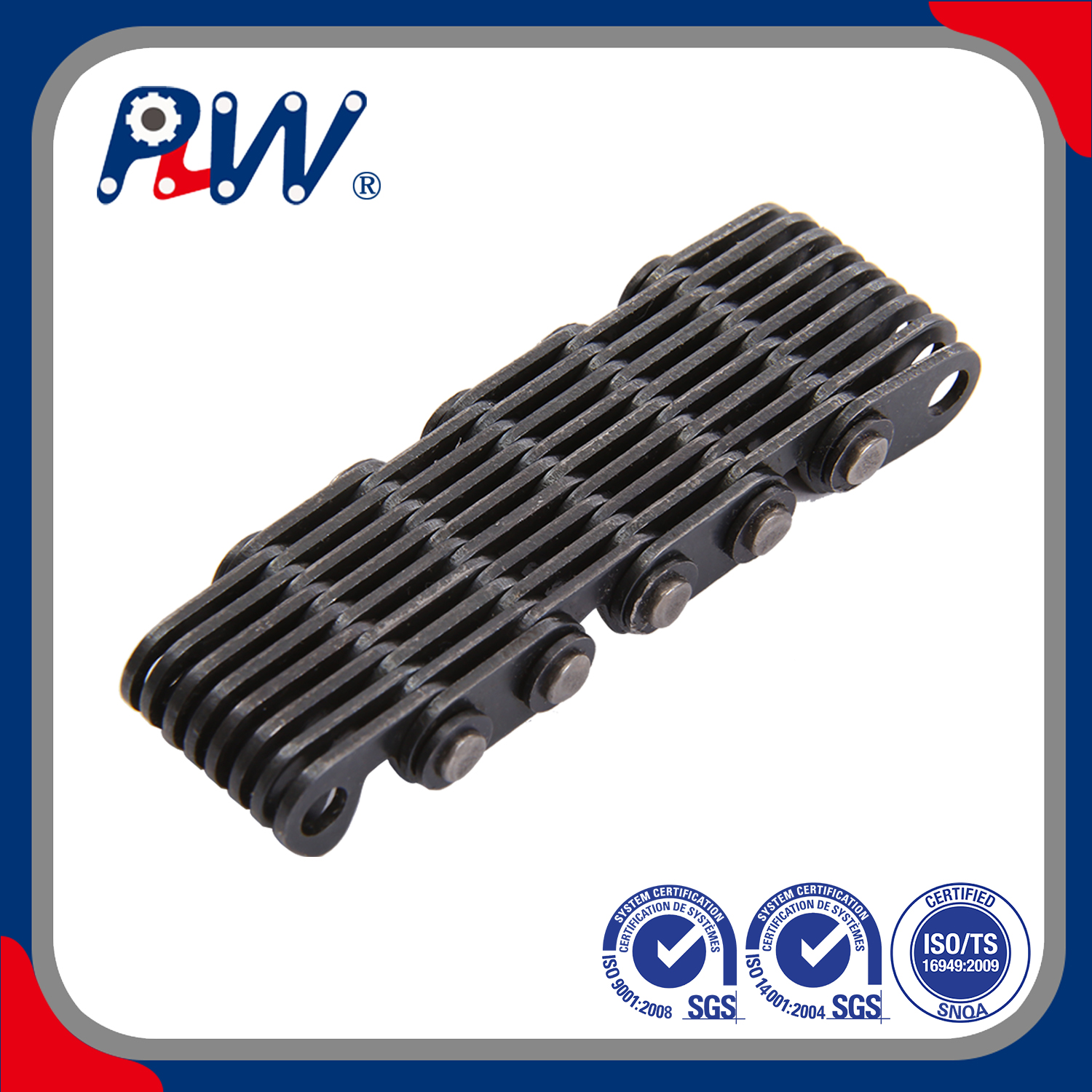
Attachment roller chains: These types of chains include extended attachments that allow them to carry, lift, and position products during manufacturing processes.
Advantages of Roller Chains
High load-bearing capacity: Roller chains are made to handle heavy loads and transmit amounts of torque. This is due to their robust design, making them useful in applications where they operate with heavy loads.
Easy installation: Roller chains can easily be installed, adjusted, and replaced. You can do all of these with simple tools and reduced downtime.
Proven reliability: Roller chains are widely available and acceptable because of their reliability under extreme demanding work conditions.
Limitations of Roller Chains
Noise and vibration: You’ll notice roller chains aren’t the quietest option out there. As they engage and disengage with sprocket teeth, they generate a fair amount of noise and vibration.
Wear and maintenance: Chains stretch over time due to wear on pins and bushings. That means you’ll be scheduling regular inspections, lubrication, and tension adjustments. If you’re running a system where downtime is costly, frequent maintenance can become a headache.
Speed limitations: Roller chains perform well at moderate speeds, but once you push into high-speed applications, they struggle. Excessive centrifugal forces and dynamic loads can shorten their lifespan, making them less reliable compared to alternatives like belts or gear drives.
What Is a Toothed Chain?
Structure and Design of a Toothed Chain
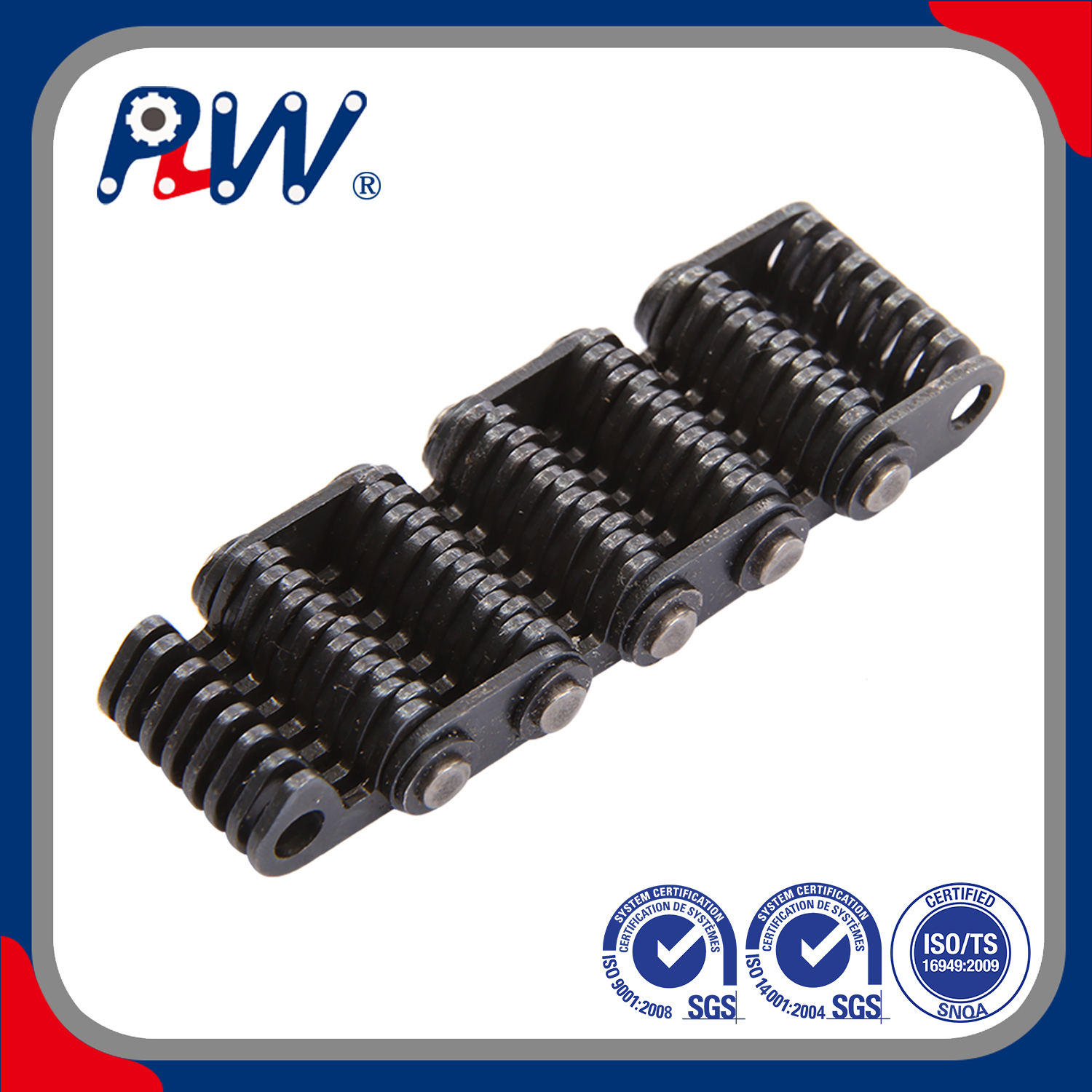
A toothed chain is the kind of chain designed to provide a smooth, quiet operation. It uses specially shaped links that engage directly with the sprocket. Each link has precision-cut teeth, connection pins, and interlocking side plates. These components work together to reduce impact, generating less vibration and noise.
How Toothed Chains Work
As the sprocket rotates, multiple teeth engage several chain links at the same time. Instead of rolling into place like a roller chain, the teeth engage smoothly with the sprocket profile. Because several links share the transmitted load at any given moment, stress is distributed more evenly throughout the chain.
This reduces impact loads, minimizes vibration, and improves transmission precision. The result is quieter operation and higher efficiency, especially at elevated speeds.
Common Types of Toothed Chains
Standard silent chains: These toothed chains are used in applications where noise is not needed.
Heavy-duty silent chains: These chains render reduced vibration for equipment that works at very high rotational speeds.
High-speed silent chains: High-speed chains deliver high torque transmission while reducing speed.
Advantages of Toothed Chains
Lower noise levels: The gradual engagement of the teeth and the sprocket reduce impact noise. This makes it useful in textile machinery, automotive engines, and indoor production facilities, where noise reduction is a necessity.
Higher operating speeds: Because there is reduced vibration, toothed chains can perform at high speeds. They maintain such speed even when they work under demanding conditions where roller chains may experience wear.
Smooth power transmission: The smooth engagement leads to accurate timing and makes errors less likely to happen. As a result, products have high-quality and excellent machine performance.
Reduced vibration: Toothed chains lead to reduced vibrations, which not only benefits the chain but also the equipment around them. Reduced vibration increases the lifespan of equipment as well as overall operating comfort.
Limitations of Toothed Chains
Higher cost: Compared to roller chains, toothed chains come with a steeper price tag. You’re paying for precision engineering and durability, but if your budget is tight, that upfront investment can feel heavy.
Complex design: Toothed chains require more intricate sprockets and tighter tolerances. That means you’ll need careful alignment and installation. If your team isn’t set up for that level of precision, it can slow down deployment.
Limited flexibility: These chains don’t handle misalignment or shock loads as gracefully as simpler chain systems. In applications where you expect frequent load variations or less-than-perfect alignment, they can be less forgiving.
Roller Chains vs Toothed Chains: Key Differences
Difference in Design and Construction
A roller chain consists of rollers, bushings, pins, and link plates. When the chain revolves about the sprocket, rollers roll against the teeth of the sprocket, hence lowering friction during engagement.
On the other hand, toothed chains do not use rollers but use steel links that have teeth of precision cut. The teeth mesh with the corresponding sprocket teeth; therefore, there is a better force transmission. In addition, the load can easily be evenly distributed along the chain.
Difference in Operating Principle
For a roller chain, the roller enters the sprocket tooth pocket and then leaves it one by one. Hence, during every engagement of the roller and the sprocket, impact shock is created.
For a toothed chain, the chain teeth are not rolled, but rather several chain teeth simultaneously engage the sprocket.
Difference in Load Capacity
The strong construction of roller chain makes it capable of enduring high torques, shocks, and frequent starting and stopping of motion.
On the other hand, toothed chains possess very good carrying capacity but are used where smoothness and precision are of similar importance.
Difference in Speed Capability
The vibration produced by a roller chain increases with an increase in its speed.
This is due to the constant hammering of the rollers on the sprocket teeth. Conversely, the toothed chains are designed for use at high speeds. The low vibration production in toothed chains is due to the gradual engagement of the teeth of the chain.
Difference in Noise and Vibration
The rollers striking the sprocket teeth cause more noise production in the case of roller chains. Conversely, toothed chains are rightly called silent chains due to their gradual tooth engagement.
Difference in Efficiency
Both roller chains and toothed chains are highly efficient in terms of transmission efficiency. But roller chains eliminate friction through the rolling contact of the rollers with sprocket teeth. Due to its simplicity, this chain has become one of the most efficient mechanical power transmission mechanisms in use for decades.
In case of toothed chains, it is possible to eliminate losses from impacts, as well as to distribute forces across several teeth. This feature contributes to the efficiency of the chain because energy loss caused by vibrations and shocks becomes minimized.
Difference in Wear and Durability
Wear in roller chains occurs mainly on the pins and bushings, which leads to an elongation of the chain. The greater the wear on the pins and bushings, the larger the pin distance and, consequently, the worse the engagement with the sprocket.
Even wear across several teeth helps toothed chains to have a long service life when used at high speeds.
Difference in Maintenance Requirements
For roller chains, maintenance generally includes lubricating pins and bushings, checking chain tension, inspecting for chain elongation, and monitoring sprocket wear. Thankfully, the maintenance practices for roller chains are straightforward.
However, toothed chains demand greater precision during installation and alignment. You’ll need to properly lubricate the chains for them to continue delivering smooth tooth engagement.
Difference in Cost
Roller chains generally have the least initial cost. The ease of design and general availability makes roller chain the cheapest of all transmissions available in the market. It is easy to change the chains and the sprockets.
On the other hand, a toothed chain requires precision and a complicated sprocket design. This usually means an increase in the initial cost.
Difference in Application
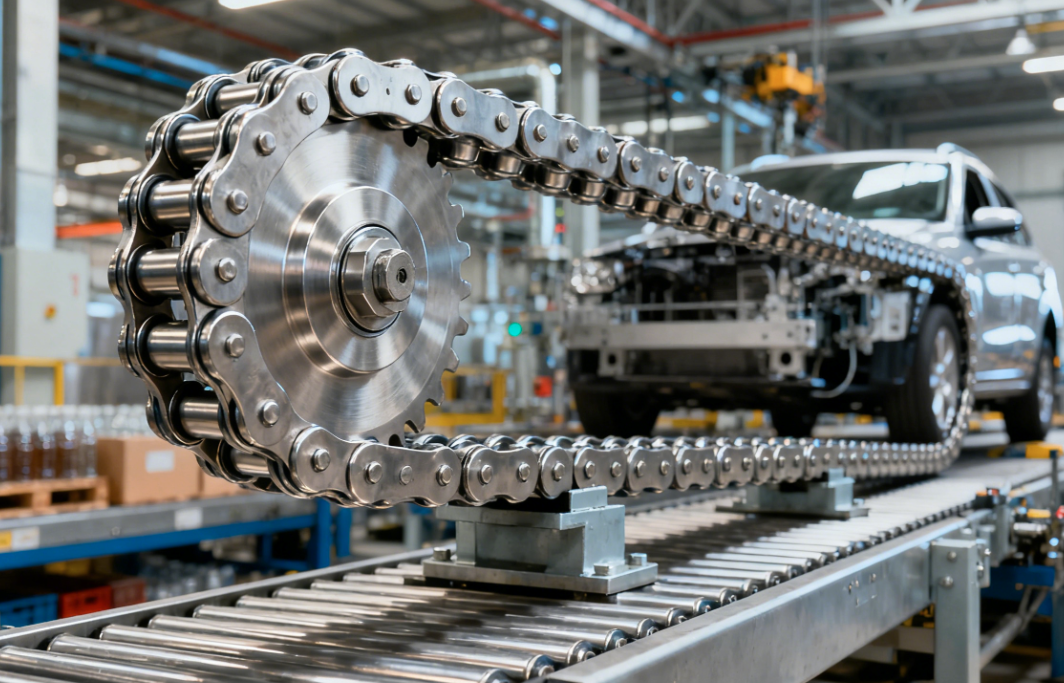
Roller chains are used in agriculture machines such as tractors, harvesters, and feed machines. They are used in handling materials in conveyors and packaging machines. Where do we get roller chains in industrial machinery? We get them in manufacturing machines, construction machines, and power transmission applications.
Where do we get toothed chains? We use them in automotive timing systems, precision manufacturing machines, industrial high-speed drives, and special power transmission systems.
How to Choose Between Roller Chains and Toothed Chains
Consider Load Requirements
Load requirements should always be considered. In case your equipment faces loads, shock loading, or severe environmental conditions, roller chain can be used. Otherwise, a toothed chain can be used if you are running in moderate conditions and under moderate load.
Evaluate Speed Requirements
Roller chains have excellent performance at moderate speeds and can be used for industrial purposes. Otherwise, if your speed is high, you can use a toothed chain, which can engage better and produce less noise.
Assess Noise Restrictions
If operator comfort is important in your facility, check if a toothed chain is the choice since it produces less noise.
Analyze Maintenance Capabilities
Roller chains are very easy to inspect, lubricate, and replace, while toothed chains have to be perfectly aligned and installed in order to achieve full service life.
In case there is insufficient maintenance personnel, using a roller chain can help reduce operating costs in the long run.
Conclusion
Roller chains and toothed chains are components designed to make power transmission systems more efficient. While roller chains are sturdy for heavy loads, toothed chains are more fit for smooth, quiet operation.
At HANGZHOU PERPETUAL MACHINERY & EQUIPMENT CO., LTD., we specialize in delivering high-quality roller chains, toothed chains, sprockets, gears, and bearings for a wide range of industrial applications. Contact our expert team for more information.
FAQs
Why are toothed chains called silent chains?
Toothed chains are also called silent chains because they are designed to cut off the harsh rattling, clacking noise generated by roller chains.
Under heavy, high-torque loads, roller chains generally last longer. This is due to their robust construction and design. While toothed chains are ideal for smooth operation, they are limited under heavy loads.
Which of these chains is ideal for high-speed applications?
The toothed chain (also widely known as a silent chain) is the ideal choice for high-speed applications. This is as a result of the flat tooth-shaped plates that gradually engage with the sprockets.

 Español
  English
  العربية
  Français
  Русский
  Português
  Deutsch
  italiano
  日本語
日本語  한국어
한국어  Nederlands
  Tiếng Việt
  ไทย
ไทย  Polski
  Türkçe
  አማርኛ
አማርኛ  ພາສາລາວ
  ភាសាខ្មែរ
  Bahasa Melayu
  ဗမာစာ
ဗမာစာ  தமிழ்
தமிழ்  Filipino
  Bahasa Indonesia
  magyar
  Română
  Čeština
  Монгол
  қазақ
қазақ  Српски
  हिन्दी
  فارسی
فارسی  Kiswahili
  Slovenčina
  Slovenščina
  Norsk
Norsk  Svenska
  українська
  Ελληνικά
  Suomi
Suomi  Հայերեն
  עברית
עברית  Latine
  Dansk
Dansk  اردو
اردو  Shqip
Shqip  বাংলা
বাংলা  Hrvatski
  Afrikaans
  Gaeilge
  Eesti keel
  Māori
Māori  සිංහල
සිංහල  नेपाली
  Oʻzbekcha
  latviešu
  অসমীয়া
  Aymara
  Azərbaycan dili
  Bamanankan
  Euskara
  Беларуская мова
  भोजपुरी