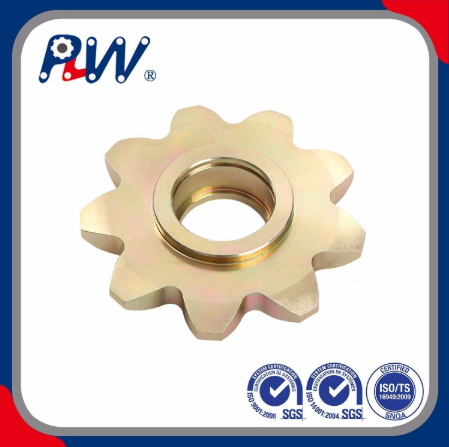
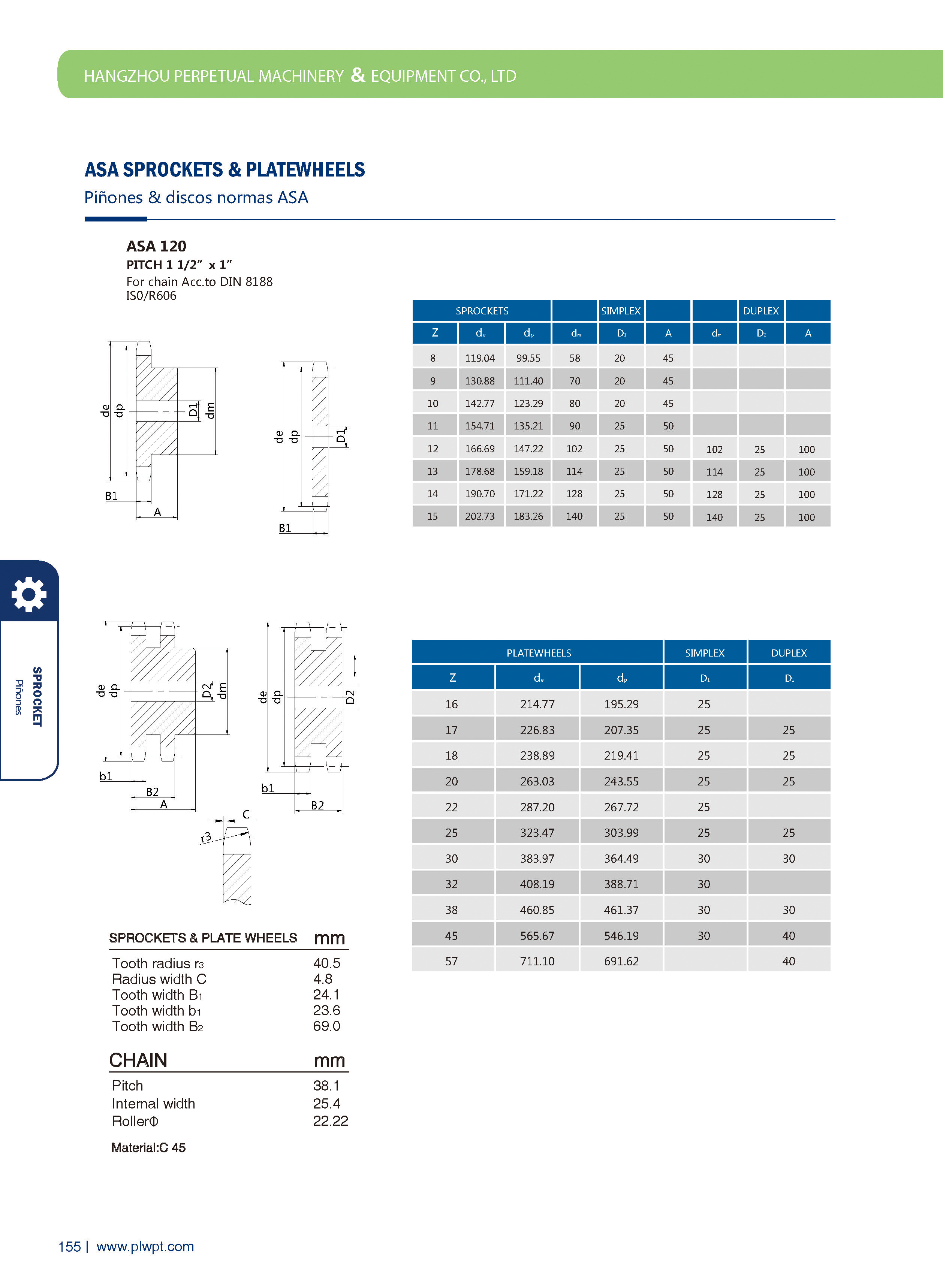
Agricultural machinery works hard every day, often under harsh conditions. Thus, selecting the correct sprocket transmission ratio is one of the most important decisions you'll make. The right ratio ensures your equipment delivers efficient speed and reliability.
In this article, you'll learn how to calculate sprocket transmission ratios, what factors influence your selection, and how to choose the best ratio for different types of agricultural machinery.
What Is a Sprocket Transmission Ratio?
A sprocket transmission ratio can be defined as the ratio of the driving sprocket and driven sprocket of a chain drive system. This shows the manner in which speed and torque transfer from the power source to the driven machinery.
Formula for calculation:
Transmission Ratio = Number of Teeth of Driven Sprocket ÷ Number of Teeth of Driving Sprocket
Example:
If the number of teeth of the driving sprocket is 18 and the driven sprocket is 54, then the transmission ratio becomes 54÷18=3:1
How Transmission Ratio Affects Machinery Performance
Output speed: The output speed depends on the transmission ratio. If slow output speed is required in some equipment, then the ratio should be high. Rapid speed means low ratio.
Torque transmission: Torque is the rotating force at the driven shaft. With an increase in the transmission ratio, torque will increase and the speed will decrease. Heavy agricultural machines will be able to carry large loads without overworking the engine.
Power transmission efficiency: Although the total power will remain almost the same, with changing ratios, we will be able to utilize it efficiently. An appropriate ratio will prevent any unnecessary loss of power.
Component lifespan: Life of components: An inappropriate ratio will cause extra stress to the chain, sprocket, bearing, and shaft. Extra stress will result in high maintenance costs and unexpected stoppages during peak seasons.
Why Is Correct Transmission Ratio Important in Agricultural Machinery?
Ensures Proper Working Speed
All agricultural equipment works at recommended operational speeds. This means that seed dispensers should work with very precise speed. In addition to that, elevators should have steady lifting speed, whereas the mixers should have steady mixing speed.
Using improper ratio will result in lower efficiency and crop damage.
Improves Power Transmission Efficiency
The loads that are handled by the agricultural equipment are rather heavy. They include wet grain, silage, fertilizers, animal feeds, soil, and other crop residues. The higher the ratio of transmission, the more torque you will get from the equipment.
Reduces Equipment Wear
If a mismatched drive is used, chains and sprockets have to endure extra loads. If it continues, then chain elongation, tooth wear, bearing wear, shaft fatigue, and vibrations become possible consequences.
Optimizes Fuel Consumption
When machinery runs efficiently, engines will not have to work so hard. In case the load on engines is low, there will be less fuel consumption, lower expenses, fewer emissions, and higher productivity.
This becomes even more critical for commercial farms that run many machines every day.
Enhances Overall Productivity
Using the right transmission ratio, all systems will perform efficiently. There are some advantages such as increased harvest efficiency, precision planting, effective grain handling, and reduced downtimes.
Overall, during the whole farming season, profitability can be substantially increased.
Key Factors to Consider Before Determining a Sprocket Transmission Ratio
Type of Agricultural Machinery
Different types of agricultural machinery have different operating requirements. Here are a few examples:
Seeders and Planters: Seed placement depends on precision. If the drive system rotates too quickly, seeds may be spaced unevenly. Too slowly, and planting efficiency decreases. Moderate transmission ratios are typically selected to maintain accurate metering.
Harvesters: Harvesting usually requires using multiple pieces of rotating equipment like feed rollers, cutter bars, conveyors, and cleaning fans. Each of these pieces of equipment may need a different transmission ratio in order for them to align with the harvesting process.
Combine Harvesters: A combine harvester has several chain drives that operate at the same time. Determining the right sprocket transmission ratio helps to coordinate crop intake, threshing, separation, cleaning, and grain transport. If you select the wrong sprocket transmission ratio, it will affect the performance of the whole machine.
Feed Processing Equipment: Feed mixers, crushers, and grinders generally require high torque rather than high speed. Higher transmission ratios help these machines process dense materials without overloading the motor.
Irrigation Systems: Pump performance depends heavily on rotational speed. Selecting the proper ratio ensures sufficient water flow while minimizing energy consumption.
Engine or Motor Speed
First, find out the speed of the power source. The most common types of power sources are the diesel engines, electric motors, and hydraulic motors. For instance, a typical speed of a diesel engine is 1800-2200 RPM; therefore, this is where your transmission ratio starts.
Required Output Speed
Secondly, determine the speed of the driven element. In case you are designing your own equipment, the speed will be determined according to the production volume, handling, and the equipment design.
If, for instance, your conveyor requires 300 RPM and your motor operates at 1500 RPM, your transmission ratio should be 5:1.
Required Torque
Torque is required differently in different situations. There is a low torque demand in such equipment as seed meters, lightweight conveyors, and small irrigation systems. There is a high torque requirement in such applications as feed crushers, heavy conveyors, and silage processing systems.
The higher the torque requirement, the higher transmission ratio is expected to be. But, extremely high transmission ratio decreases efficiency.
Load Characteristics
Not all agricultural machinery handles the same kind of load.
Constant Load Applications: Constant loads like irrigation pumps or continuous conveyor systems operate under relatively stable conditions and often require straightforward ratio calculations.
Variable Load Applications: Variable loads like harvesters frequently experience changing loads as crop density changes. Transmission systems should be designed with enough flexibility to accommodate these fluctuations without excessive wear.
Shock Load Applications: Some machines are subjected to shock loads. Shock loads need stronger chains, harder sprockets, and transmission ratios carefully chosen.
Operating Environment
The operating environment for agricultural machinery is tough, including dust, mud, and water. The operating environment could lead to increased wear and tear of the chain and sprockets. In choosing a transmission ratio, take into consideration whether the operating environment will cause increased resistance or torque.
Chain Type and Specifications
Selection of transmission ratio is impossible without consideration of the chain. Chain should be able to transfer a desired amount of energy without failure. Increased transmission ratio usually causes increased loads acting on the chain, hence the importance of careful chain selection.
Use of good quality agricultural chain along with high precision sprockets ensures reliable power transmission and increases operational life even under farm conditions.
Step-by-Step Guide to Calculating Sprocket Transmission Ratio
Step 1: Determine Input Speed
Every calculation always starts from the speed of the drive shaft. The nominal speed of the motor is normally given in the name plate of the motor or in the specifications of the equipment. When under load, the motor or engine operates slightly slower than the nominal speed.
For example, let us assume that you will create a grain elevator whose drive is an electric motor working at 1,500 RPM. 1,500 RPM will be your input speed.
The first step will be to find out whether your speed is either constant or variable during operation.
Step 2: Identify Required Output Speed
This is followed by determining the speed at which the driven shaft will turn. There is a variation in speed for various farming machines to operate effectively. This is because some machines such as seeders have to rotate slowly and steadily for equal distribution of seeds, while others like conveyors should turn at a certain speed to prevent spillage.
When designing a replacement for an existing drive, use the recommended output speed from the manufacture wherever possible, and when designing a new machine, establish your speed depending on your output needs.
Step 3: Calculate the Required Transmission Ratio
Here we can compute the ratio using the formula below:
Transmission Ratio = Input Speed ÷ Desired Output Speed
Take an example of calculating the ratio of the grain conveyor with input speed of 1,500 RPM and desired output speed 300 RPM; the ratio will be 1,500 ÷ 300 = 5:1. This implies that the driving sprocket will make five rotations for every one rotation of the driven sprocket.
Step 4: Select Suitable Sprocket Tooth Counts
After computing the ratio, one needs to select the right sprockets that will give that ratio. Note that:
Transmission Ratio = Driven Teeth ÷ Driving Teeth
For example, if you want a 3:1 ratio, there are a number of sprockets combination that may work for you. But note that you should never use very small driving sprockets or small tooth sprockets. The reason being that it will cause wear and tear on the chain, as well as high vibrations and noises.
Step 5: Verify Chain Compatibility
The sprockets and chain must work together as a complete system. Even if the ratio is correct, using an undersized chain can lead to premature failure. Before finalizing your design, confirm that the chain pitch matches the sprocket pitch. Confirm that the lubrication method suits the application and that the tensile strength is higher than the expected load.
Common Mistakes When Selecting Sprocket Transmission Ratios
Choosing Ratio Based Only on Speed
However, speed alone is not enough to define your choice. You have to take into account such factors as output torque, load, efficiency of a machine and duty cycle when choosing the proper ratio of sprockets. Always think about speed and torque when choosing the size of sprockets.
Ignoring Torque Requirements
In fact, low torque causes bad machine operation and higher energy consumption. In addition, high torque can overload the chains, shafts, and gearboxes. Therefore, it is necessary for you to check whether the machine can work under the expected torque of the driven shaft.
Failing to Account for Future Load Changes
Farm machines work in various seasons and have different loads and requirements. The future changes in load or number of working hours may appear. Hence, it is better for you to make a reserve in order to allow the machinery to operate effectively with further changes in conditions without any redesigning.
Best Practices for Optimizing Agricultural Sprocket Drive Systems
Maintain Proper Chain Tension
Excessively tight chains can put undue strain on both the bearings and the shafts. Excessively loose chains can lead to noise and vibration. Consequently, ensure that appropriate chain tension is maintained and adjustments checked regularly, especially in the initial hours of operation.
Ensure Accurate Shaft Alignment
Shaft misalignment leads to uneven loads on the teeth of the sprockets. Even slight shaft misalignment can throw your power transmission system into turmoil. During assembly, use alignment devices to check that both sprockets have been installed on parallel shafts.
Conduct Regular Maintenance Inspections
Regular inspection allows you to avoid costly machine downtime by helping you spot problems that need addressing in good time. Some of the things you should watch out for during inspection include chain stretching, vibration, and shaft misalignment. Early detection of problems will save you from escalating them.
Conclusion
Determining the right sprocket transmission ratio will help you create a drive system that is efficient, durable, and productive. Partner with an experienced manufacturer like HANGZHOU PERPETUAL MACHINERY & EQUIPMENT CO., LTD so you can get access to high-quality chains and sprockets. For more information, contact our expert team.
FAQs
Does a larger driven sprocket increase torque?
Yes. A larger driven sprocket increases torque and pulling power. It essentially shortens your final drive ratio, allowing for quicker acceleration, but it will reduce your overall top speed.
How does sprocket tooth count affect speed?
Sprocket tooth count directly affects speed. To increase top speed, a larger front sprocket or a smaller rear sprocket is used. To increase acceleration (and torque), a smaller front sprocket or a larger rear sprocket is used.
What happens if the transmission ratio is too high?
If a transmission ratio is too high, your engine will produce less torque and slow acceleration. This causes decreased system efficiency, accelerated wear and tear, overheating, and severe limitations on top speed and operating range.

 Español
  English
  العربية
  Français
  Русский
  Português
  Deutsch
  italiano
  日本語
日本語  한국어
한국어  Nederlands
  Tiếng Việt
  ไทย
ไทย  Polski
  Türkçe
  አማርኛ
አማርኛ  ພາສາລາວ
  ភាសាខ្មែរ
  Bahasa Melayu
  ဗမာစာ
ဗမာစာ  தமிழ்
தமிழ்  Filipino
  Bahasa Indonesia
  magyar
  Română
  Čeština
  Монгол
  қазақ
қазақ  Српски
  हिन्दी
  فارسی
فارسی  Kiswahili
  Slovenčina
  Slovenščina
  Norsk
Norsk  Svenska
  українська
  Ελληνικά
  Suomi
Suomi  Հայերեն
  עברית
עברית  Latine
  Dansk
Dansk  اردو
اردو  Shqip
Shqip  বাংলা
বাংলা  Hrvatski
  Afrikaans
  Gaeilge
  Eesti keel
  Māori
Māori  සිංහල
සිංහල  नेपाली
  Oʻzbekcha
  latviešu
  অসমীয়া
  Aymara
  Azərbaycan dili
  Bamanankan
  Euskara
  Беларуская мова
  भोजपुरी