1. Introduction
Ever wondered how heavy machinery achieves smooth, efficient power transfer? The secret often lies in helical gears. Known for their high load capacity and smooth operation, these gears are essential in many industries. In this article, we’ll dive into the different types of helical gears, their applications, and how to select the right one for your needs.
2. Understanding Helical Gears: Key Characteristics
What Are Helical Gears?
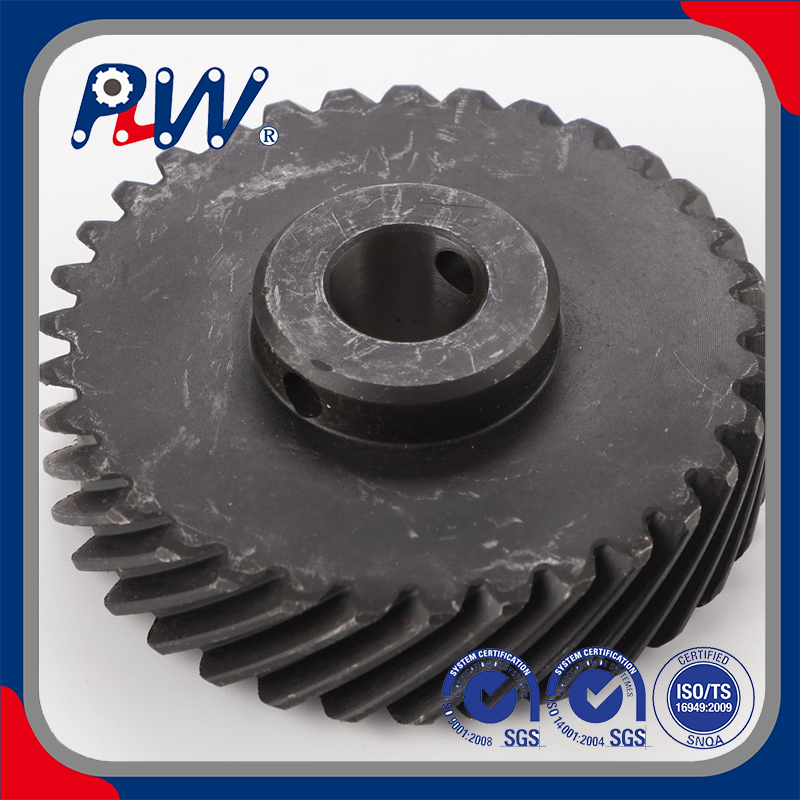
Helical gears are cylindrical gears where the teeth are cut at an angle to the axis of rotation. Unlike spur gears, which have straight teeth that engage simultaneously, helical gears engage progressively, which helps in reducing the impact load. The teeth in helical gears are set at a particular angle known as the helix angle. This angled design allows for smoother operation, lower noise levels, and greater efficiency, making them ideal for use in power transmission systems.
How Do Helical Gears Work?
The primary advantage of helical gears lies in their tooth design. As the gears rotate, the teeth gradually come into contact with each other rather than making an abrupt connection, as seen in spur gears. This progressive engagement reduces vibrations and minimizes the chances of gear teeth skipping or jarring against one another. The progressive meshing of teeth also helps distribute the load more evenly across the gear, leading to a smoother transfer of power. Additionally, this method of engagement significantly reduces the noise produced by the gears compared to other types of gears, which is crucial in applications where noise reduction is important.
Advantages of Using Helical Gears
Helical gears offer several advantages over other types of gears:
● Smooth Operation: The gradual engagement of teeth in helical gears minimizes noise and vibrations, ensuring smoother power transmission and reducing wear on the gears.
● Higher Load Capacity: Because of their angled teeth, helical gears can handle higher loads than spur gears. This increased surface contact area allows them to distribute force more effectively, making them suitable for high-power applications.
● Efficient Power Transmission: Helical gears are highly efficient, offering smooth, continuous power transfer, which helps improve the overall performance of mechanical systems.
Due to these benefits, helical gears are used in a wide range of applications, from low-power systems to heavy-duty industrial machinery.
3. Types of Helical Gears
Helical gears come in different configurations and types, each designed for specific applications. Understanding the differences between these types is crucial for selecting the right gear for your system.
Single-Start Helical Gears
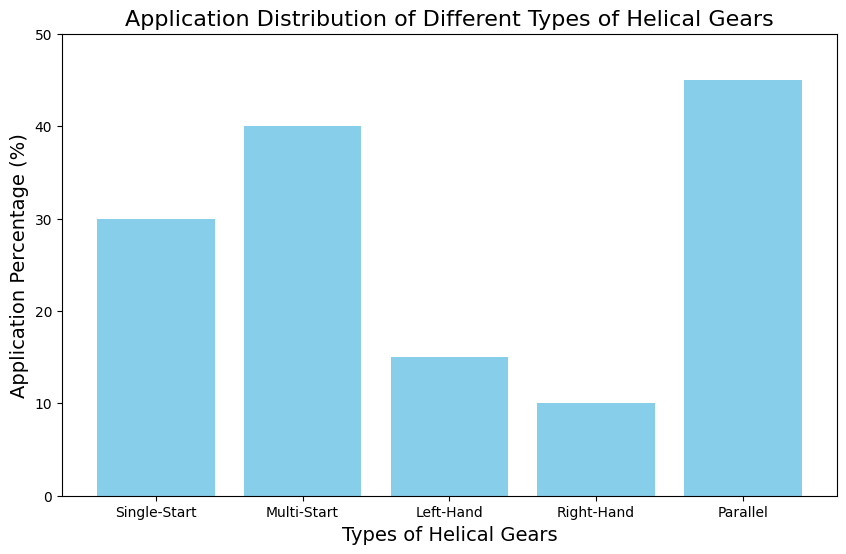
Single-start helical gears are the most commonly used type. They feature a single set of teeth that spiral around the gear. This type of gear provides a steady and smooth transfer of power, making it suitable for moderate load applications. These gears are ideal for machinery that requires efficient power transmission but does not experience extreme torque or speed fluctuations.
● Advantages: Simple design, cost-effective, and reliable for general-purpose use.
● Applications: Automotive gear systems, conveyors, and other industrial machinery.
Multi-Start Helical Gears
Multi-start helical gears have more than one set of teeth, which allows for a quicker engagement between the gears. This design increases the gear’s capacity to handle higher loads and higher speeds while maintaining a smooth power transfer. Multi-start gears are used in applications that require rapid speed changes and heavy-duty power transmission.
● Advantages: Increased load-bearing capacity, smoother meshing, and better suited for high-speed applications.
● Applications: High-speed machinery, heavy-duty industrial equipment, and high-performance automotive systems.
Left-Hand and Right-Hand Helical Gears
Helical gears can be classified into right-hand or left-hand gears based on the direction of the helix. A right-hand helical gear has teeth that spiral upwards to the right, while a left-hand helical gear’s teeth spiral to the left. The main distinction is that left-hand and right-hand helical gears must be paired together for proper functioning.
● Advantages: These gears allow for the transmission of power between shafts that are oriented at an angle to each other, making them highly versatile for a variety of applications.
● Applications: Systems that require a reverse direction of rotation, such as in cross-shaft drives or worm gears.
Parallel Helical Gears
Parallel helical gears are designed for applications where two gears need to operate on parallel shafts. These gears provide high precision and are capable of functioning at high speeds while keeping noise levels low. Parallel helical gears are particularly useful in situations where space constraints exist but high performance is still required.
● Advantages: High precision, efficient power transmission, and quieter operation.
● Applications: Automotive gearboxes, precision machinery, and conveyor systems.
4. Common Applications of Helical Gears
Helical gears are used in many industries where efficient power transmission is needed. Below are a few examples of where they are commonly used.
Automotive Applications
In the automotive industry, helical gears are used extensively in gearboxes, especially in manual and automatic transmissions. The smooth engagement of the teeth in helical gears reduces the noise and vibration that is typically associated with spur gears, making them ideal for the demanding environment of car engines and gear systems. These gears are also found in drive axles, engine timing systems, and other components of a vehicle's drivetrain.
Industrial Equipment
Helical gears are crucial components in industrial machinery that operates under heavy loads. From gearboxes in large machinery to conveyors in manufacturing plants, helical gears are designed to handle the high power requirements of these systems. Their ability to transmit power smoothly and efficiently makes them ideal for industries such as mining, construction, and manufacturing.
Aerospace and Robotics
In aerospace, robotics, and high-precision industries, the importance of accuracy and reliability cannot be overstated. Helical gears provide the necessary durability and precision for these applications, ensuring that the machinery operates optimally under extreme conditions. The smooth and quiet operation of helical gears is especially valuable in aerospace engines and robotic systems, where performance is critical.
5. Advantages of Using Helical Gears in Machinery
Helical gears offer a variety of benefits when it comes to industrial and heavy-duty applications.
Higher Load Capacity
One of the major benefits of helical gears is their ability to carry heavy loads. The angled teeth of helical gears create a larger contact area between the gears, which helps distribute the load more evenly. This reduces the chance of gear wear and tear, and allows the gear to handle higher torque without failure.
For applications that experience high loads or require heavy-duty performance, consider using multi-start helical gears for enhanced load handling.
Smooth and Quiet Operation
Unlike spur gears, which engage abruptly and can generate significant noise, helical gears engage gradually, leading to smoother and quieter operation. This characteristic is especially beneficial in environments where noise reduction is a priority, such as in automotive transmissions and noise-sensitive industrial machinery.
For noise-sensitive applications, such as automotive systems and robotics, helical gears offer a clear advantage over other gear types.
Longer Lifespan
Due to their smooth operation and gradual tooth engagement, helical gears typically last longer than other gear types, such as spur gears. The reduced wear and tear on the teeth ensure a longer operational life, which can reduce maintenance costs and increase the reliability of machinery.
Regular maintenance, such as proper lubrication and alignment checks, can further extend the lifespan of helical gears.
6. Choosing the Right Type of Helical Gear for Your Application
Choosing the right type of helical gear requires careful consideration of several factors, including material, size, load capacity, and speed requirements. It’s important to match the gear type to the specific needs of your application to ensure optimal performance.
Factors to Consider
When selecting a helical gear, consider factors like:
● Material: Gears can be made from various materials, including steel, cast iron, and non-metallic materials such as nylon and POM.
● Size: The size of the gear will determine how much power it can handle. Larger gears generally provide more load-bearing capacity.
● Load and Speed Requirements: High-speed applications may require multi-start helical gears, while general-purpose applications may be better suited for single-start gears.
When to Choose Multi-Start vs Single-Start Gears
The choice between single-start and multi-start helical gears depends on the demands of the application. Multi-start gears are ideal for high-speed and high-power applications, while single-start gears are more suitable for general use.
If you are working with a system that requires high-speed performance, multi-start gears will provide a more efficient power transmission.
Maintenance and Care Tips
To ensure the longevity of your helical gears, proper maintenance is essential. Regular lubrication is crucial to prevent friction and overheating. Additionally, ensuring proper alignment and checking for wear periodically can help avoid premature gear failure.
Keep your helical gears well-lubricated to reduce friction and prevent excessive wear.
7. How Helical Gears Compare to Other Gear Types
Helical gears are often compared to other types of gears, such as spur and bevel gears, each of which has its advantages and limitations.
Helical Gears vs. Spur Gears
While both helical and spur gears are used to transmit power, there are several key differences between the two:
● Meshing Method: Helical gears engage progressively, while spur gears engage abruptly.
● Noise Levels: Helical gears are quieter due to their smooth engagement, while spur gears generate more noise due to instantaneous meshing.
● Load Capacity: Helical gears can handle higher loads than spur gears, making them better suited for heavy-duty applications.
Comparison Item | Helical Gear | Spur Gear |
Meshing Method | Progressive contact, low impact | Instantaneous contact, high impact |
Noise Level | Low | High |
Load Capacity | High | Medium |
Axial Force | Exists (thrust bearings required) | None |
Manufacturing Difficulty | Higher (requires specialized machine tools) | Lower (simple processing) |
Helical Gears vs. Bevel Gears
Bevel gears are used to transmit power between shafts that are not parallel to each other, unlike helical gears, which are primarily used for parallel shafts. While bevel gears are essential for certain angular transmission applications, helical gears provide better efficiency and load capacity for parallel shaft applications.
Bevel gears are ideal for transferring power between shafts positioned at an angle, but helical gears offer smoother operation and higher load capacity for parallel shafts.
Helical gears are integral to various industrial applications due to their ability to handle high loads, offer smooth and quiet power transmission, and deliver superior efficiency. The use of alloy steel in the manufacturing of high-precision helical gears has become increasingly important for industries requiring robust, reliable, and long-lasting components. These gears are particularly essential in heavy-duty applications that demand high load capacities and smooth performance under significant stress.
Core Features of High-Precision Helical Gears
● Smooth, Low-Noise Power Transmission: The spiral tooth design of helical gears allows for progressive meshing, reducing impact loads and noise. This feature is crucial in applications where reducing operational noise is a priority.
● High Load Capacity: Due to the larger contact area between the teeth compared to spur gears, helical gears offer 30%-50% higher load capacity. This makes them ideal for heavy-duty industrial machinery.
● Efficiency and Durability: Helical gears are designed to provide high operational efficiency while enduring heavy usage. This makes them suitable for high-load systems that require durability over extended periods.
Key Technical Parameters
Parameter | Definition |
Module (m) | Ratio of circular pitch to π; standard industrial values range from 1-20mm. Determines gear size and load capacity. |
Pressure Angle (α) | Typically 20°, affecting meshing smoothness and force transmission. |
Helix Angle (β) | The angle between tooth line and gear axis, generally 8°-20°. A larger β increases load capacity. |
Number of Teeth (z) | The total number of teeth, impacting gear ratio. Typically ranges from 12-60 teeth. |
Face Width (b) | The axial width of the gear, balancing strength and installation space. |
Materials & Manufacturing Standards
● Common Materials:
○ Steel: 20CrMnTi (for heavy loads, carburized and quenched), 45# steel (quenched and tempered, for medium loads).
○ Cast Iron: HT200 (for low-speed, light-load applications, cost-effective).
○ Non-Metallic Materials: Nylon and POM (for low-noise, lubrication-free applications).
● International Standards:
○ ISO 6336: Gear load capacity calculation standard.
○ AGMA 2001: American Gear Manufacturers Association standard.
○ DIN 3990: German standard for helical gear geometric accuracy.
○ GB/T 10095: Chinese standard for helical gear accuracy.
9. Conclusion
In conclusion, helical gears are essential for efficient, smooth, and reliable power transmission in various industries. Their angled teeth allow for gradual meshing, reducing noise and vibrations while handling higher loads than other gear types. Whether using single-start, multi-start, left-hand, right-hand, or parallel configurations, each type offers distinct benefits based on specific application needs.
To choose the right helical gear, consider factors like load capacity, speed, and material. Regular maintenance ensures long-lasting performance and efficiency. Ultimately, helical gears provide a durable solution for high-performance machinery, making them indispensable in many mechanical systems. At HANGZHOU PERPETUAL MACHINERY & EQUIPMENT CO., LTD, we specialize in manufacturing high-quality helical gears tailored to meet the demands of various industries, ensuring optimal performance and reliability.
FAQ
Q: What are helical gears?
A: Helical gears are gears with teeth cut at an angle to the axis of rotation, allowing for smooth and gradual engagement. They are commonly used in machinery that requires efficient, quiet, and high-load power transmission.
Q: How do helical gears work?
A: Helical gears work by gradually meshing their angled teeth, which reduces impact loads and allows for smoother, quieter power transmission compared to spur gears. This makes them ideal for high-speed and high-load applications.
Q: What are the different types of helical gears?
A: The main types of helical gears include single-start, multi-start, left-hand, right-hand, and parallel helical gears. Each type has specific applications, with multi-start gears offering higher load capacity and faster speed.
Q: Why are helical gears used in automotive applications?
A: Helical gears are used in automotive transmissions because of their smooth operation and ability to handle high loads. Their quiet and efficient performance ensures smoother gear shifting and reduced noise in car systems.

 Español
  English
  العربية
  Français
  Русский
  Português
  Deutsch
  italiano
  日本語
日本語  한국어
한국어  Nederlands
  Tiếng Việt
  ไทย
ไทย  Polski
  Türkçe
  አማርኛ
አማርኛ  ພາສາລາວ
  ភាសាខ្មែរ
  Bahasa Melayu
  ဗမာစာ
ဗမာစာ  தமிழ்
தமிழ்  Filipino
  Bahasa Indonesia
  magyar
  Română
  Čeština
  Монгол
  қазақ
қазақ  Српски
  हिन्दी
  فارسی
فارسی  Kiswahili
  Slovenčina
  Slovenščina
  Norsk
Norsk  Svenska
  українська
  Ελληνικά
  Suomi
Suomi  Հայերեն
  עברית
עברית  Latine
  Dansk
Dansk  اردو
اردو  Shqip
Shqip  বাংলা
বাংলা  Hrvatski
  Afrikaans
  Gaeilge
  Eesti keel
  Māori
Māori  සිංහල
සිංහල  नेपाली
  Oʻzbekcha
  latviešu
  অসমীয়া
  Aymara
  Azərbaycan dili
  Bamanankan
  Euskara
  Беларуская мова
  भोजपुरी


