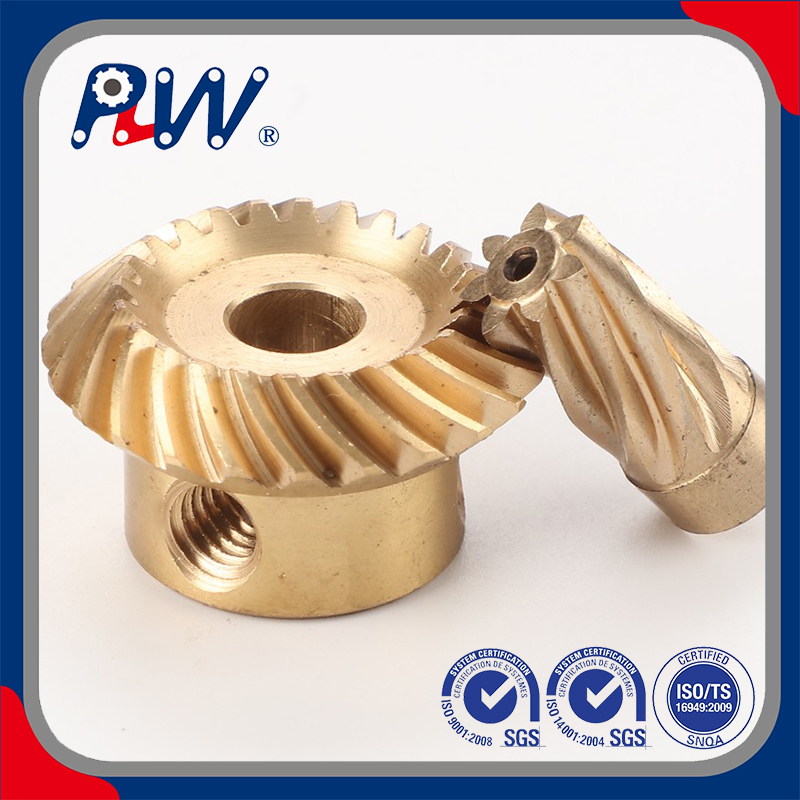
Wear-Resistant Heat-Treated Spiral Gear - High Efficiency for Mechanical Equipment Systems Product Introduction
Product Overview
This Wear-Resistant Heat-Treated Spiral Gear is a high-efficiency core transmission component optimized for modern mechanical equipment systems. Combining professional thermal processing technology and precision spiral tooth design, this gear solves the common defects of traditional transmission parts such as severe wear, low efficiency and unstable operation during long-term equipment operation. The upgraded heat treatment process enhances the overall mechanical toughness and surface abrasion resistance of the gear body, while the unique spiral meshing structure delivers continuous, low-loss and high-efficiency power transmission. Adaptable to frequent operation, variable load and long-cycle working conditions of various mechanical equipment, it is a reliable and energy-saving transmission accessory widely used in general machinery, automated equipment and industrial transmission systems.
Core Features
Professional Integrated Heat Treatment: Adopts standardized quenching, tempering and surface hardening integrated thermal processing technology. The gear forms a high-hardness wear-resistant layer on the tooth surface while maintaining excellent internal structural toughness. This process eliminates internal metal stress, effectively preventing tooth surface peeling, tooth breakage and structural deformation caused by long-term cyclic meshing and load impact, greatly improving overall operational stability.
Excellent Long-Term Wear Resistance: The heat-strengthened tooth surface features ultra-low friction coefficient and strong anti-abrasion capability. It can resist continuous meshing friction, dust abrasion and variable load wear in complex mechanical working environments. Even after thousands of hours of high-frequency operation, it can still maintain complete tooth profile accuracy and stable meshing performance, reducing component aging and wear failure.
High-Efficiency Spiral Tooth Transmission Structure: Optimized spiral curved tooth design achieves overlapping gradual meshing, with a larger contact area than conventional straight gears. This structure disperses instantaneous transmission pressure, reduces mechanical friction loss and power attenuation, and effectively improves the overall power transmission efficiency of mechanical equipment. It delivers more sensitive power response and lower energy consumption for various mechanical transmission systems.
Precision Machining & Low-Noise Operation: Manufactured via advanced CNC fine hobbing and tooth profile calibration technology, with ultra-precise tooth pitch and meshing clearance control. The smooth and polished tooth surface ensures seamless fitting during operation, effectively reducing mechanical vibration and running noise caused by meshing deviation. It realizes quiet and stable high-speed operation, meeting the precision operation requirements of high-end mechanical equipment.
Strong System Compatibility: With standardized dimensional parameters and stable assembly performance, this spiral gear is compatible with most mainstream mechanical equipment transmission systems. It supports seamless replacement and assembly for automated machinery, general industrial equipment, power transmission devices and mechanical gearbox assemblies, featuring strong versatility and wide adaptability for various mechanical system matching scenarios.
Product Advantages
Different from ordinary untreated spiral gears, this heat-treated upgraded version achieves dual breakthroughs in wear resistance and transmission efficiency. The professional thermal processing fundamentally solves the pain points of easy wear and short service life of traditional gears, greatly extending the replacement cycle of transmission parts. The high-efficiency spiral meshing design reduces equipment energy consumption and power loss, effectively improving the operating efficiency of mechanical systems. With stable performance, low failure rate and convenient installation, it significantly reduces equipment daily maintenance costs and production downtime losses, providing cost-effective and high-stability transmission solutions for mechanical equipment operation.
Wide Application Scenarios
Suitable for a full range of mechanical equipment transmission systems, widely applied in automated production machinery, industrial gearbox devices, packaging and printing equipment, textile machinery, logistics transmission machinery, environmental protection equipment and general industrial mechanical power systems. It is perfectly applicable to all mechanical scenarios requiring long-term continuous operation, high-efficiency power transmission and low wear loss, covering light, medium and conventional heavy-duty mechanical operation environments.
Product Specifications & Core Strengths
Applicable Material: High-strength carbon steel, premium alloy steel (customizable)
Core Process: Integral heat treatment, surface hardening, stress relief, CNC precision finishing
Transmission Characteristic: High-efficiency energy-saving transmission, low power loss, stable meshing
Key Product Advantages: Heat-treated reinforced, ultra-wear-resistant, high transmission efficiency, low noise, long service life, universal compatibility
Applicable Fields: Industrial automation, general machinery manufacturing, packaging & textile industry, logistics transmission equipment, environmental protection machinery

 Español
  English
  العربية
  Français
  Русский
  Português
  Deutsch
  italiano
  日本語
日本語  한국어
한국어  Nederlands
  Tiếng Việt
  ไทย
ไทย  Polski
  Türkçe
  አማርኛ
አማርኛ  ພາສາລາວ
  ភាសាខ្មែរ
  Bahasa Melayu
  ဗမာစာ
ဗမာစာ  தமிழ்
தமிழ்  Filipino
  Bahasa Indonesia
  magyar
  Română
  Čeština
  Монгол
  қазақ
қазақ  Српски
  हिन्दी
  فارسی
فارسی  Kiswahili
  Slovenčina
  Slovenščina
  Norsk
Norsk  Svenska
  українська
  Ελληνικά
  Suomi
Suomi  Հայերեն
  עברית
עברית  Latine
  Dansk
Dansk  اردو
اردو  Shqip
Shqip  বাংলা
বাংলা  Hrvatski
  Afrikaans
  Gaeilge
  Eesti keel
  Māori
Māori  සිංහල
සිංහල  नेपाली
  Oʻzbekcha
  latviešu
  অসমীয়া
  Aymara
  Azərbaycan dili
  Bamanankan
  Euskara
  Беларуская мова
  भोजपुरी