Chains - whether roller chain, agricultural chain, or conveyor chain - are the foundation of power transmission. They transmit motion in countless machines across many sectors. Therefore, proper chain selection is essential as it affects the performance and durability of your equipment.
With the variety of chain designs available, selecting the proper chain can be overwhelming. However, this blog provides basic guidelines to help you choose one that meets your performance and budget requirements.
Why Chain Selection Matters in Industrial Applications
Here’s why proper selection matters in your industrial projects:
● Operational efficiency: The proper chain selection will enable sprockets to transfer torque over long distances without slipping. It can reduce energy loss and vibration, and runs smoothly at the required speed, which results in excellent equipment operations.
● Increased lifespan: Proper chain selection reduces wear and tear on the chain and other components. Thus, it extends the life of the transmission system and prevents frequent replacements.
● Maintenance costs: Selecting the right chain drive reduces financial loss and delays. It minimizes breakdowns and prevents frequent maintenance that would have cost your business lots of money.
● Compliance with industry standards: Proper chain selection adheres to industry standards for safety, hygiene, and durability. Thus, it ensures quality performance and compliance with industry standards.
Core Considerations for Chain Selection
Loading
Proper chain selection depends on the loading requirement. Chains are often designed to carry loads on a continuous cycle over their lifespan. Choosing a chain that cannot withstand the demands can cause premature failure, increased downtime, and high maintenance costs.
Understanding the load requirement will help you determine the type of load and the kind of force magnitude that should be applied.
Load types are often classified as steady, variable, or shock loads. Steady loads use consistent force without fluctuation, like in light conveyor systems. Variable loads use force with fluctuation, as in packaging and processing systems. Shock loads involve the application of sudden force, like in heavy equipment.
Each load type determines the type of chain to use. For example, for shock loads, such as in high-load applications, chains with multiple strands are used for even distribution. Steady loads require chains with few strands as they are light.
Chain speed
Not all chain drives can handle equal speed applications. Some are specifically designed for low speeds, others are designed for high speeds. The chain speed affects the equipment’s performance, wear rate, and lifespan.
High chain speeds may enhance efficiency, but may introduce vibration and increased friction. This not only affects workers’ comfort but also machine precision and performance. Thus, when selecting a chain, it must withstand accelerated wear and elongation. It should have tight tolerances and ground components to reduce the effects.
For low to moderate speeds, chains must be selected to perform reliably and allow for easy lubrication. For example, in packaging equipment where the speed is high but the load is moderate, lightweight chains are used for continuous motion.
Shaft layout
The shaft layout, that is, the way shafts are aligned relatively to one another, is important in selecting the right chain. This influences chain length and overall performance. A poor layout can cause premature wear, misalignment, chain breakage, and downtime. There are three common shaft layouts: (1) parallel, (2) vertical, and (3) offset.
Parallel shafts have the chains transmit power between sprockets locked on the same plane. This allows for easy maintenance and proper alignment.
Vertical or inclined shafts have the shafts arranged vertically or at an angle. In this instance, the chain behavior changes. Due to the tension and wear patterns that may occur, chains may need guides or tensioners for stability.
Offset shafts are not perfectly aligned, which may lead to uneven load distribution. Thus, stronger chains, or using idlers, or gear drives, are used to redirect the chain path.
Shaft distance
The shaft distance influences chain type, length, and tensioning method. An improper shaft distance can cause sagging, uneven wear, and chain misalignment, which may affect the service life of your equipment.
For example, short distances, that is, when shafts are too close, may reduce sagging. Therefore, using chain sprockets that are large in diameter can reduce wear on pins and bushings.
For longer distances, that is, when shafts are placed far apart, chains may experience sag, leading to poor sprocket engagement. Chain guides or tension systems are therefore employed to avoid this.
It is generally suggested that the distance between shafts in the centre should be within an ideal range of 30-50 times the chain pitch. Furthermore, the minimum arc of contact obtained on a smaller sprocket should be 1200.
Service environment
The service environment in which the chain operates should also be considered.
● Temperature: High temperatures may make chain materials weaker and lead to elongation. On the other hand, extreme cold can make the chain brittle. In hot conditions, it is best to use heat-treated or alloy steel chains. For cold environments, stainless steel is often used.
● Corrosion: In environments prone to corrosion, stainless steel chains are used as they offer better resistance against moisture and corrosive agents than standard steel chains.
● Dust: Chains used in heavy-duty applications like mining are often exposed to dust, dirt, and abrasion. In this instance, chains with special coatings are used to extend their service life.
● Hygiene: In environments where hygiene is crucial, stainless steel chains are used for easy cleaning purposes and safety.
Determine the Roller Chain Size
The right roller chain size will help to ensure that the chain transmits the required power efficiency while maintaining durability. Chain size is often defined by pitch, roller diameter, and width.
● Pitch and load capacity: The pitch refers to the distance between the centers of two pins. Larger pitch chains can handle higher loads but are less flexible. Smaller pitch chains operate at high speeds and offer smooth movement. The calculation of the transmitted power and torque is needed to choose the right pitch.
● Sprocket compatibility: Chain size must be compatible with the sprocket teeth. Poor engagement and wear can be due to the mismatch of chains and sprockets.
● Industry standards: Chains are standardized by industries like ISO, ANSI, and DIN. Common sizes include #40, #50 and #60 chains. Higher numbers indicate a larger chain with a higher load requirement. Find the perfect chain match for your load capacity.
Determine the Chain Materials
The chain material has effects on performance, resistance to environmental conditions and durability. The right chain material makes sure that it is in position to withstand mechanical stress and endure the operating environment.
● Carbon steel chains: These standard chains have high strength and are affordable. They are mostly used in general industrial applications where corrosion and heat are not major concerns.
● Alloy steel chains: The chains offer high tensile strengths and also fatigue resistant. These chains undergo special treatments to make them harder and stronger with extended service life.
● Stainless steel chains: Stainless steel chains are applied in food production and pharmaceutical settings, where hygiene is very important.
● Plastic chains: These chains are lightweight and corrosion-resistant. They are used in light-duty applications or industries that need low noise.
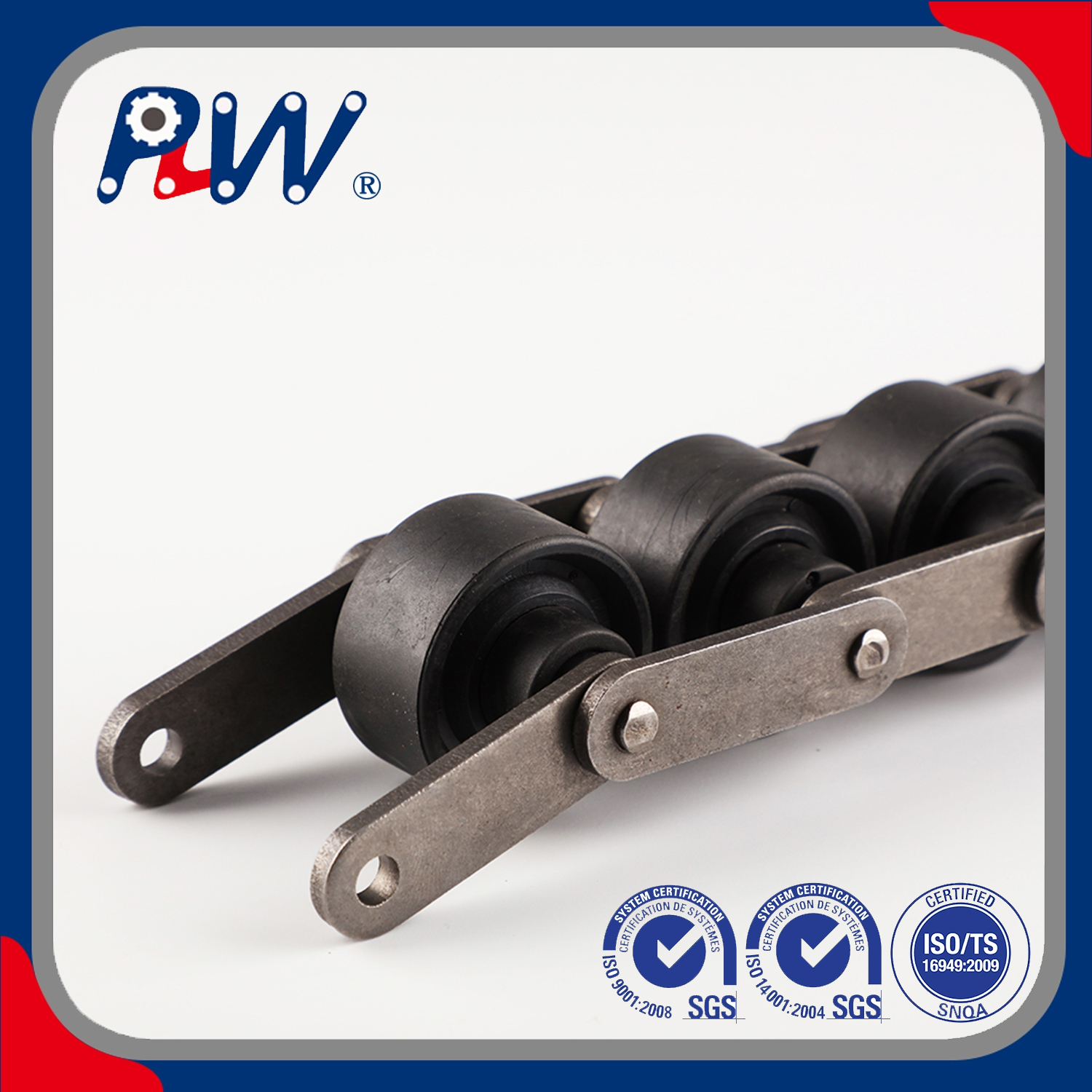
Match the Chain to the Application
Knowing the particular industrial application will help you know which chain to use. In light-duty, e.g. in packaging machinery or in processing plant, roller chains of standard type may be suitable. In the case of heavy-duty usage such as mining or construction, reinforced chains are recommended due to the shock loads and constant mechanical stress.
In the food and beverage industry, use chains that meet hygiene standards. In the automotive industry, chains that have high fatigue resistance are used for improved productivity. In the agricultural industry, use chains that operate reliably in dusty and outdoor environments. In the marine industry, use chains with high corrosion resistance to withstand saltwater exposure.
Maintenance and Service Life
The maintenance requirements of a chain have a direct impact on the service life and overall performance. Even if you buy an expensive and durable chain, it may fail prematurely if not properly maintained. When selecting a chain, consider not only initial performance but also how its maintenance schedules will be throughout its lifespan.
Establish maintenance schedules that include inspection of chain length, sprocket alignment, etc. Check the service life expectations to reduce maintenance demands. The lifespan of a chain usually depends on the load, operating speed, environment, and maintenance quality.
Consider premium-quality chains that will need little maintenance. Though they are more expensive, they reduce downtime and lower total operating costs. This is crucial for continuous operations, striking a balance between upfront investment and long-term savings.
Chain Treatment and Surface Treatment
When selecting a chain, consider chain treatment and surface treatment because this affects the strength, wear resistance, and resistance to environmental conditions. Further treatment is usually required in order to prolong shelf life.
● Heat treatment: Heat treatment is done to most chains to enhance hardness and fatigue strength. This treatment enables the chain to withstand the wear and tear in case of shock loading.
● Shot Peening: This is applied to chain plates to improve fatigue strength. It also helps chain resist crack formation, making it reliable in heavy-duty applications.
● Specialized treatment: Chains may receive special coatings to reduce friction, improve cleanliness, and prevent contaminants.
Whether you choose a chain with surface treatment depends on the application type.
Other Design Elements
● Chain length: The chain needs to be of the right length for proper engagement. A chain that is too short may cause misalignment, while a chain that is too long may cause poor engagement.
● Sprocket selection: The sprocket size and tooth profile must match for smooth operation and efficient power transfer.
● Chain tension: Over-tension may cause unnecessary stress on the chain, while under-tension may cause the chain to jump. Thus, maintaining proper chain tensioning will prevent slippage and excessive wear.
● Lubrication: Lubrication is needed to minimize friction and extend lifespan. Choosing self-lubricating chains can save you maintenance costs.
● Fatigue rating: Select a chain with an adequate fatigue rating to withstand stress cycles and premature failure.
Common Mistakes in Chain Selection
● Incorrect Pitch Matching: Incorrect pitch matching can cause excessive chain wear, vibrations, and noise.
● Overlooking material compatibility: Using the wrong chain material in the wrong environment can lead to corrosion and premature failure.
● Underestimating load requirements: Selecting a chain based solely on cost without considering load requirements can lead to mechanical failures and a shortened lifespan.
● Ignoring alignment and Installation: Poor alignment and installation process can lead to chain wear and ultimately, downtime.
Conclusion
The proper chain selection will help you avoid common pitfalls and contribute to a smooth operation and the longevity of your machine. If you’re looking for an expert to guide you, contact us today to address your specific needs.
FAQs
How do I calculate the correct chain size for my project?
The correct chain size depends heavily on the application. For example, different chain sizes are needed for industrial machinery, a bicycle, and a chainsaw, respectively. To calculate the correct chain size, measure the pitch and width and confirm with the manufacturer’s size chart.
Which chain materials are good in hot environments?
For hot environments, chain materials that have high strength and resistance to corrosion should be used. For example, superalloys, stainless steels, and cast iron chains have resistance to oxidation. The material you’re using depends on the temperature range and other environmental factors.
Is roller chain the same as conveyor chain?
A roller chain is not the same as a conveyor chain. A roller chain is a type of power transmission chain used on conveyors. However, conveyor chains are used to move materials and often have specialized attachments. Therefore, a roller chain is defined by its components, while a conveyor chain is determined by its function.
How often should I inspect and maintain my chain?
Inspect your chain regularly for signs of wear or damage. Lubricate and clean your chain every 300-600 miles, or 500-100km. Clean often if the chain is used in wet or dusty environments. A deep, thorough inspection should be done every 10,000-12,000km.
What are the methods of lubrication in chain drives?
There is manual lubrication and drip lubrication, oil bath lubrication, and forced-feed lubrication. Each method differs in its complexity, amount of oil it delivers, and the applications they are suitable for.

 Español
  English
  العربية
  Français
  Русский
  Português
  Deutsch
  italiano
  日本語
日本語  한국어
한국어  Nederlands
  Tiếng Việt
  ไทย
ไทย  Polski
  Türkçe
  አማርኛ
አማርኛ  ພາສາລາວ
  ភាសាខ្មែរ
  Bahasa Melayu
  ဗမာစာ
ဗမာစာ  தமிழ்
தமிழ்  Filipino
  Bahasa Indonesia
  magyar
  Română
  Čeština
  Монгол
  қазақ
қазақ  Српски
  हिन्दी
  فارسی
فارسی  Kiswahili
  Slovenčina
  Slovenščina
  Norsk
Norsk  Svenska
  українська
  Ελληνικά
  Suomi
Suomi  Հայերեն
  עברית
עברית  Latine
  Dansk
Dansk  اردو
اردو  Shqip
Shqip  বাংলা
বাংলা  Hrvatski
  Afrikaans
  Gaeilge
  Eesti keel
  Māori
Māori  සිංහල
සිංහල  नेपाली
  Oʻzbekcha
  latviešu
  অসমীয়া
  Aymara
  Azərbaycan dili
  Bamanankan
  Euskara
  Беларуская мова
  भोजपुरी


